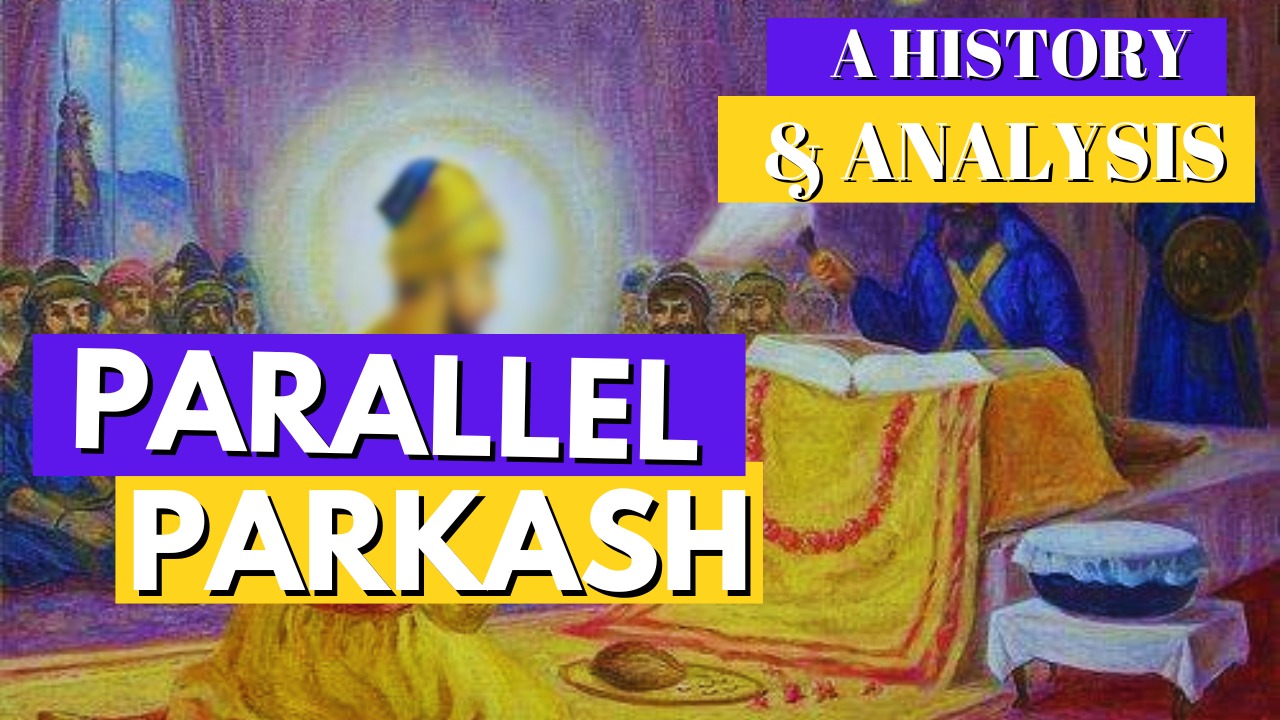
The article, titled “Parallel Parkash: An Analysis of the Evidence Presented in Sri Guru Granth Sahib and Sikh History” by Dr. Dapinder Singh (U.K.), discusses the issue of performing ‘parallel parkash’ (enthroning side-by-side) of Sri Guru Granth Sahib and Sri Dasam Granth. The author argues that such a practice is against Sikh doctrines and traditions, and provides historical, theological, and scriptural evidence to support this stance.
ਇਕਾ ਬਾਣੀ ਇਕੁ ਗੁਰੂ ਇਕੋ ਸਬਦੁ ਵੀਚਾਰਿ
There is One Bani, One Guru, and One Shabad on which to contemplate.
Introduction
The Khalsa Panth today stands at a critical juncture, whereby its long established ‘Gurmat’ based ideologies, principles and traditions are being distorted and challenged, consequently undermining the supremacy of the Sri Guru Granth Sahib. Much of this is occurring from within the Panth as a result of misunderstanding, misinformation and being unfamiliar with the essence of the teachings contained within the Sri Guru Granth Sahib.
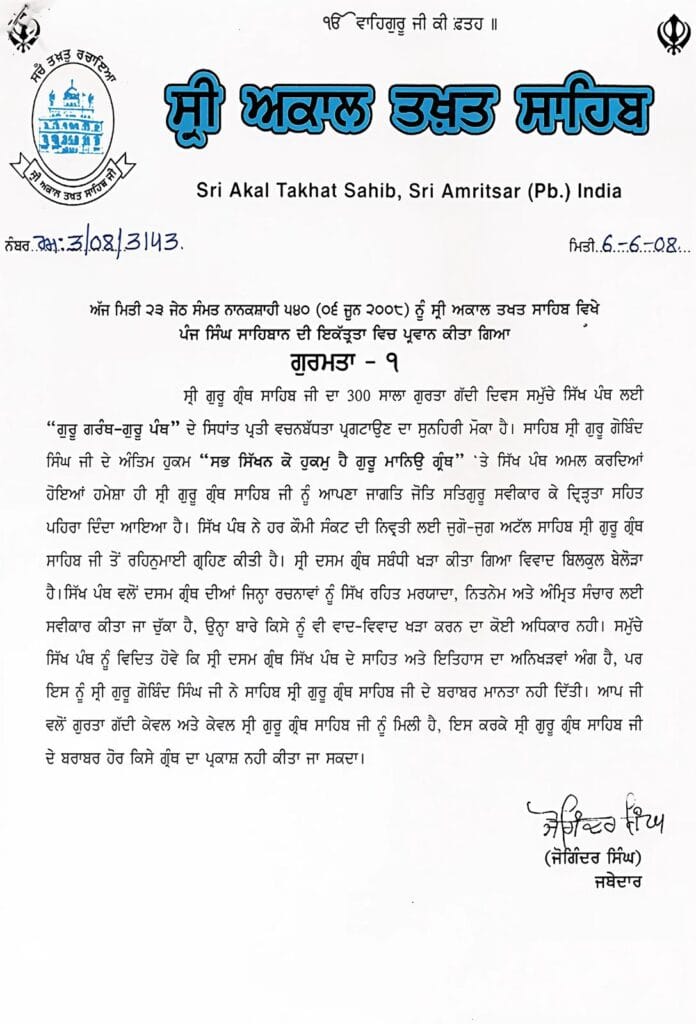
Recently, certain individuals and organisations have reignited the debate on Sri Dasam Granth, thus going directly against the ‘hukamnama’ issued by Sri Akaal Takhat Sahib. A worrying trend amongst the more aggressive has been to forcefully ‘parkash’ (enthrone and install) the Sri Dasam Granth in parallel with the Eternal Shabad Guru of the Sikhs; Sri Guru Granth Sahib.
In this article, it will be shown that there is an irrefutable case to be made that no other ‘granth’ can be ‘parkash’ in parallel with Sri Guru Granth Sahib, the embodiment of Akaal Purakh. No attempt will be made to cast any criticism regarding the authenticity or otherwise of the Sri Dasam Granth here as per hukamnama from Sri Akaal Takhat Sahib.
All individuals and Panthic Sikh institutions are encouraged to actively oppose the ‘parkash’ of Sri Dasam Granth in parallel with Sri Guru Granth Sahib on the basis of established Sikh doctrines, Gurmat.
Guru Nanak Sahib established the Sikh Panth, and built this ‘True Fortress’ on the strongest of foundations. This is clearly revealed in the Sri Guru Granth Sahib as follows:
ਨਾਨਕਿ ਰਾਜੁ ਚਲਾਇਆ ਸਚੁ ਕੋਟੁ ਸਤਾਣੀ ਨੀਵ ਦੈ॥
Furthermore, Bhai Gurdaas confirms this by stating that Guru Nanak Sahib sealed the authority of His doctrines in the world and revealed a religion devoid of any impurity; a ‘Nirmal Panth’:
ਮਾਰਿਆ ਸਿਕਾ ਜਗਤਿ ਵਿਚਿ, ਨਾਨਕਿ ਨਿਰਮਲ ਪੰਥ ਚਲਾਇਆ॥
In order to protect this ‘Panth’ Guru Nanak Sahib, while alive, transformed Himself, leaving His physical form and merged into Bhai Lehna to reveal Himself as Guru Angad Sahib. He positioned the canopy of the Satgur’s authority over the head of Bhai Lehna and merged His Jyot with that of Guru Angad Sahib. A mystery that left the world in astonishment and bewilderment:
ਥਾਪਿਆ ਲਹਿਣਾ ਜੀਵਦੇ ਗੁਰਿਆਈ ਸਿਰਿ ਛਤ੍ਰ ਫਿਰਾਇਆ।
ਜੋਤੀ ਜੋਤਿ ਮਿਲਾਇਕੈ ਸਤਿਗੁਰ ਨਾਨਕ ਰੂਪ ਵਟਾਇਆ।
ਲਖਿ ਨ ਕੋਈ ਸਕਈ ਆਚਰਜੇ ਆਚਰਜ ਦਿਖਾਇਆ।
– Bhai Gurdas
It is this very seat of authority that is being challenged today and the foundations of this ‘nirmal panth’ are being shaken by the controversy surrounding the parallel parkash of Sri Dasam Granth Lets look at the evidence for making our case:
It is well-established Gurmat doctrine that only at the command of Akaal Purakh can the Satguru be appointed. There is nothing greater than Akaal Purakh who is True. Only one True Satguru is chosen at any one time by Akaal Purakh and at given instance there can only be one Satguru:-
ਸਚੁ ਸਚਾ ਸਭ ਦੂ ਵਡਾ ਹੈ ਸੋ ਲਏ ਜਿਸੁ ਸਤਿਗੁਰੂ ਟਿਕੇ॥
ਸੋ ਸਤਿਗੁਰੂ ਜਿ ਸਚੁ ਧਿਆਈਦਾ ਸਚੁ ਸਚਾ ਸਤਿਗੁਰੂ ਇਕੇ॥
His Bani is One; There is Only One Guru; there is only One Shabad to contemplate:-
ਇਕਾ ਬਾਣੀ ਇਕੁ ਗੁਰੁ ਇਕੋ ਸਬਦੁ ਵੀਚਾਰਿ ॥
First, Satguru Guru Nanak Sahib was ordained and appointed by Akaal Purakh Himself. The Shabad within the physical body of Guru Nanak Sahib was the Guru:
ਸਬਦੁ ਗੁਰੂ ਸੁਰਤਿ ਧੁਨਿ ਚੇਲਾ॥
The Satguru is in fact the embodiment of Akaal Purakh Himself, He is Shabad, and Gurbani is the Revealed Word, uttered by Akaal Purakh Himself:
ਸਤਿਗੁਰੂ ਦੇਉ ਪ੍ਰਤੱਖਿ ਹਰਿ ਮੂਰਤਿ ਜੋ ਅੰਮ੍ਰਿਤ ਬਚਨ ਸੁਣਾਵੈ॥
ਗੁਰੂ ਨਾਨਕੁ ਨਾਨਕੁ ਹਰਿ ਸੋਇ॥
ਬਾਣੀ ਗੁਰੂ ਗੁਰੂ ਹੈ ਬਾਣੀ ਵਿਚਿ ਬਾਣੀ ਅੰਮ੍ਰਿਤੁ ਸਾਰੇ॥
ਧੁਰ ਕੀ ਬਾਣੀ ਆਈ॥
ਹਉ ਆਪਹੁ ਬੋਲਿ ਨ ਜਾਣਦਾ ਮੈ ਕਹਿਆ ਸਭੁ ਹੁਕਮਾਉ ਜੀਉ॥
There is NONE other like the Satguru; The Satguru is the Supreme Lord who is Unparalleled:
ਸਤਿਗੁਰ ਜੇਵਡੁ ਅਵਰੁ ਨ ਕੋਇ॥
ਗੁਰੂ ਪਾਰਬ੍ਰਹਮੁ ਪਰਮੇਸਰੁ ਸੋਇ॥
Guru Nanak Sahib was the embodiment of the Divine Light, ‘Jyot’, ‘Shabad’ and Akaal Purakh Himself was called Guru Nanak. The Divine Light within Guru Nanak Sahib was merged into Bhai Lehna, who then became Guru Angad Sahib. And so, it continued and the ‘Jyot’, was passed onto the nine True Successors of the Immortal Seat of the Satguru:
ਜੋਤਿ ਰੂਪਿ ਹਰਿ ਆਪਿ ਗੁਰੂ ਨਾਨਕੁ ਕਹਾਯਉ॥
ਤਾ ਤੇ ਅੰਗਦੁ ਭਯਉ ਤਤ ਸਿਉ ਤਤੁ ਮਿਲਾਯਉ ॥
The physical body of the Guru changed, but they enshrined the same Divine Light and Stratagem of the Guru:
ਜੋਤਿ ਓਹਾ ਜੁਗਤਿ ਸਾਇ ਸਹਿ ਕਾਇਆ ਫੇਰਿ ਪਲਟੀਆ॥
It is a fundamental belief contained within the sacred writings of the Sri Guru Granth Sahib that all the ten Sikh Gurus were in essence One, in the form of ‘Shabad’. Guru Nanak Sahib Himself commenced the formality of succession by anointing Bhai Lehna with a ceremonial mark on his forehead, followed by circumambulation and bowing down to his True successor, who became Guru Angad Sahib. From that point onwards, all the Sikhs recognised Guru Angad Sahib as the Satguru who then sat on the Divine Throne (Takhat) under the Canopy (Chandoah) over whom the Whisk (Chaur) was waved.
ਲਹਣੇ ਧਰਿਓਨੁ ਛਤੁ ਸਿਰਿ ਕਰਿ ਸਿਫਤੀ ਅੰਮ੍ਰਿਤੁ ਪੀਵਦੈ ॥ (966-16, ਰਾਮਕਲੀ, ਬਲਵੰਡਿ ਤੇ ਸਤਾ)
ਗੁਰਿ ਚੇਲੇ ਰਹਰਾਸਿ ਕੀਈ ਨਾਨਕਿ ਸਲਾਮਤਿ ਥੀਵਦੈ ॥ (966-17, ਰਾਮਕਲੀ, ਬਲਵੰਡਿ ਤੇ ਸਤਾ)
ਝੁਲੈ ਸੁ ਛਤੁ ਨਿਰੰਜਨੀ ਮਲਿ ਤਖਤੁ ਬੈਠਾ ਗੁਰ ਹਟੀਐ ॥ (966-19, ਰਾਮਕਲੀ, ਬਲਵੰਡਿ ਤੇ ਸਤਾ)
Those who chose not to accept the Guru’s decision of succession and refused to bow down to Guru Angad Sahib were considered evil hearted and ostracised from the Sikh faith.
ਪੁਤ੍ਰੀ ਕਉਲੁ ਨ ਪਾਲਿਓ ਕਰਿ ਪੀਰਹੁ ਕੰਨ੍ ਮੁਰਟੀਐ॥ (967-4, ਰਾਮਕਲੀ, ਬਲਵੰਡਿ ਤੇ ਸਤਾ)
ਦਿਲਿ ਖੋਟੈ ਆਕੀ ਫਿਰਨ੍ਹਿ ਬੰਨ੍ਹਿ ਭਾਰੁ ਉਚਾਇਨ੍ਹਿ ਛਟੀਐ ॥ (967-4, ਰਾਮਕਲੀ, ਬਲਵੰਡਿ ਤੇ ਸਤਾ)
No one dared to challenge the rightful successor to the Satguru. History bears witness to the fact that Guru Hargobind Sahib merged His Divine Light onto His grandson, (Baba Gurditta’s son) Sri Har Rai by-passing his own son Sri Tegh Bahadur. Guru Har Rai Sahib then appointed his son Sri Har Krishan as His successor and only after a period of 20 years after the passing of Guru Hargobind Sahib was Guru Tegh Bahadur Sahib appointed as the ninth Guru of the Sikhs! Such was the command of Akaal Purakh!
The tenth Guru, Guru Gobind Singh finally merged the Shabad ‘Jyot’ Eternal Light, into the Aad Bir and installed Sri Guru Granth Sahib as the ever-lasting Shabad Guru of the Sikhs, while He was alive.
We have shown in Section 2, Satguru was always the ‘Shabad’ in the form of the Divine Bani, which was revealed to the physical Guru. Gurbani was written by Guru Nanak Sahib Himself and passed onto His successors. The ‘Govindval Pothi’s’ containing the Gurbani of the first four Gurus were kept with the utmost respect by Baba Mohan, the son of Guru Amardas Sahib. When in 1604 Guru Arjan Dev compiled the Aad Granth, also known as ‘Pothi Sahib’ and installed it in the Sri Harmander Sahib Amritsar, it was regarded as the Abode of Akaal Purakh.
ਪੋਥੀ ਪਰਮੇਸਰ ਕਾ ਥਾਨੁ ॥ (1226-3, ਸਾਰੰਗ, ਮ: 5)
As such, the Aad Granth was given a higher reverence than the physical body of the Guru. After the installation of the Aad Granth at Sri Harmander Sahib in 1604, none of the successive Gurus ever sat on the Takhat in parallel to it in recognition of its Eternal status as Shabad Guru.
ਪੂਰਾ ਸਤਿਗੁਰ ਜਾਣੀਐ ਪੂਰੇ ਪੂਰਾ ਥਾਟ ਬਣਾਇਆ.. ਪੂਰੇ ਪੂਰਾ ਬੈਹਣਾ ਪੂਰੇ ਪੁਰਾ ਤਖਤੁ ਰਚਾਇਆ
( ਭਾਈ ਗੁਰਦਾਸ ਜੀ )
Guru Angad Sahib was appointed as the successor Guru on 14th July 1539 and Guru Nanak Sahib left for His Heavenly Abode on 22nd September 1539. During this time, Guru Nanak Sahib stayed at Kartarpur Sahib while Guru Angad Sahib stayed at Khadoor Sahib. On meeting Guru Angad Sahib, Guru Nanak Sahib would ceremoniously encircle and bow down to Him. Only Guru Angad Sahib sat on the Takhat and had the Chaur waved over His head as the ceremonial marks of the Satguru during this time. Guru Angad Sahib appointed as his successor Guru Amardas Sahib, and He too retained the same ceremonial marks of the Satguru; the Takhat, Chaur and the Canopy.
ਸੋ ਟਿਕਾ ਸੋ ਬੈਹਣਾ ਸੋਈ ਦੀਬਾਣੁ ॥ (968-1. ਰਾਮਕਲੀ, ਬਲਵੰਡਿ ਤੇ ਸਭਾ)
The same mark on the forehead, the same throne, and the same Royal Court.
While alive, the next Guru successor was appointed so that no one could challenge the decision of the Satguru.
ਸਤਿਗੁਰੂ ਪਰਤਖਿ ਹੋਦੈ ਬਹਿ ਰਾਜੁ ਆਪਿ ਟਿਕਾਇਆ ॥ (923-14, ਰਾਮਕਲੀ, ਬਾਬਾ ਸੁੰਦਰ)
ਸਤਿਗੁਰੁ ਪੁਰਖੁ ਜਿ ਬੋਲਿਆ ਗੁਰਸਿਖਾ ਮੰਨਿ ਲਈ ਰਜਾਇ ਜੀਉ ॥ (924-1, ਰਾਮਕਲੀ, ਬਾਬਾ ਸੁੰਦਰ)
All true disciples of the Guru accepted this decision. Those that did not were permanently excommunicated from the Sikh Panth. There were those that challenged the Satguru and emulated and imitated the Guru’s grandeur by sitting on the Takhat with Chaur. The likes of Meharban, Harji and the devilish Dhir Mal proclaimed themselves as Gurus and sat on the Takhat. They occupied Sri Harmander Sahib Amritsar and compiled their own ‘granth’. In response to this outrage, Guru Hargobind Sahib left Sri Amritsar Sahib and settled in Kiratpur Sahib in 1635 and none of the Gurus were ever to return to Sri Amritsar Sahib again. Guru Sahib categorically forbids any imitation of the Satguru and those who do this are cursed: –
ਸਤਿਗੁਰ ਕੀ ਬਾਣੀ ਸਤਿ ਸਰੂਪੁ ਹੈ ਗੁਰਬਾਣੀ ਬਣੀਐ ॥ (304-16, ਗਉੜੀ, ਮਃ: 4)
The Word of the True Guru’s Bani is the embodiment of Truth; through Gurbani, one becomes perfect.
ਸਤਿਗੁਰ ਕੀ ਰੀਸੈ ਹੋਰਿ ਕਚੁ ਪਿਚੁ ਬੋਲਦੇ ਸੇ ਕੂੜਿਆਰ ਕੂੜੇ ਝੜਿ ਪੜੀਐ ॥
Imitating the True Guru through jealously, some others may speak deceitfully, but the false are destroyed by their falsehood.
ਓਨਾ ਅੰਦਰਿ ਹੋਰੁ ਮੁਖਿ ਹੋਰੁ ਹੈ ਬਿਖੁ ਮਾਇਆ ਨੋ ਝਖਿ ਮਰਦੇ ਕੜੀਐ ॥੯॥
Deep within them is one thing, yet in their mouths’ is another; they suck in the poison of Maya, (illusion) and then they painfully waste away. ||9||
The true devotees of the Satguru abide by His every command (Hukam). We shall later explore what the Hukam of Sri Guru Gobind Singh was with respect to His appointment for successor, when the command was issued and what that implies for the present discussion. For now, let’s look further at Sri Guru Granth Sahib’s edict to those who refuse to accept the Guru’s Hukam: –
ਪੂਰੇ ਗੁਰ ਕਾ ਹੁਕਮੁ ਨ ਮੰਨੈ ਓਹੁ ਮਨਮੁਖੁ ਅਗਿਆਨੁ ਮੁਠਾ ਬਿਖੁ ਮਾਇਆ ॥ (303-16, ਗਉੜੀ, ਮ: 4)
One who does not obey the Hukam of the Perfect Guru – that self-willed ‘manmukh’ is plundered by his ignorance and poisoned by Maya.
ਓਸੁ ਅੰਦਰਿ ਕੂੜੁ ਕੂੜੋ ਕਰਿ ਬੁਝੈ ਅਣਹੋਦੇ ਝਗੜੇ ਦਯਿ ਓਸ ਦੈ ਗਲਿ ਪਾਇਆ ॥
Within him is falsehood, and he sees everyone else as false; the Lord has tied these useless conflicts around his neck.
ਓਹੁ ਗਲ ਫਰੋਸੀ ਕਰੇ ਬਹੁਤੇਰੀ ਓਸ ਦਾ ਬੋਲਿਆ ਕਿਸੈ ਨ ਭਾਇਆ ॥
He babbles on and on, but the words he speaks please no one.
ਓਹੁ ਘਰਿ ਘਰਿ ਹੰਢੈ ਜਿਉ ਰੰਨ ਦੋਹਾਗਣਿ ਓਸੁ ਨਾਲਿ ਮੁਹੁ ਜੋੜੇ ਓਸੁ ਭੀ ਲਛਣੁ ਲਾਇਆ ॥
He wanders from house to house like an abandoned woman; whoever associates with him is stained by the mark of evil as well.
ਗੁਰਮੁਖਿ ਹੋਇ ਸੁ ਅਲਿਪਤੋ ਵਰਤੈ ਓਸ ਦਾ ਪਾਸੁ ਛਡਿ ਗੁਰ ਪਾਸਿ ਬਹਿ ਜਾਇਆ ॥
Those who become Gurmukh avoid him; they forsake his company and sit near the Guru.
Thus, only the appointed Satguru is to be worshiped as the True Guru, and only He is approved to sit on the Takhat with the regalia of Chaur and Canopy. Not accepting the Hukam of the Guru is tantamount to committing sacrilege.
Sri Guru Gobind Singh was the embodiment and image of Akaal Purakh, the tenth successor of Guru Nanak Sahib’s Jyot, whose glories are un-paralleled in the world. It is well documented that Guru Gobind Singh had always intended to give the Guru succession to the Aad Granth and no other. In the works of Bhai Nand Lal, a contemporary Gursikh of Guru Gobind Singh, there is irrefutable evidence of this. In 1695, Bhai Nand Lal wrote his Rehat-Nama under the instructions of Guru Gobind Singh. This was 4 years prior to initiating the Khalsa order in 1699 and 13 years before Guru Sahib left His physical body:
ਤੀਨ ਰੂਪ ਹੈ ਮੋਹਿ ਕੇ, ਸੁਣਹੁ ਨੰਦ ਚਿੱਤ ਲਾਇ ਨਿਰਗੁਣ, ਸਰਗੁਣ, ਗੁਰਸ਼ਬਦ, ਕਹੈ ਤੋਹਿ ਸਮਝਾਇ
Listen O’ Nand, there are three forms of mine, The Formless, Attributive and the Guru’s Shabad
ਏਕ ਰੂਪ ਤਿਹ ਗੁਣ ਤੇ ਪਰੈ, ਨੇਤ ਨੇਤ ਜੇਹ ਨਿਗਮ ਉਚਰੇ…
There is one form, which is beyond all the three attributes. Which has been expounded many times in the Vedas as the Almighty, which resides in every heart
ਦੂਸਰ ਰੂਪ ਗ੍ਰੰਥ ਜੀ ਜਾਨ, ਉਨ ਕੇ ਅਂਗ ਮੇਰੋ ਕਰ ਮਾਨ…
My second form is (Guru) Granth, recognise it as inseparable from my physical form.
ਜੋ ਸਿਖ ਗੁਰ ਦਰਸਨ ਕੀ ਚਾਹਿ, ਦਰਸਨ ਕਰੈ ਗ੍ਰੰਥ ਜੀ ਆਹਿ
The Sikh that is desirous of the Guru’s holy presence should go and have the glimpse of (Guru) Granth.
ਸ਼ਬਦ ਸੁਣੈ ਗੁਰ ਹਿਤ ਚਿਤ ਲਾਇ, ਗਿਆਨ ਸ਼ਬਦ ਗੁਰ ਸੁਣੈ ਸੁਣਾਇ…
hearing the Shabad with full concentration, (the Sikh should) listen and preach the wisdom of the Shabad therein.
ਜੋ ਮੁਮ ਬਚਨ ਸੁਣਨ ਕੀ ਚਾਇ, ਗ੍ਰੰਥ ਜੀ ਪੜੇ, ਸੁਣੇ ਚਿਤ ਲਾਇ
One, who aspires to listen to my sermons, diligently, should read and recite the (Guru) Granth.
ਮੇਰਾ ਰੂਪ ਗ੍ਰੰਥ ਜੀ ਜਾਨ, ਇਸ ਮੈ ਭੇਧ ਨ ਰੰਚਕ ਮਾਨ
Recognize the Granth Jee as my embodiment, and concede to no other perception
ਤੀਸਰ ਰੂਪ ਸਿਖ ਹੈ ਮੋਰ, ਗਰਬਾਣੀ ਰਤਿ ਜਿਹ ਨਿਸ ਭੋਰ…
My Sikh is my third embodiment, (‘Khalsa mera roop hai Khaas’) who remains imbued in the essence of Gurbani day and night.
Guru Gobind Singh added the Bani of His father, Guru Tegh Bahadur Sahib to the Aad Granth in 1706 and fully sealed and completed this at Damdama Sahib. There is no evidence to suggest that Guru Gobind Singh ever had any intentions to add His own Bani/compositions to the Aad Granth, despite the fact that He had written extensively and that His ‘ Sri Mukh Vak’ Bani like Jaap Sahib was routinely read by His Sikhs in daily recitation of Nit-Nem.
Guru Sahib fully rejected the suggestion by the Sikhs that His own Bani be joined with (Guru) Granth Sahib. This is very clearly documented in Kesar Singh Chibber’s Bansavlinama (1779) where he states: –
“Guru Sahib had written a ‘smaller granth’ ‘ਛੋਟਾ ਗ੍ਰੰਥ’with His own hands which He was very fond of. Sikhs respectfully requested Guru Sahib to combine the two Granths (Aad Granth Sahib and the smaller Granth). Guru Sahib declared, “That is The Granth, This is my play/creation (ਖੇਡ – refering to Bachitar Natak Granth) the two cannot be combined in one; who knows this distinction?”
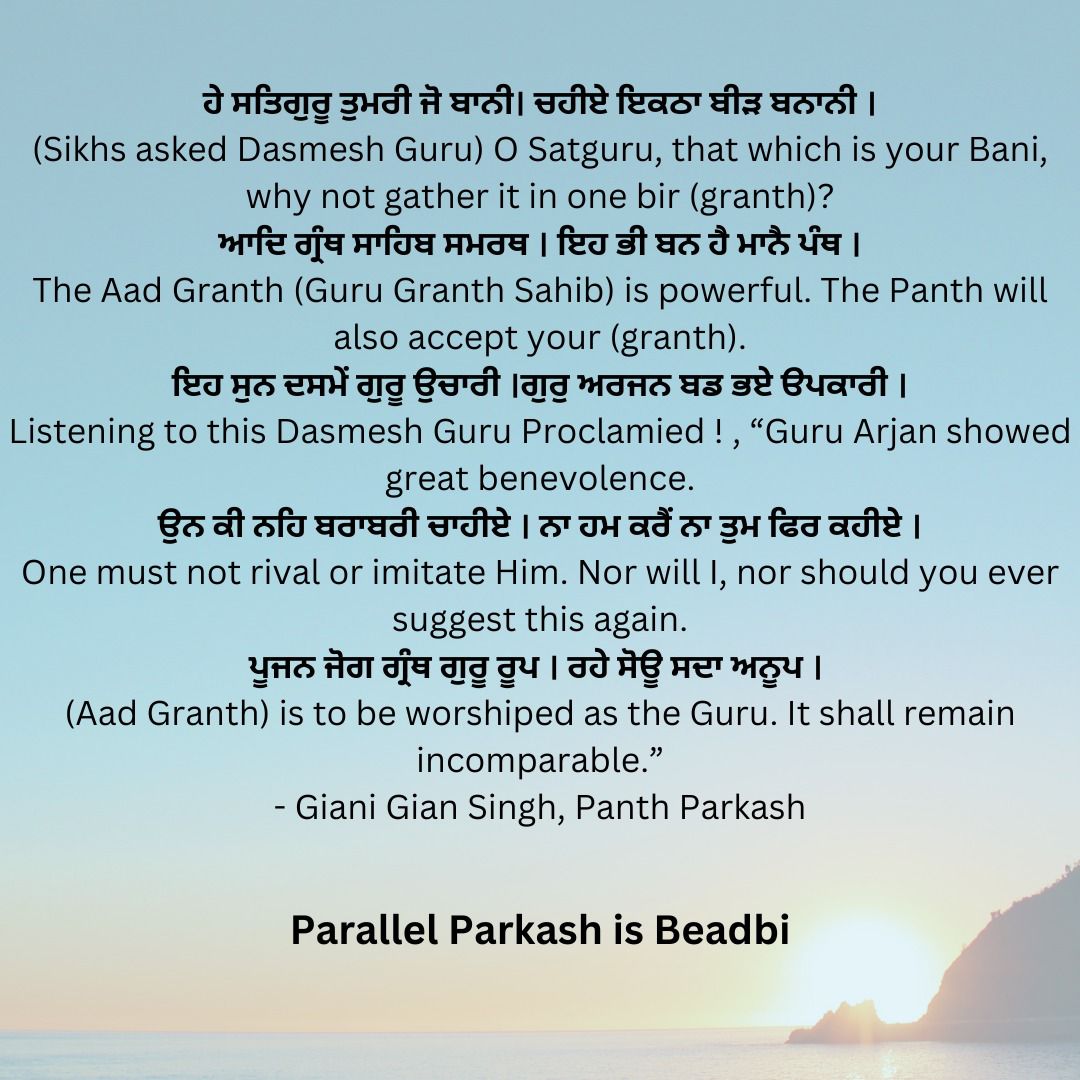
Giani Gian Singh writer of ‘Tawrikh Guru Khalsa and Panth Parkash’ (1874) redrafted the works of Maha-Kavi Santokh Singh, ‘Gur Partap Suraj Granth’(1843). He narrates a conversation between Guru Gobind Singh and his Sikhs:
Guru Gobind Singh’s ultimate instructions to the Khalsa Panth at the time when He left His physical body in 1708 at Nanded was recorded by one of His trusted poet popularly known as Sainapat. Sainapat was initiated into the Khalsa fold by Guru Gobind Singh and his written work ‘Sri Gur Sobha’ was completed in 1711. It is our earliest contemporary record whose contents are not disputed by any historian:
Sainapat writes, ‘The Sikhs questioned Sri Guru Gobind Singh’: –
ਕਵਲ ਰੂਪ ਆਪਨ ਪ੍ਰਭ ਕੀਨੋ? ਤਿਨ ਕੇ ਜੁਆਬ ਭਾਤਿ ਇਹ ਦੀਨੋ।
What is the identity of your Lotus Form?; The Guru answered thus:
ਤਾਹ ਸਮੇ ਗੁਰ ਬੈਨ ਸੁਨਾਯੋ। ਖ਼ਾਲਸ ਆਪਨੋ ਰੂਪ ਬਤਾਯੋ ।
At that instant the Guru spoke and stated; Khalsa is my very own Form.
ਖ਼ਾਲਸ ਹੀ ਸੋ ਹੈ ਮਮ ਕਾਮਾ। ਬਖਸ਼ ਕੀਉ ਖ਼ਾਲਸ ਕੋ ਜਾਮਾ।
Khalsa is my creation. I have granted my Form to the Khalsa
ਖ਼ਾਲਸ ਮੇਰੇ ਰੂਪ ਹੈ ਹੌ ਖ਼ਾਲਸ ਕੇ ਪਾਸਿ। ਆਦਿ ਅੰਤਿ ਹੀ ਹੋਤ ਹੈ ਖ਼ਾਲਸ ਮੈ ਪ੍ਰਗਾਸ ।
Khalsa is my form, I reside within the Khalsa. From beginning to the end, I am illuminated within the Khalsa.
ਖਾਲਸ ਖਾਸ ਕਹਾਵੈ ਸੋਈ ਜਾ ਕੈ ਹਿਰਦੈ ਭਰਮ ਨ ਹੋਈ ।
Khalsa is specifically that person within who’s ‘heart’ there is no doubt or duality.
ਭਰਮ ਭੇਖ ਤੇ ਰਹੈ ਨਿਆਰਾ ਸੋ ਖਾਲਸ ਸਤਿਗੁਰੂ ਹਮਾਰਾ ।
He who lives without doubt and disguise, is my Pure True Guru (Khalsa)
ਸਤਿਗੁਰੂ ਹਮਾਰਾ ਅਪਰ ਅਪਾਰਾ ਸ਼ਬਦਿ ਬਿਚਾਰਾ ਅਜਰ ਜਰੰ ।
My Satguru is beyond any limits of measure, and through the contemplation of the Shabad, the unbearable (bliss of Satguru) is obtained.
ਹਿਰਦੇ ਧਰਿ ਧਿਆਨੀ ਉਚਰੀ ਬਾਨੀ, ਪਦ ਨਿਰਬਾਨੀ, ਅਪਰ ਪਰੰ । (ਧਿਆਉ ਅਠਾਰਵਾਂ, ੪੩੮੦੮)
By concentrating (on Naam) in ‘hirda’ and reciting Gurbani, the indescribable state of salvation is attained.
The above clearly leaves no room for any doubt that when Guru Gobind Singh left His physical body, He passed on the Guru Jyot to Sri Guru Granth Sahib. Here we also learn of the perception of Guru Granth-Guru Panth, where his Khalsa would be his physical form. This also forms the basis of our Panthic Ardaas “Sab Sikhan Ko Hukam Hai Guru Maneo Granth”.
Further proof that Guru Gobind Singh unequivocally accepted Sri Guru Granth Sahib as the Eternal Shabad Guru of the Khalsa Panth is found in all the historical texts including the following: – Koer Singh’s Gurbilaas Patshahi 10 1751, Kesar Singh Chibber’s Bansavlinama 1779, Saroop Das Bhalla’s Mehma Parkash 1776, Swaroop Singh Kaushish’s Guru Kian Saakhian 1790. There is categorically no mention of any other ‘granth’ that was given any authority either equal to or superior to Sri Guru Granth Sahib by Guru Gobind Singh in any historical literature.
We also have in our possession a handwritten Gutka dated 1827 that narrates the story of the ‘Creation of the Khalsa’ which concludes with the following;
‘ਤਾਂ ਫੇਰਿ ਗੁਰੂ ਜੀ ਲਗੇ ਅੰਮ੍ਰਿਤ ਤਈਯਾਰ ਕਰਨ । ਜਾਂ ਪਾਹਲ ਤਿਆਰ ਹੋਈ ਤਾ ਫੇਰਿ ਗੁਰੂ ਪੂਰੇ ਕਾ ਬਚਨੁ ਹੋਇਆ। ਜਹਾਂ ਗ੍ਰੰਥ ਜੀ ਹੋਵੇ। ਔਰ ਪੰਜ ਸਿਖ ਬੈਠੇ ਹੋਵਨ ਤਹਾਂ ਅੰਮ੍ਰਿਤ ਛਕਾਇ ਦੇਣਾ। ਗੁਰੂ ਸਭਨੀ ਥਾਈ ਪੂਰਨ वे।’
‘Then Guru Ji began preparing the Amrit. When the Phaul (Amrit) was ready, the Complete (Perfect) Guru gave a sermon; Where there is the ‘Granth Ji’(Sri Guru Granth Sahib) and the five Sikhs (Panj Piyare) there the Amrit can be given. The Guru is present everywhere.’
We can see that it was common knowledge that no other Granth aside from Sri Guru Granth Sahib was the canon of the Sikhs worthy of the authority to allow initiation of someone into the Khalsa fold.
All historians acknowledge that Bhai Mani Singh, subsequent to Jyoti-Jyot of Sri Guru Gobind Singh, probably compiled the granth now known as ‘Sri Dasam Granth’ in its present form. It would be therefore entirely logical to assume that during Guru Sahib’s life, and the subsequent period before the compilation of Sri Dasam Granth, only the parkash of Sri Guru Granth Sahib was done. Clearly, the notion of parallel parkash of Sri Dasam Granth is an innovation made by certain Sikhs many decades after 1708.
If one was to look through the historical evidence present within the texts of the early 18th and 19th century, it becomes evident that, the supreme authority of Sri Guru Granth Sahib as the Eternal Guru of the Sikhs had become established and unchallenged by any other granth during this period.
Bhai Chaupa Singh’s extensive Rehatnama (1765) unmistakably refers to the manner in which Sri Guru Granth Sahib must be treated with utmost reverence as the ‘Satguru’ with silk robes (rumalay), Chaur and Takhat (manji). He states the Sri Guru Granth Sahib must never be separated from these royal symbols and its presence in Sikh ceremonies is essential. Again no mention is made by Bhai Chaupa Singh of any other granth that must be revered in a similar manner despite quoting many times from some of the compositions of the present version of Sri Dasam Granth.
Swaroop Singh Kaushish’s Guru Kian Saakhian (1790) (a descendant of Bhiku Bhat who was present during Guru Amardas Sahib’s time) has made extensive references to the recitation of Sehaj Path (non-continuous recitation) and Akhand Path (continuous recitation) of the ‘Guru’ Granth Sahib even during the time of the Gurus.
Saakhi #72 relates to Guru Gobind Singh ordering a Sehaj Path to be performed in 1702 and in Saakhi #103 asked his Sikhs to perform an Akhand Path in 1706.
“ਸਤਿਗੁਰਾਂ ਦਖੰਨ ਦਿਸ਼ਾ ਜਾਨੇ ਸੇ ਤੀਨ ਦਿਵਸ ਪਹਿਲੇ ਭਾਈ ਮਨੀ ਸਿੰਘ ਸੇ ਬਚਨ ਹੋਆ, ਸ੍ਰੀ ਗ੍ਰੰਥ ਜੀ ਲੇ ਆਈਐ ਅਸਾਂ ਅਖੰਡ ਪਾਠ ਕਰਾਨਾ ਹੈ “
This clearly implies that during that time Sikhs were very familiar with performing the Akhand Path and Sehaj Path from ‘Guru’ Granth Sahib. This is despite the fact that a ‘ਛੋਟਾ’ smaller Granth of Guru Gobind Singh’s compositions existed at the time. According to Dr Trilochan Singh in ‘The History and Compilation of Dasam Granth 1955’ Krishna Avtar was written in 1688, Rama Avtar in 1698 and the whole Bachitar Natak Granth in 1701.
No mention is made of another ‘granth’ being enthroned for any ceremony or for doing an Akhand Path or Sehaj Path.
In the final Saakhi #112, Kaushish states that after the jyoti-jyot of Guru Gobind Singh, Mata Sunder Kaur arrived and was consoled by Bhai Daya Singh. Ten days later, the bhog of the Sehaj Path from Sri Guru Granth Sahib was completed in honour of Sri Guru Gobind Singh.
Again, no mention of any other ‘granth’ is made that was present from which any recitation was made at this important moment in history.
Summary & Conclusions
Searching through the evidence contained within the undisputed Shabad-Guru, BaniGuru, Satguru, Sri Guru Granth Sahib, it has been established that the Satguru is ordained and appointed by Akaal Purakh Himself. Akaal Purakh Himself took the form of Shabad Guru and passed His Eternal Jyot through the ten Gurus. Eventually, the Shabad Jyot was infused into the Eternal Satguru, Sri Guru Granth Sahib by Guru Gobind Singh himself. Sri Guru Granth Sahib is the form of Nirankar Himself and nothing (and no other granth) is akin to it:
ਵਾਹੁ ਵਾਹੁ ਬਾਣੀ ਨਿਰੰਕਾਰ ਹੈ ਤਿਸੁ ਜੇਵਡੁ ਅਵਰੁ ਨ ਕੋਇ ॥ (515-17, ਗੂਜਰੀ ਕੀ ਵਾਰ, ਮ: 3)
Further, we have established that only the Satguru occupied the Takhat, and had the Chaur and Canopy, the symbols of Royalty and Authority conferred. The only exception to this being Aad Granth Sahib, which was respected as the Abode of Akaal Purakh. (In reality, the real form of the Satguru, Bani and Shabad Guru, which was ultimately given the Gurgadi)
We have seen that those that imitated the Satguru, in whatever shape or form, were cursed by the Satguru and excommunicated from the Sikh Sangat.
History bears witness to the fact that Guru Gobind Singh never intended for His Bani to be included within Sri Guru Granth Sahib. Akaal Purakh Himself ordained this. Sri Guru Gobind Singh specifically chose to keep His Bani separate in another ‘ਛੋਟਾ ਗ੍ਰੰਥ’. There is no evidence whatsoever that this was ever treated in the same manner as Sri Guru Granth Sahib (Aad Granth) during His lifetime nor did He ever advise his Sikhs to treat it as such. Only the Aad Granth ( Sri Guru Granth Sahib ) was to be worshiped as the Satguru.
The popularity of Sri Dasam Granth began in the late 18th century; decades after Guru Gobind Singh left His physical body in 1708. Bhai Mani Singh ‘Shaheed’ compiled what is now known as ‘Sri Dasam Granth’ sometime around 1734. Prior to that, Guru Sahib’s compositions were in separate smaller ‘granths’ e.g. Bachitar Natak Granth, Gyan Prabodh Granth and Shastar Naam Mala Puran. During the lifetime of Guru Sahib, there was no granth called ‘Sri Dasam Granth’. This name was propagated in the late 18th century, originally being referred to as ‘Dasam Padishah Ka Granth’. In various original handwritten ‘Dasam Granths’, it was called by various names such as:
1 ‘Bachitar Natak Granth’ (Bhai Mani Singh’s bir)
2 ‘soochi pothi ka tatkra, Sri Bachitar Natak Granth Ji ka, Sri Mukh Vak Patshahi 10’ (Misl Patne ki nakal)
3 ‘tatkra likhya Granth Ji Ka Patshahi 10’
Piara Singh Padam in his book ‘Dasam Granth Darshan’(1968) concludes that the name ‘Dasam Granth’ was an ‘invention of the early 20th century’.
Mischievous individuals have changed this more recently to ‘Sri Dasam Guru Granth Sahib’!
The change in the name of the ‘Sri Dasam Granth’ to ‘Sri Dasam Guru Granth Sahib’ appears to have been been done intentionally to confuse the Sikh masses and to establish it in direct equivalence to Satguru Sri Guru Granth Sahib i.e. there are two Sri Guru Granth Sahib’s, one Aad Sri Guru Granth Sahib and the other Dasam Sri Guru Granth Sahib ! To confer such a title to the Sri Dasam Granth is contrary to the tenets of the Sikhs.
The honoured Sikh scholar and historian Bhai Kahan Singh ‘Nabha’(1861-1938) states:
‘ਕਈ ਨਾਦਾਨ ਸਿਖ ਦਸਮ ਗ੍ਰੰਥ ਨਾਲ ਭੀ ‘ਗੁਰੁ’ ਸ਼ਬਦ ਦਾ ਪ੍ਰਯੋਗ ਕਰਦੇ ਹਨ ਜੋ ਗੁਰਮਤ ਵਿਰੁਧ ਹੇ”
“Some foolish and ignorant Sikhs attach the word ‘Guru’ to the Dasam Granth, which is against the Guru’s philosophy and teachings”
Considering the overwhelming evidence given above, there is no denying that it is fundamentally wrong and against Gurmat principles to do ‘parkash’ of the Sri Dasam Granth in parallel with the Eternal Satguru, Sri Guru Granth Sahib.
All Sikhs worldwide and all Khalsa organisations are encouraged to stop the promotion of such erroneous activities and to stand firm in their conviction to not allow the denigration and disrespect of Sri Guru Granth Sahib to take place.
Article written by Dr. Dapinder Singh U.K.
18th February 2017
1 ‘The Sri Dasam Granth contains the Bani of Guru Gobind Singh. It should be given the utmost respect’.
It is agreed that the Bani of all the Sikh Gurus should be treated with the greatest of respect. However, the Satguru’s ceremonial attributes of being enthroned on a Takhat with Chaur and Canopy can only be offered to Sri Guru Granth Sahib as instructed by Sri Guru Gobind Singh Himself.
Gurbani contained within smaller pothis, gutke and senchis are never afforded the same status as the Satguru. They are kept with respect wrapped in special cloth at a higher place away from other texts. If they are of a large size, they are placed on an appropriate platform made for the purpose, like a ‘manji sahib’ so that the contents can be read with reverence.
2 ‘The parkash of Sri Dasam Granth is only done in the presence of Sri Guru Granth Sahib, like at the Nihang Dera’s, just as a Prince cannot hold court without the King’.
To take the comparison of a King and a Prince is inappropriate. Sri Guru Granth Sahib is neither just a ‘King’ and nor is Sri Dasam Granth a ‘Prince’. Even if we take this analogy, it is not uncommon for the Prince to hold the Durbar (Court) in the absence of the King. This was common practice in the Moghul Durbar when the King was often away in distant lands. It is also noteworthy that even the Mughal Emperor, Akbar, was not allowed the Takhat, Chaur or Canopy in the presence of Guru Arjan Sahib. There is no reason why Sri Dasam Granth cannot be read without the presence of Sri Guru Granth Sahib.
Sri Guru Granth Sahib is the embodiment of Akaal Purakh and was bestowed the Gurgadi by Guru Gobind Singh himself. There is no historical or theological precedent set that allows any other granth, pothi or individual to be enthroned equal to it.
In Gurmat, there is no provision for any special relationship between different Guru’s Bani. The Bani of all the Guru’s and the Bhagats and other authors contained in the Sri Guru Granth Sahib are treated equally.
3 ‘There is no special provision for using the Chaur. The Chaur is even used at the Takhats over the sacred ‘shasters’, (weapons) of the Guru’s that are kept there. The ‘shasters’ are even kept at a higher level than the Sri Guru Granth Sahib’.
The Chaur is sometimes confused with a flywhisk. In Mughal India it was an item of Regalia in the Emperors Court. Historically, only the Satguru had the honour of having the Chaur waved over Him. It was a symbol of His authority as the Satguru.
Doing Chaur over the ‘shasters’ of the Guru’s is not Gurmat. Placing them at a higher level is not symbolic of anything spiritual but purely out of love and respect. Sikhs of the past merely did that to show their reverence to these special shasters. When they are shown to the public, they are not taken around and shown with Chaur waved over them! There are other relics belonging to the Gurus, including Chola Sahib, Kanga, Kachera, Mala, and Sandals. A Chaur is not waved over these sacred relics!
Sri Guru Granth Sahib is above and higher than anything in the material world. Nothing should be placed near it in a manner that would inadvertently show disrespect to it. Nothing is to be respected more and above the Shabad Guru.
Doing Chaur over the Sri Dasam Granth is a show of inappropriate respect, especially so in the presence of Satguru Sri Guru Granth Sahib.
4 ‘Because the Sri Dasam Granth enshrines Gurbani, it cannot be put on the floor or a small Rehal. It needs to be put on a ‘manji’ just as a Prince does not sit on the floor but on a comparable throne in the presence of the King’.
Sri Dasam Granth contains Gurbani. This is not in dispute. No one is advocating that it should be placed on the floor or be disrespected in a similar manner. It is of comparable size to the Sri Guru Granth Sahib. As such, the only way to read from it would be on a ‘manji’ made for it. Placed respectfully like this, it will be possible to read from it without showing any disrespect.
The issue is that we should NOT do parkash parallel to Sri Guru Granth Sahib. It is clear that only Satguru Sri Guru Granth Sahib is Supreme and no other granth or individual can be enthroned in parallel to it.
5 ‘The first 4 Gurus wrote Gurbani and these were compiled in the Govindwal Pothi’s. Even Guru Arjan Sahib went barefoot to collect them showing utmost respect to the Pothi containing Gurbani. Sri Dasam Granth should be given the same respect because it contains Guru Gobind Singh’s Gurbani’.
All pothis, books, gutke and senchis containing the sacred Gurbani of our Guru’s must be offered utmost respect. That is why all of these are covered with special cloth and placed in a respectful manner. Govindwal Pothi’s were very special and passed on from one Guru to another at the time of being given the Gurgadi. The Pothi’s became the symbol of the authority of the Guru. Despite the fact they carried such an important place in Sikhi, they were never placed on a Takhat, with Chaur or Canopy, and certainly not in the presence of the living Satguru.
In modern times, Sri Guru Granth Sahib senchis in two or four volumes are available. They are all kept wrapped separately and treated with full respect. Despite containing the full Gurbani of Sri Guru Granth Sahib the senchis are not placed on the Takhat with Chaur or Canopy. That is because they are separate and not compiled in their entirety as Sri Guru Granth Sahib.
Also, there are larger size Sukhmani Sahib pothis as well as ‘panj granthi’ and ‘das granthi’ pothis. They are not placed on Takhats with Chaur and Canopy. They are not treated ‘as if’ they were Sri Guru Granth Sahib.
6 ‘Guru Arjan Sahib complied the Aad Granth and referred to it as ‘Pothi Sahib’. Even when Guru Arjan Sahib was Satguru, the Pothi Sahib was treated with utmost respect by being placed on the Takhat with Chaur and Canopy. Even though the Pothi Sahib was not given Gurgadi, the next 5 Gurus placed it on the Takhat and did Chaur over it. In the same way, why can’t Sri Dasam Granth be treated with full respect even though it is not the Satguru’?
When in 1604 Guru Arjan Dev compiled the Aad Granth, also known as ‘Pothi Sahib’ and installed it in the Sri Harmander Sahib Amritsar, it was regarded as the Abode of Akaal Purakh: –
ਪੋਥੀ ਪਰਮੇਸਰ ਕਾ ਥਾਨੁ ॥ (1226-3, ਸਾਰੰਗ, ਮਃ 5)
As such, the Aad Granth was given a higher reverence than the physical body of the Guru. After the installation of the Aad Granth, none of the successive Gurus ever sat on the Takhat in parallel to it in recognition of its Eternal status as Shabad Guru and it being the embodiment and Abode of Akaal Purakh. Once the Gurgadi was given to Sri Guru Granth Sahib, Guru Gobind Singh never sat at the same level in its presence. So therefore, no other granth should be placed in parallel to it so that it can be respected in the same way as the living Gurus showed us.
7 ‘Can the parkash of Sri Dasam Granth be done separate to Sri Guru Granth Sahib’ ?
Due to the size of the Sri Dasam Granth, it must be placed on a ‘manji’ sahib to allow one to read from it. There is no reason why it cannot be placed in this manner separate to Sri Guru Granth Sahib. However, it cannot be offered the same platform, with the ceremonial regalia of Chaur and Canopy that is reserved for the Satguru Sri Guru Granth Sahib alone and certainly not in its presence.
8 ‘Takhat Sri Patna Sahib and Hazoor Sahib have parallel parkash of Sri Dasam Granth with Sri Guru Granth Sahib for centuries. So that proves it’s okay to do it’.
From the mid 1700’s until the early part of the 20th century, most of the Sikh institutions, Takhats, Gurdwara’s, Dera’s and Bungai were occupied by Sikh sympathisers but not necessarily Sikhs or Khalsas. Many of them were occupied by Mahants; like Narain Daas of Sri Nankana Sahib. Many Hindu, Brahmin practices became the norm and slowly the Khalsa doctrines began to be eroded away. Preaching from Hindu texts was common and texts like Suraj Parkash (1843) propagated many false stories of our Guru’s and it was commonplace to find Hindu deities even within the precincts of Sri Harmander Sahib Amritsar around the 1920’s. It would be entirely wrong to suggest that just because these idolatory practices were done 100 years ago at Sri Durbar Sahib, then it proves it is okay to reinstae these in the present time.
Just because Takhat Sri Patna Sahib and Hazoor Sahib allow the practice of parallel parkash does not mean it is acceptable on Gurmat grounds. At these very Takhat’s many other Non-Sikh practices take place including ritual slaughter of animals in the name of Akaal Purakh and defiling the sacred weapons of Guru Gobind Singh with their blood. Aarti is performed using lamps contrary to Guru Nanak’s teachings.
It is important to follow the Word of the Satguru and not be misled by perceived actions.
ਗੁਰਿ ਕਹਿਆ ਸਾ ਕਾਰ ਕਮਾਵਹੁ ॥ (੯੩੩-੮, ਰਾਮਕਲੀ ਦਖਣੀ, ਮਃ ੧)
Do those deeds, which the Guru has ordained.
ਗੁਰ ਕੀ ਕਰਣੀ ਕਾਹੇ ਧਾਵਹੁ ॥ (੯੩੩੮, ਰਾਮਕਲੀ ਦਖਣੀ, ਮਃ ੧)
Why are you chasing after the Guru’s actions?
Interestingly, an account of significant historical importance by a European orientalist of the 18th century, Charles Wilkins, fails to mention any evidence of a separate Sri Dasam Granth installed in parallel to Sri Guru Granth Sahib at Takhat Sri Patna Sahib in 1781. He states:
‘The congregation arranged themselves upon the carpet, on each side of the hall, so as to leave a space before the altar from end to end. The great book, was brought, with some little ceremony from the altar, and placed at the opposite extremity of the hall. An old man, with a revered silver beard, kneeled down before the desk with his face towards the altar; and on one side of him sat a man with a small drum, and two or three with cymbals. The book was now opened and the old man began to chant to the tune of the drum and cymbals; ..
The Hymn being concluded, which consisted of about twenty verses, the whole congregation got up, and presented their faces with joined hands towards the altar, in the attitude of prayer. A young man now stood forth; and, with a loud voice and distinct accent, solemnly pronounced a long prayer…This prayer was followed by a short blessing from the old man, and an invitation to the assembly to partake of a friendly feast. The book was then closed and restored to its place at the altar…That this book, of which that standing near the altar, and several others in the hall, were copies, teaches that there is but one God, omnipotent and omnipresent; filling all space, and pervading all matter; and that he is to be worshipped and invoked…
The following worth seeing historical relics/articles are preserved at Takhat Patna Saheb.
1. “Sri Guru Granth Saheb” called Bare Saheb containing signature of  Sri Guru Gobind Singhji Maharaj.
2. “Chhabi Saheb” oil painted very big picture of Sri Guru Gobind Singhji Maharaj of his young age.
3. “Panghura Saheb” a small cradle with four stands covered with gold plates on which Sri Guru Gobind Singhji Maharaj used to sit or sleep, when he was a boy.
4. A small “Saif” (Sword) of Sri Guru Gobind Singhji Maharaj.
5. Four iron “Arrows” of Sri Guru Gobind Singhji Maharaj…’
Charles Wilkins’s personal account of his visit to Takhat Sri Patna Sahib in 1781 clearly reveals the presence of parkash of Sri Guru Granth Sahib WITHOUT the presence of any other granth or Sri Dasam Granth. Evidently, the parkash of Sri Dasam Granth or any other ‘granth’ in parallel to Sri Guru Granth Sahib was not always done at these Takhat Sahibs.
In this article, it will be shown that there is an irrefutable case to be made that no other ‘granth’ can be ‘parkash’ in parallel with Sri Guru Granth Sahib, the embodiment of Akaal Purakh. No attempt will be made to cast any criticism regarding the authenticity or otherwise of the Sri Dasam Granth here as per hukamnama from Sri Akaal Takhat Sahib.
We’re here to help. Whether you’re curious about Gurbani, Sikh history, Rehat Maryada or anything else, ask freely. Your questions will be received with respect and answered with care.
Ask Question