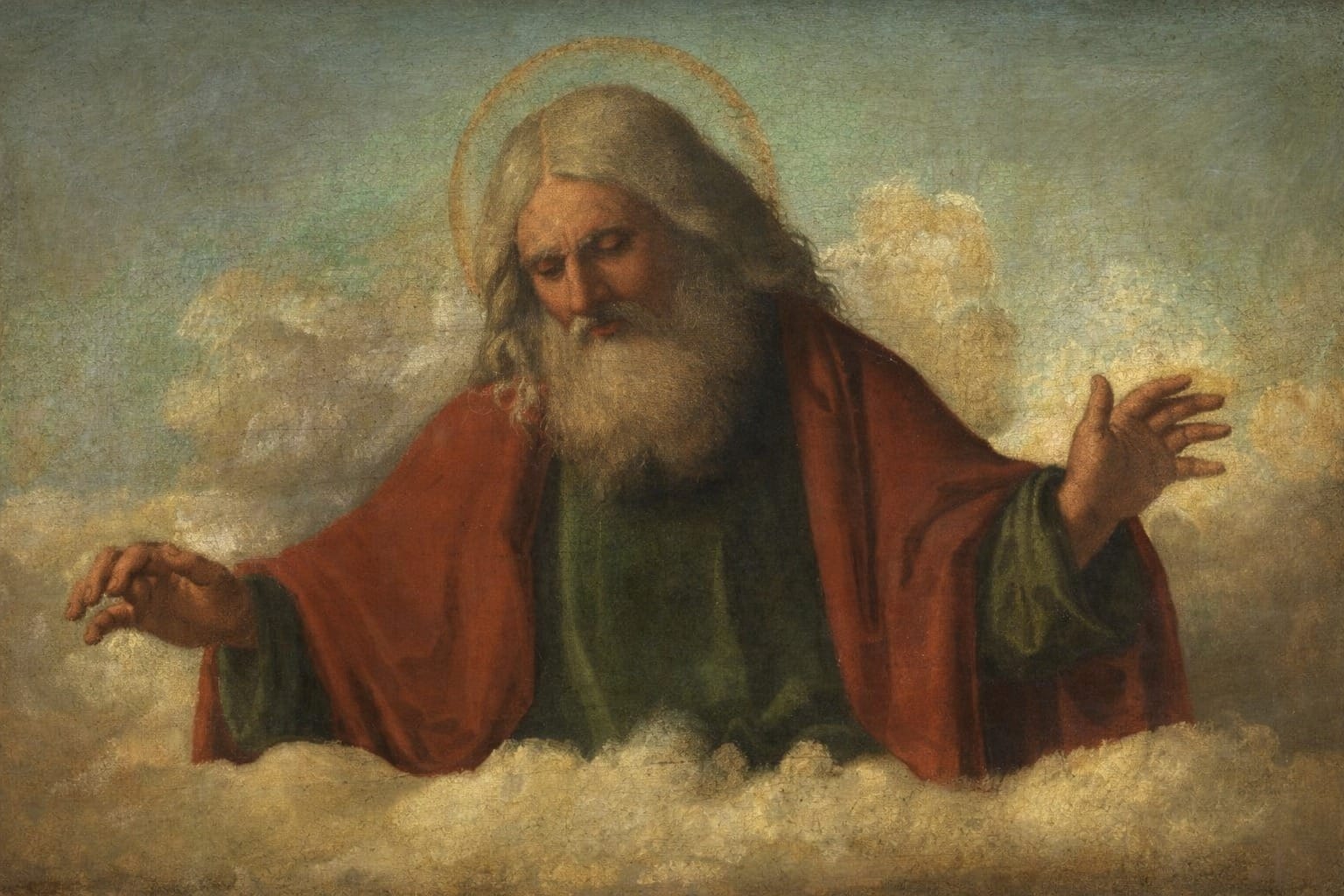
It’s a favourite line of Sikh social media influencers attempting to explain the Sikh belief in Akal Purakh to the public:
“We don’t believe that God is a man in the sky.”
What they mean to say is that Akal Purakh (literally meaning “Immortal Man”) is not a sentient Being who watches over Creation, but merely an abstract, unifying force which underlies existence.
While this one description of Vaheguru is not untrue, why can it not simultaneously be true that Akal Purakh is also a sentient, intentioned Being who takes on identity and observes Creation while being aloof from it?
Why must it be one and not the other?
Still, the Sikh diaspora’s discomfort with the so-called “colonial” notion of God as a Man in the Sky is not totally unfounded. It represents a recognition of the problems with the imagery of God that is present in “colonial”, or more-so, Abrahamic religion; conceptualisations that are clearly archaic and rooted in polytheistic cultural pasts.
The Abrahamic/Biblical “God” is not Vaheguru; he is a deity who originated from a pantheon of many other human-like gods and was eventually elevated to the status of supremacy over the others. In fact, scholars argue that the Old Testament of the Bible contains not one, but two, of such deities: El and Yahweh.
The first, El, was the god of Abraham, adopted from the mythology of the Canaanites, while Moses’ god was Yahweh, a completely different tribal deity whose origins likely hailed from the Southern region of Midian. (Some argue that Yahweh was originally a deity from a Sumerian pantheon.) Passages in the older books of the Bible speak of them separately, even alluding to Yahweh’s sub-ordinance to El. Later, the priesthood syncretized El and Yahweh into a single deity.
This explains why the Biblical notions of God are at odds with our Gurus’ conceptualisation of Akal Purakh: they simply are not the same Being. No doubt the people who worshipped the god(s) of the Bible intrinsically understood that there was a supreme Creator of the universe, but their deity was by no means a representation of Him. He was no less of a humanised deity than the tribal gods of other regional pantheons – an imagined creation of mankind, with distinctly human-like characteristics that made him easy to be perceived as a “Man in the Sky”.
However, there are several reasons why personified characterisations in other traditions should not deter the scholars of Gurmat and the seekers of Vaheguru from believing in the transcendent, sentient Beingness of Akal Purakh.
Unlike in Abrahamic tradition, Gurbani’s description of Akal Purakh does not reduce Vaheguru to a mere Devta with whom we can negotiate, make contracts, and access through worldly, material-level quests. He remains aloof, endless, and beyond comprehension. And while accessible, He is not accessible through tri-gun or our tri-guni senses and faculties. He is only fully accessible in frequencies beyond material realms.
Secondly, Gurbani does not attribute flawed human attributes to Akal Purakh, such as jealousy, vengeance, and even a thirst for blood – attributes of the god(s) of the Bible, which are rooted in the influence of a polytheistic heritage in which wrathful gods vied for power. Vaheguru is forever beyond human flaw, and perfect – totally just, but incomprehensible in His perfect intention.
Thirdly, attributing identity, intention and Beingness to Akal Purakh does not automatically put Him into the realm of the material – unlike the deity of the Bible, who is highly concerned with the material affairs of humanity and his own positioning of supremacy within all of it. For instance, Vaheguru’s aloof control over the world does not take away from his omnipotence. His taking on of a gendered identity (as ਸਾਈਂ, ਸਾਹਿਬ, etc.) does not take away from the fact that He is simultaneously unbound to gender. Vaheguru’s identity as a Being does not necessitate that He is without the simultaneous attribute of formlessness. Vaheguru’s sentience does not reduce Him to being human. All of these attributes can belong to Vaheguru at the same time, and do, as per Gurbani.
ਸਾਚੇ ਸਾਹਿਬ ਸਿਰਜਣਹਾਰੇ ॥
The true Sahib is the Creator.
ਜਿਨਿ ਧਰ ਚਕ੍ਰ ਧਰੇ ਵੀਚਾਰੇ ॥
He who established the worlds after contemplation;
ਆਪੇ ਕਰਤਾ ਕਰਿ ਕਰਿ ਵੇਖੈ ਸਾਚਾ ਵੇਪਰਵਾਹਾ ਹੇ ॥੧॥
He Himself is the Doer. After creating, He watches over the creation; He is True and aloof. ||1||
What this means is that Akal Purakh, while not a human-like deity like the god(s) of Abrahamic religion, is nonetheless not without sentience, agency, authority or intention. He is still a personal God – one who thinks, acts, and observes, and therefore one with whom we can have an intimate and real relationship. This fact does not reduce Vaheguru’s transcendent infiniteness – even against the backdrop of the absurdity of the conceptualisations of a personified “God” in other religions.
Ultimately, the Vaheguru of Sikhi is beyond comprehension, but we can still come to a certain level of functional understanding of Him. However, when seeking to understand Vaheguru from a Gurmat perspective, it is important for our understanding to not be shaped as a defensive response to other belief systems. Gurmat stands supreme, and is the Rosetta stone by which all comparisons and analyses should be done.
Yet, modern Sikhs have a tendency to begin with the study of manmade (manmat) philosophies and later attempt to see how Gurmat can be squeezed into or pitted against these other frameworks, rather than allowing Gurbani to stand as the beginning foundation. Rather than attempting to glean an understanding through Gurbani first and foremost, many of us fall into the trap of conceiving and inventing Vaheguru as per our own ideas. This is the exact trap that befell the inventors of the god of the Bible. Rather than bringing us closer to the True One, such pursuits will only doom us to fall into the worship of a false deity conceived through our own imagination.
There is only one way to find the inconceivable Supreme Creator, Vaheguru: and that is through the ultimate, absolute Truth of Gurbani. No other scripture, philosophy, religion, or theological framework has truly grasped who Vaheguru is. Gurbani, the physical manifestation of an inconceivable God, is the one and only path to connection with Akal Purakh. It’s time we put away our own manmat ideas, and rely on the true gyaan of Gurbani to tell us who Vaheguru really is.
Written By: Musäfr
We’re here to help. Whether you’re curious about Gurbani, Sikh history, Rehat Maryada or anything else, ask freely. Your questions will be received with respect and answered with care.
Ask Question