Flat Earthers say the Earth must be flat because we cannot see or feel it spinning. They think if it were moving, we would clearly notice it. But there is strong and clear evidence that the Earth is a globe:

Some Sikhs, unfortunately influenced by misunderstandings and pseudo-scientific ideas, have started believing that the Earth is flat and stationary, that the Sun moves in a circle above it, or that the Moon produces its own light. A few have even tried to use Gurbani to support these claims, but this comes from a lack of proper understanding of both science and Gurbani, which can unintentionally mislead others.
We fully acknowledge that science does not and cannot explain everything. There are realities mentioned in Gurbani such as the existence of the soul, heaven and hell, Jamdoots, Dharam Rai, and many other realms where beings dwell that lie beyond the scope of scientific measurement and experimentation. The limitations of science in understanding spiritual dimensions, however, do not mean that well-established and observable physical realities should be rejected. Matters such as the Earth being a globe, its movement in space, and other demonstrable natural phenomena are supported not only by scientific research but also by direct observation and consistent evidence.
Flat Earthers claim that scientists, astronomers, physicists, government, and space agencies are all deceiving the public. But, in reality, it is these individuals who have been misled by pseudoscience. These experts have dedicated their lives to studying and understanding the universe through evidence-based research, while those under the influence of misinformation reject facts and evidence.
The idea that Earth is a sphere is not new or told by NASA; it has been known for over two thousand years. Ancient Greek thinkers like Pythagoras and Aristotle noticed natural signs, such as Earth’s round shadow on the Moon and changing stars when traveling north or south, showing that Earth is spherical. Around 240 BC, Eratosthenes even measured Earth’s size using shadows. Later, scholars across Europe, the Middle East, and India accepted this, and Magellan’s expedition circumnavigating the globe confirmed it. Flat earthers claim space agencies lie, but we can ask: why would an ancient Greek philosopher like Pythagoras claim that Earth was a sphere? He had no reason to lie, yet his observations matched reality perfectly.
Guru Nanak Dev Ji spoke against the flat earth myths that were prevalent during his time: 
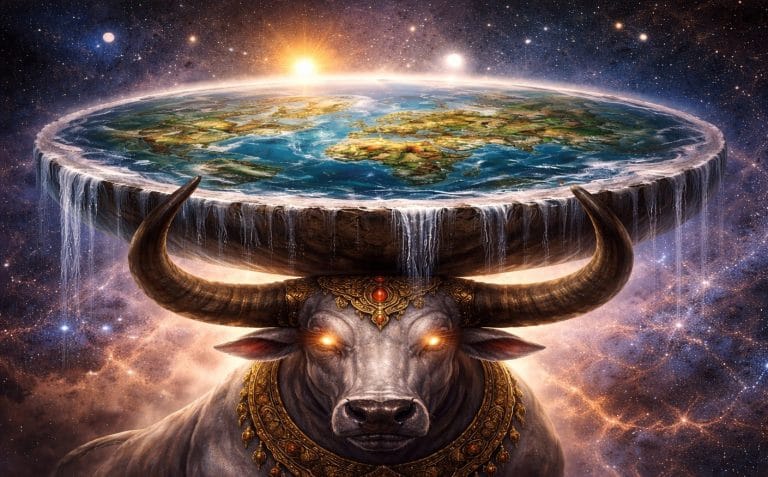
ਧੌਲੁ ਧਰਮੁ ਦਇਆ ਕਾ ਪੂਤੁ ॥ ਸੰਤੋਖੁ ਥਾਪਿ ਰਖਿਆ ਜਿਨਿ ਸੂਤਿ ॥
ਜੇ ਕੋ ਬੁਝੈ ਹੋਵੈ ਸਚਿਆਰੁ ॥ ਧਵਲੈ ਉਪਰਿ ਕੇਤਾ ਭਾਰੁ ॥
ਧਰਤੀ ਹੋਰੁ ਪਰੈ ਹੋਰੁ ਹੋਰੁ ॥ ਤਿਸ ਤੇ ਭਾਰੁ ਤਲੈ ਕਵਣੁ ਜੋਰੁ ॥
These verses directly addresses and debunks the literal “bull supporting the Earth” myth prevalent in Hindu and many other traditions (which implied a flat Earth on a bull’s horns). Guru Sahib treats the bull as a metaphor for Dharma (righteousness), saying that it is what holds the Earth in its place. The verse also points out the problem with taking it literally: if the Earth rests on the bull, then what supports the bull itself?
In the same way, when Guru Nanak Dev Ji visited Baghdad, it was commonly believed in Islamic teaching that there were only seven skies and seven underworlds. When Guru Nanak Dev Ji sang, “ਪਾਤਾਲਾ ਪਾਤਾਲ ਲਖ ਆਗਾਸਾ ਆਗਾਸ,” he clearly declared that there are nether worlds beneath nether worlds, and hundreds of thousands of heavenly worlds above, far beyond limited human understanding. This directly contradicted the commonly held Islamic belief of only seven skies and seven underworlds. As recorded by Bhai Gurdas Ji in his Vaars, Guru Nanak Dev Ji demonstrated that creation is vast beyond all measure.
Another important word used in Gurbani is ਭੂਮੰਡਲ:
ਜੈ ਜੈ ਕਾਰੁ ਸਗਲ ਭੂਮੰਡਲ ਮੁਖ ਊਜਲ ਦਰਬਾਰ ॥੩॥
In Mahan Kosh, Bhai Kahn Singh Nabha translates ਭੂਮੰਡਲ as ਪ੍ਰਿਥਿਵੀ ਮੰਡਲ, ਭੂਗੋਲ. He further explains that ਭੂਗੋਲ means ਪ੍ਰਿਥਿਵੀ ਦਾ ਗੋਲਾ, ਗੋਲਾਕਾਰ ਭੂਮੰਡਲ, ਭੂਚਕ੍ਰ, terrestrial globe.
The meaning given is clearly that the Earth is spherical. The word itself is made of two parts: ਭੂ (Bhoo) meaning earth, and ਗੋਲ (Gol) meaning round or sphere. So literally, ਭੂਗੋਲ means “the earth which is round.” This shows that respected Sikh scholars understood the Earth to be a globe, not flat, and the traditional Sikh lexicon itself supports this understanding.
Flat Earthers often quote these verses to claim that the Earth is stationary:
ਭੈ ਵਿਚਿ ਧਰਤੀ ਦਬੀ ਭਾਰਿ ॥
In the Fear of God, the earth is crushed under its burden.
(Sri Guru Granth Sahib Ji: Ang 464)
But this is a clear misinterpretation of Gurbani. The verse ਭੈ ਵਿਚਿ ਧਰਤੀ ਦਬੀ ਭਾਰਿ ॥ is explaining how all of the creation functions within the divine Hukam (command) and Bhau (reverence/fear) of Waheguru.
In this specific context, “ਧਰਤੀ ਦਬੀ ਭਾਰਿ” does not mean the Earth is literally pressed down to be still or stationary. Rather, it’s expressing how the Earth carries immense weight, both physically (its own mass and everything on it) and metaphorically (the karmic weight of human actions). The word ਭੈ (fear) represents the divine law and order under which the entire universe operates.
Misquoting Gurbani to fit one’s own theories not only distorts its meaning but also disrespects its depth.
In short, this verse beautifully describes how the Earth, like everything else in creation, functions under the Hukam of Waheguru, not that it is immobile.
The Movement of the Sun and Moon
Flat Earthers sometimes point to the following Gurbani verse to argue that only the sun and moon move, while the Earth remains stationary:
ਭੈ ਵਿਚਿ ਸੂਰਜੁ ਭੈ ਵਿਚਿ ਚੰਦੁ ॥
In the Fear of God, the sun shines, and in the Fear of God, the moon reflects.
ਕੋਹ ਕਰੋੜੀ ਚਲਤ ਨ ਅੰਤੁ ॥
They travel millions of miles, endlessly.
(Sri Guru Granth Sahib Ji: Ang 464)
Gurbani tells us that the sun and moon move, but that does not automatically mean that the Earth does not move. Science tells us, and it has been verified repeatedly, that the Earth, moon, and sun all move in their respective orbits and paths.
Gurbani stating that the sun and moon move aligns with this scientific truth, but nowhere does Gurbani say that the Earth is stationary or motionless. That is a wrong assumption imposed by Flat Earthers, not something stated in Sri Guru Granth Sahib Ji.
The Verse About Turning the Earth
Flat earthers also use this Gurbani pankti, ਕਹਹਿ ਤ ਧਰਣਿ ਇਕੋਡੀ ਕਰਉ ॥ ਕਹਹਿ ਤ ਲੇ ਕਰਿ ਊਪਰਿ ਧਰਉ ॥੧੭॥, “The Lord said to Naam Dev, ‘If you wish, I shall turn the earth sideways. If you wish, I shall turn it upside down,’” to try to prove that the earth is flat. However, this interpretation misunderstands the verse. The line is describing the limitless power of Waheguru Ji, showing that the earth can be turned in any way by His will. A ball can be turned sideways or upside down. If our globe Earth were suddenly flipped sideways or turned upside down, it would cause unimaginable destruction to all life. So this verse is not about the shape of the earth, it is about how powerful Waheguru Ji is.
Why ਗਗਨ ਮੈ ਥਾਲੁ Does Not Mean the Earth Is Flat
Some people use the Gurbani verse ਗਗਨ ਮੈ ਥਾਲੁ ਰਵਿ ਚੰਦੁ ਦੀਪਕ ਬਨੇ ਤਾਰਿਕਾ ਮੰਡਲ ਜਨਕ ਮੋਤੀ ॥ to claim that Guru Sahib Ji is saying ਥਾਲੁ represents the Earth, and because ਥਾਲੁ is “flat,” it supposedly means the Earth is flat. They also interpret ਰਵਿ ਚੰਦੁ ਦੀਪਕ ਬਨੇ to mean that the sun and moon produce their own light.
However, this is not correct. This verse does not use the word ਥਾਲੁ to represent the Earth. Instead, it describes ਥਾਲੁ as the entire sky or space, and ਰਵਿ ਚੰਦੁ ਦੀਪਕ ਬਨੇ is poetic language meant to show that the sun and moon illuminate the world, with the sun producing its own light and the moon reflecting the sun’s light. If we took this literally, we would have to say the sun and moon are actual lamps (ਦੀਪਕ), which of course they are not.
This verse is part of the Aarti Shabad composed by Guru Nanak Dev Ji at Jagannath Puri. When asked to join the Hindu ritual of Aarti, Guru Sahib explained that He was already participating in the Aarti of Waheguru, which is happening everywhere in creation. The shabad uses poetic imagery to describe the universe:
ਗਗਨ ਮੈ ਥਾਲੁ ਰਵਿ ਚੰਦੁ ਦੀਪਕ ਬਨੇ ਤਾਰਿਕਾ ਮੰਡਲ ਜਨਕ ਮੋਤੀ ॥
“ਸਾਰਾ ਆਕਾਸ਼ (ਮਾਨੋ) ਥਾਲ ਹੈ, ਸੂਰਜ ਤੇ ਚੰਦ (ਇਸ ਥਾਲ ਵਿੱਚ) ਦੀਵੇ ਬਣੇ ਹੋਏ ਹਨ, ਤਾਰਿਆਂ ਦੇ ਸਮੂਹ, (ਥਾਲ ਵਿੱਚ) ਮੋਤੀ ਰੱਖੇ ਹੋਏ ਹਨ।”
“Consider the entire sky as a bowl; the sun and moon in this bowl are like lamps, and the clusters of stars are like pearls placed in the bowl.”
Notably, Sikh scholars, including Prof. Sahib Singh Ji, Giani Harbans Singh Ji, and Bhai Vir Singh Ji have never interpreted ਥਾਲੁ to mean Earth. This verse is clearly poetic imagery describing the sky, not a statement about the shape of the Earth. It teaches that all of creation participates in the divine Aarti of Waheguru.
Some Flat Earthers argue that because a certain Gursikh interpreted Gurbani in a way that supports their belief, it must be accepted as absolutely true. While we deeply respect Gursikhs of high spiritual avastha, it’s important to remember that Gurbani is Agam (beyond reach), Agadh (beyond understanding), and Abodh (beyond explanation).
This means that no matter how spiritually elevated a Gursikh may be, they are still human, and only Guru Sahib and Waheguru are perfect. The meanings of Gurbani are limitless, and no one, not even the most learned scholar or the most spiritually advanced soul, can claim to have captured the final, complete meaning of any Shabad.
While the interpretations by Mahapurakhs can inspire and guide us, blindly treating any one interpretation as 100% final, especially when it contradicts clear evidence from nature, is not Gurmat. Even high avastha Gursikhs have acknowledged that they can make mistakes.
For example, one flat earther often cites a highly respected Gursikh (Sant Giani Gurbachan Singh Ji) who, in a katha, stated that science claims the earth is moving, but Gurbani says it is stationary. Because of the Gursikh’s respected status, the flat earther assumes this statement must be completely true and that the Gursikh could not be mistaken. However, even the most spiritually elevated Gursikhs are human and capable of error. Moreover, it is worth noting that the same Gursikh also accepted the appended Raagmala as part of Gurbani. So we would ask the flat earther quoting him: if you do not consider Raagmala to be Gurbani, then it is inconsistent to rely on this Gursikh’s words to support your flat earth claim.
If Flat Earthers still want to rely on the interpretations of Gursikh Mahapurakhs, they can turn to the writings of Bhai Sahib Bhai Randhir Singh Ji, who offers a profound understanding of the natural world in line with both Gurbani and scientific observations.
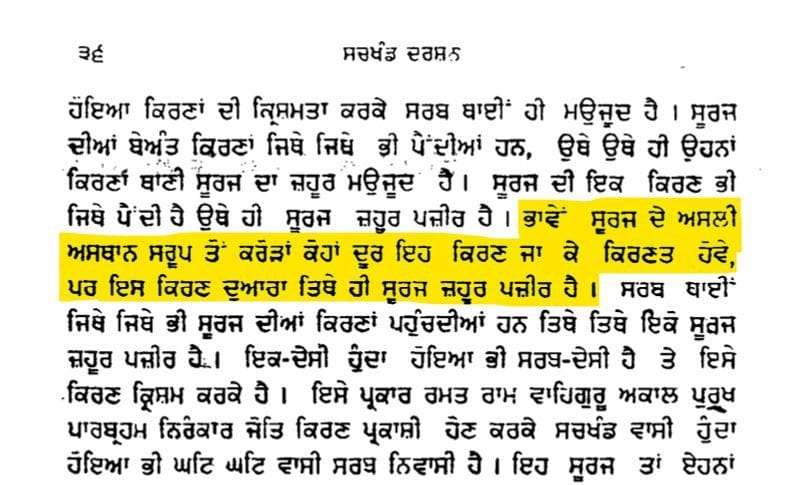
In one of his books, Bhai Sahib writes:
ਭਾਵੇਂ ਸੂਰਜ ਦੇ ਅਸਲੀ ਅਸਥਾਨ ਸਰੂਪ ਤੋਂ ਕਰੋੜਾਂ ਕੋਹਾਂ ਦੂਰ ਇਹ ਕਿਰਣ ਜਾ ਕੇ ਕਿਰਣਤ ਹੋਵੇ, ਪਰ ਇਸ ਕਿਰਣ ਦੁਆਰਾ ਤਿਥੇ ਹੀ ਸੂਰਜ ਜ਼ਹੂਰ ਪਜ਼ੀਰ ਹੈ ।
Translation: Even if this ray travels millions of miles from the original source of the sun and becomes a ray, yet through this ray, the sun is manifest there.
Bhai Sahib not only reveals the spiritual wisdom of how the sun’s light reaches us but also aligns with scientific understanding, confirming that the sun is indeed millions of miles away from the Earth, and not just a few thousand miles as claimed by Flat Earthers.
Some people quote the following line from Bhai Gurdas Ji’s vaaran to claim that Bhangarnath literally plucked stars from the sky:
ਤਾਰੇ ਤੋੜੇ ਭੰਗਰਿਨਾਥ ਇਕ ਚੜਿ ਮਿਰਗਾਨੀ ਜਲੁ ਤਰਿ ਜਾਈ।
ਸਿਧਾ ਅਗਨਿ ਨ ਬੁਝੈ ਬੁਝਾਈ ॥੪੧॥
However, this is a misunderstanding of poetic language.
The line describes how, during the discussion at Achal Batala with Guru Nanak Dev Ji, the Siddhas began displaying miraculous powers when they were losing the debate. Bhai Gurdas Ji explains that Bhangarnath showed a spectacle as if he had plucked stars from the sky, and another Siddha floated on water sitting upon a deer skin. Yet despite these displays, their inner fire of ego and jealousy did not extinguish.
The key point is this: Bhai Gurdas Ji is describing a boastful display, not affirming that someone literally reached into outer space and removed physical stars.
Poetic and Hyperbolic Language
In everyday language, people often use exaggeration to express something dramatic or emotional. For example, in Hindi romantic expression, someone might say: “Chand taare tod lau.”
Literal meaning: “I will pluck the moon and stars for you.”
Idiomatic meaning: “I will do the impossible for you” or “I will bring you all the happiness in the world.”
No one understands this as physically tearing astronomical objects from space. It is a poetic way of expressing intensity.
In the same way, poetic expressions in classical literature, including the Vaars of Bhai Gurdas Ji, must be understood in their literary and spiritual context.
Just as Gurbani uses deep metaphor to express spiritual truths, historical Sikh writings also employ poetic language. The focus of the verse is not astronomy. It is the spiritual lesson that ego-driven miracles are worthless before the truth spoken by Guru Nanak Dev Ji.
Bhai Gurdas Ji says, ਸੂਰਜ ਬਾਰਹ ਮਾਹ ਵਿਚਿ ਸਸੀਅਰੁ ਇਕਤੁ ਮਾਹਿ ਫਿਰਾਇਆ, which can be translated as: “The Sun completes its cycle in twelve months, and the Moon completes its cycle in one month.”
This verse goes against flat earth theory because flat earthers claim that the Sun moves in a circular path above the flat Earth every 24 hours, without any structured 12-month orbital period. The Sun’s motion in their model is purely daily, and seasons are explained only as changes in the size of its circular path.
Even if someone translates Bhai Gurdas Ji’s line as “The Sun revolves around the Earth in twelve months and the Moon in one month,” it still does not fit flat earth ideas, because flat earth theory asserts a daily solar orbit, not a yearly one. In both cases, the verse describes fixed, predictable celestial cycles that contradict the flat earth model.
There is another verse by Bhai Gurdas Ji that clearly shows that the sun and moon are moving bodies in space, and a solar eclipse happens when the moon comes between the sun and the Earth. ਚੰਦ੍ਰਮਾ ਅਛਤ ਰਵਿ ਰਾਹੁ ਨ ਸਕਤ ਗ੍ਰਸਿ ਦ੍ਰਿਸਟਿ ਅਗੋਚਰ ਹੁਇ ਸੂਰਜ ਗ੍ਰਹਨ ਹੈ ॥, which can be translated as: “With the moon present, Rahu cannot devour the sun; a solar eclipse occurs, which is beyond ordinary perception.”
This directly goes against the flat Earth idea because a flat Earth model cannot explain how the sun, moon, and Earth align to create an eclipse. On a flat Earth, the mechanics of shadows and distances simply don’t work the way we actually observe in solar eclipses.
Flat Earthers often don’t accept that an eclipse happens because the moon hides the sun. They claim some magical or mysterious reason instead of the real, observable alignment. Bhai Gurdas Ji’s verse points out exactly the opposite: it’s a real, physical phenomenon, not something caused by Rahu or myths, and it only makes sense if the Earth is round and moving in space.
Flat Earthers say the Earth must be flat because we cannot see or feel it spinning. They think if it were moving, we would clearly notice it. But there is strong and clear evidence that the Earth is a globe:
Sunsets: Watch the Sun as it sets. It does not just shrink and fade like it would on a flat surface. It sinks below the horizon, disappearing from the bottom up. If the Earth were flat, the Sun would remain visible and simply get smaller. But it vanishes because the Earth is curved. Anyone can observe this with their own eyes. No special equipment is needed.
Ships: As a ship sails away, it does not just shrink and stay in view. The bottom disappears first, followed by the top, as the Earth’s curve gradually hides it. On a flat Earth, you would see the entire ship, just smaller, until it is too far to spot.
Stars shift as you travel: Head north, and the Polaris rises higher in the sky. Travel south, such as to Australia, and it disappears entirely, replaced by a completely different set of stars. Polaris appears almost fixed above the North Pole, so only observers in the Northern Hemisphere can see it. Its position shows true north, which is why it is called the North Star. On a flat Earth, everyone would see the same stars everywhere. In reality, your location on the globe determines which stars are visible.
Earth’s spin can be tested: Some claim you would feel the Earth spinning if it were a sphere. But you do not feel it because the spin is smooth and steady, happening once every 24 hours with no sudden jerks. Want proof of the spin? Hang a weight on a string, let it swing, and watch how it shifts over time. This is called a Foucault pendulum. Flat Earthers fail to grasp this simple experiment.
Shadows: Place a pole in the ground and observe its shadow at noon. Then ask a friend in another city to do the same at the same time. The shadows will be different. One will be longer and the other shorter because the Sun’s rays hit the Earth’s curve at different angles. On a flat Earth, shadows would be the same everywhere.
Flat Earthers say “trust your senses,” but simple things like sunsets, ships on the horizon, moving stars, pendulums, and shadows all show the Earth is a spinning globe. The evidence is clear and easy to check, yet many still choose to ignore it.
We don’t feel the rotation of the Earth because it’s happening at a constant speed and in a smooth, steady motion. Our bodies only sense changes in speed or direction, not constant movement.
Think of it like sitting in an airplane that’s cruising at a high altitude. Once the plane reaches a steady speed and altitude, you don’t feel like you’re moving fast, even though you might be flying at over 800 kilometers per hour. You can walk around, eat your food, and feel completely calm. That’s because the motion is smooth and constant, so your body doesn’t detect it.
The same thing happens with the Earth. It rotates steadily, without sudden acceleration or bumps, so we don’t feel it. Plus, everything around us, the air, the oceans, and we ourselves, are all rotating together with the Earth at the same speed. There’s no difference in motion for us to sense.
So it’s not that the Earth isn’t rotating, it’s just that the motion is so smooth and consistent, our bodies don’t notice it.
1. The Earth Does Not Spin
The Earth is enormous, and it rotates very slowly, completing one full turn every 24 hours. Because of its size and steady motion, we do not feel this rotation. A simple way to understand this is to imagine sitting on a smoothly moving train. If you toss a ball straight up, it does not land behind you; it falls right back into your hand. That happens because you and the ball are already moving at the same speed as the train.
In the same way, everything around us moves together with Earth, including air, oceans, and atmosphere. We are all traveling at the same constant speed as the planet’s rotation. That is why we do not feel the Earth spinning, even though it is constantly rotating.
2. The Earth Does Not Revolve Around the Sun
The Earth travels around the Sun once every year. This motion, combined with Earth’s axial tilt, is what causes the seasons. If Earth did not orbit the Sun, seasons would never change, and day length would remain the same throughout the year in every location.
However, in Canada, winter days are very short and summer days are very long. At the same time, Australia experiences the opposite seasons. This only makes sense if Earth is tilted and moving around the Sun. If the Sun were simply circling above a flat surface, opposite hemispheres would not experience opposite seasons at the same time.
3. The Moon Does Not Reflect Sunlight
When you observe the Moon through binoculars, you can see shadows inside its craters. During a full moon, the entire visible face appears bright. During a half moon, only part is illuminated. During a new moon, it becomes nearly invisible.
If the Moon produced its own light, it would always appear fully lit. During a solar eclipse, the Moon blocks the Sun’s light and appears dark. If it generated its own light, it would not go dark. You can test this with a simple example: place a rough rock in a dark room and shine a flashlight on it from the side. You will see shadows in its cracks and valleys. But if the rock itself were glowing, those shadows would disappear. The shadows on the Moon show that its light comes from the Sun.
4. The Sun and Moon Are Local and Near
If the Sun were very close to Earth, clouds would sometimes pass behind it. Instead, clouds always pass below it. When you travel north or south, the Sun’s angle in the sky changes significantly. That only makes sense if it is extremely far away and very large.
Additionally, when traveling thousands of kilometers, the Sun does not appear larger or smaller. If it were close, like a streetlamp, it would noticeably change in size as you moved closer or farther away. It does not, which shows it is very distant.
5. The Sun and Moon Are Small
If the Sun were small and nearby, it would gradually shrink in appearance as it moved away from you across the sky. However, when you watch a sunset, the Sun does not steadily shrink. It maintains nearly the same apparent size until it disappears below the horizon.
A simple comparison helps: hold a small coin close to your eye and it can block your view of a distant building. That does not mean the coin is larger than the building; it only appears that way because it is closer. The Sun and Moon appear small because they are extremely far away, not because they are physically small.
6. The Earth Is Bigger Than the Sun
The Sun is enormous, so large that more than one million Earths could fit inside it. If the Sun were smaller than Earth, it could not illuminate the entire planet or provide the gravitational pull necessary to hold planets in orbit.
All planets in our solar system orbit the Sun, not Earth. That fact alone demonstrates that the Sun is far more massive and much larger than our planet.
7. Moonlight Is Cold
Moonlight feels cool because it is only weak, reflected sunlight. The Sun gives direct, powerful energy, while the Moon reflects only a small portion of that light, and even that spreads out over a vast distance before reaching Earth. Because of this, moonlight carries very little heat. Thermometers show that moonlight itself does not produce cold. It feels cooler simply because nighttime temperatures drop after the Sun has set, not because the Moon is giving off “cold light.”
8. Humans Cannot Travel to the Moon
Every year, thousands of meteors enter Earth’s atmosphere and burn up. If there were a solid barrier above us, those rocks would strike it instead of passing through.
Today, multiple space agencies launch rockets into space, including ISRO, SpaceX, and Roscosmos. Satellites orbit Earth daily, making GPS navigation, weather forecasting, live television, and internet communications possible.
During the Cold War, the Soviet Union was a major rival of the United States. If the Moon landing had been fake, it would have had strong motivation and capability to expose it. Instead, it acknowledged the mission. Additionally, astronauts from many countries currently live and work aboard the International Space Station, which continuously orbits Earth.
9. The Sky Is a Solid Structure
If the sky were a solid dome, meteors could not enter Earth’s atmosphere, satellites could not orbit, and space stations could not exist. Yet satellites provide GPS, communications, and live broadcasts every day.
The sky is not a hard ceiling; it is Earth’s atmosphere. Beyond the atmosphere lies space, a vast region through which spacecraft travel and in which satellites and space stations orbit our planet.
10. Sun Produces Yellow Light
The Sun does not produce only yellow light; it produces white light, which is a mix of all colors. If it were truly yellow, the sky would not be blue, rainbows would not show all their colors, and many objects would appear wrong. Imagine your room light bulb: a white LED shows all colors clearly, while a yellow bulb makes everything look yellowish and hides some colors. If the Sun were truly yellow, Earth would look like it is always under a yellow bulb.

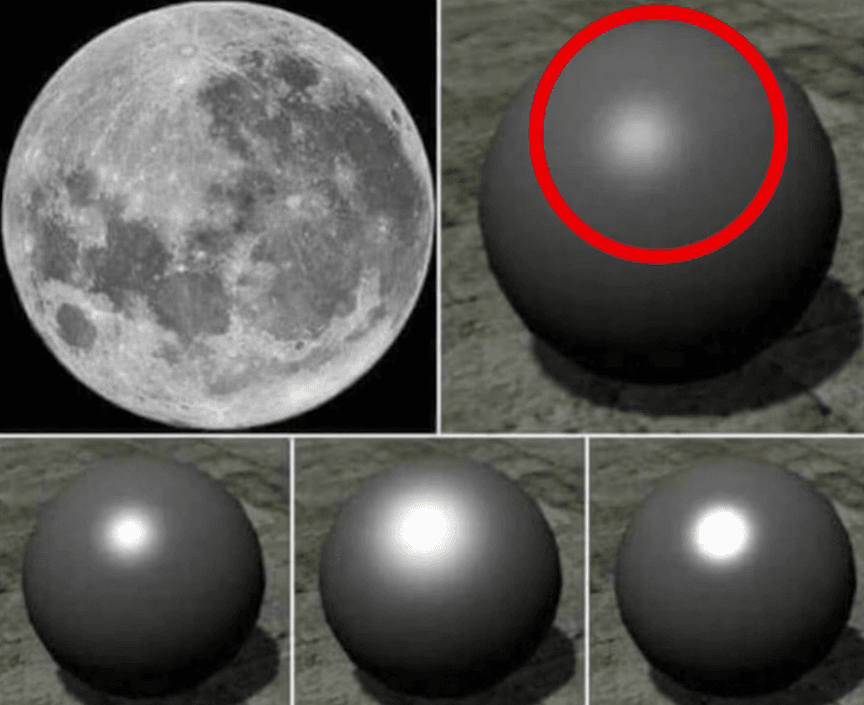
Some flat earthers use this image to claim that if the Moon reflected sunlight, it should show a bright hotspot like a polished sphere. This argument is misleading because the Moon has a rough, dusty surface covered in regolith, which reflects sunlight diffusely rather than specularly. A shiny sphere produces a bright hotspot because it reflects light in a concentrated direction, but a rough surface scatters light in many directions, creating a soft and even glow instead of a glare. Since the Sun is extremely far away, its light reaches the Moon in nearly parallel rays, producing uniform illumination consistent with what we observe. Therefore, the absence of a sharp hotspot on the Moon is exactly what physics predicts, not evidence against reflected sunlight.
Some flat earthers claim that objects kept under moonlight are colder than objects in the shadow, and they argue that this means the Moon produces “cold light.” Objects kept under moonlight may sometimes feel slightly colder than objects in the shadow, but this is not because the Moon produces “cold light.” At night, objects lose heat by radiating it toward the open sky, a process called radiative cooling. Objects exposed under the open sky (even under moonlight) can lose more heat than objects partially shielded in a shadow, which may stay a tiny bit warmer. The temperature difference comes from natural heat loss to the night sky, not from any cooling effect of moonlight itself.
In 2024, a group of staunch flat Earth YouTubers traveled to Antarctica for “The Final Experiment,” hoping to disprove the globe model. Instead, they witnessed the 24-hour sun a phenomenon impossible under flat Earth theories. They publicly admitted they were wrong and left the flat Earth community.
The best part? They filmed it all, so the whole internet got to watch them accidentally prove that the Earth is round.
We’re here to help. Whether you’re curious about Gurbani, Sikh history, Rehat Maryada or anything else, ask freely. Your questions will be received with respect and answered with care.
Ask Question