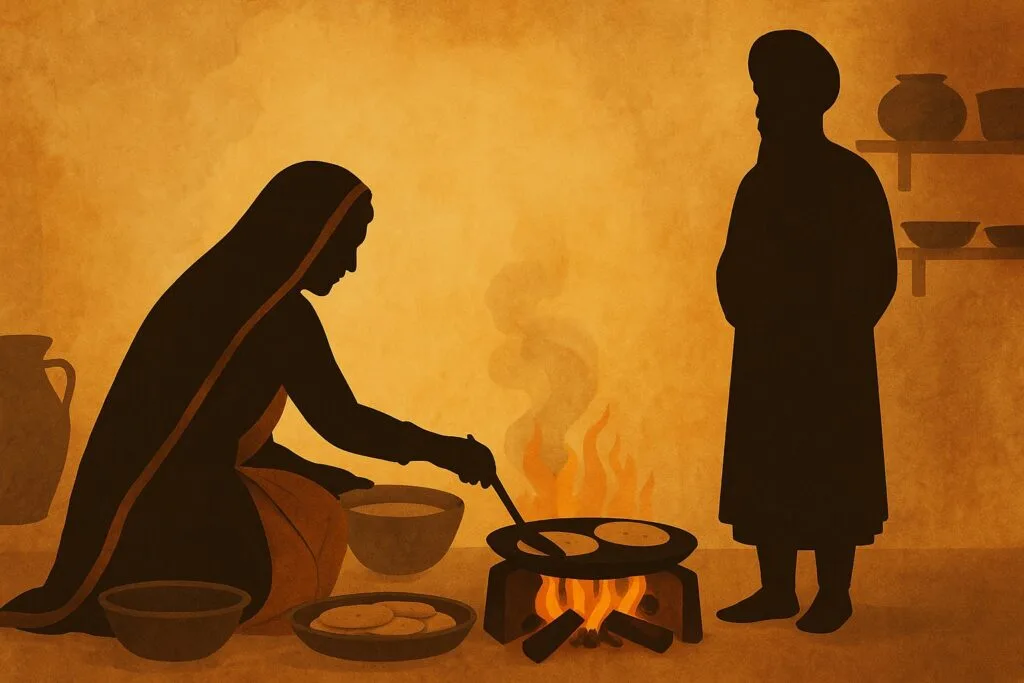
Did Guru Angad Dev Ji’s langar include meat? If that were true, why isn’t meat prepared in Sikh langars today? Did the Sikh code of conduct (Sikh maryada) change at some point? But if this story is false, then who started it in the first place? What was the intention behind this tale?
Today, some historians claim that Guru Angad Dev Ji gave meat to Guru Amar Das Ji to eat. They even cite a 250-year-old granth in support of this claim. But who wrote this granth? Who first recorded this story, and why?
Is this sakhi (historical anecdote) true? Were meat dishes ever actually prepared or served in the langar during the times of the Gurus?
In this article, we will reflect on the well-known sakhi (historical story) that is often cited in support of eating meat. According to this sakhi, meat was prepared in the langar of Guru Angad Dev Ji and was served to everyone. Before examining this story in detail, it is important to understand how it is written.
The sakhi begins with Guru Amar Das Ji visiting Guru Angad Dev Ji for the first time. He bows at the Guru’s feet and seeks the gift of Sikh wisdom (Sikhi di daat). After this, he joins the entire sangat (congregation) for the langar meal.
The storyteller writes that during this langar, they noticed meat being served. Baba Amar Das Ji, coming from a Vaishnavite background, considered meat impure and felt troubled. He wondered what he should do: should he eat the meat and compromise his earlier maryada (disciplinary code), or refuse and risk displeasing the Guru?
Suddenly, a thought came to his mind: if Guru Angad Dev Ji was truly a Guru, he would naturally protect him and prevent him from eating meat. According to the sakhi, Guru Angad Dev Ji sensed Baba Amar Das Ji’s inner feelings and instructed the Sikhs serving the langar not to offer meat to the new visitor. Instead, only pure vegetarian food was given to him.
Hearing this, Baba Amar Das Ji was very pleased, realizing that Guru Angad Dev Ji had preserved his dignity and ensured that his Vaishnavite maryada was not violated.
The next day, Baba Amar Das Ji went to the langar again. This time, he had decided that he would partake in whatever was served without hesitation or doubt. On this occasion, Guru Angad Dev Ji offered meat to Baba Amar Das Ji, who ate it happily.
This completes the full sakhi, which many well-meaning writers and Sikhs have used to argue that eating meat is acceptable in Sikhi and that meat was served in the Guru’s langar.
We will now analyze this sakhi in four parts, discussing each in detail. First, we will consider whether Guru Amar Das Ji was testing Guru Angad Dev Ji. Second, we will examine whether meat was ever actually served in the langar. Third, we will look at the other arguments presented in support of this sakhi and assess how valid they are. Fourth, we will explore the actual origin of this sakhi, who wrote it, when, and why, and how it entered Sikh history. We will also discuss an earlier, more authentic granth (scripture) that predates this one and provides details about Guru Angad Dev Ji’s first meeting with Baba Amar Das Ji.
So, let us consider whether Baba Amar Das Ji was testing Guru Angad Dev Ji. We believe that Baba Amar Das Ji did not test Guru Angad Dev Ji. There are three reasons for this.
First, Baba Amar Das Ji had spent his entire life visiting pilgrimage sites, bathing in sacred waters, and performing Vedic rituals, yet he did not find inner spiritual fulfillment. It was this need that brought him to the Guru’s door. When Baba Amar Das Ji came to see Guru Angad Dev Ji, he had already made up his mind. He had decided that he would seek the Guru’s guidance and dedicate his life according to the Guru’s instructions.
This becomes clear from their first meeting. When he met the Guru and said, “O true Paatshah Ji, I have not come as a relative but as a humble seeker. Grant me the gift of Sikhi and make me your Sikh,” it shows that he had already surrendered to the Guru. Therefore, if meat had been served in the langar, he would have happily partaken of it right away. Saying that Baba Amar Das Ji was testing Guru Angad Dev Ji does not make sense.
The second reason is that even after meeting the Guru, if Baba Amar Das Ji had remained attached to his old Vaishnavite beliefs, he would not have eaten the vegetarian food in the langar. According to Vaishnavite principles, any food prepared where meat has been cooked, even if the dish itself is vegetarian, is considered impure.
For this reason, Baba Amar Das Ji would have refused to eat even vegetarian food if he had been following strict Vaishnavite principles. If he was not going to eat at all, then there was no need for any kind of test.
The third reason is that in the Guru’s langar, there was no distinction of caste or social status. Everyone sat together in the same row (pangat) and ate the langar collectively. If Baba Amar Das Ji had still held Vaishnavite beliefs, he would not have eaten food prepared by someone of a lower caste, even if it was vegetarian. According to Vaishnavite thinking, food prepared by someone of a lower caste is considered impure, no matter what.
For these three reasons, it is clear that Baba Amar Das Ji was not testing Guru Angad Dev Ji.
Now, let us for a moment assume that he was testing the Guru and that the Guru offered him vegetarian food instead of meat. The question then arises: if the test was complete, why did Baba Amar Das Ji not immediately decide to eat the meat, or go to the Guru and seek forgiveness? After all, he had come to become a Sikh. Why did he not accept the Guru right away? Even if we accept the story of this test as true, the test would have been complete the moment Baba Amar Das Ji was satisfied. So why was there a delay of one day, as the sakhi mentions? The storyteller gives no answer to this.
The truth is that after meeting Guru Angad Dev Ji, Baba Amar Das Ji was deeply influenced by the Guru’s spiritual presence. He humbly bowed his head and became a true Sikh.
In Sikh history, anyone who came to see the Guru with sincere devotion could not remain unaffected by the Guru’s presence. From the very first meeting, they abandoned their previous ways and rituals, and their lives changed completely. People like Sajjan Thagg, Kauda Rakshas, Bhoomia Chor, Bhai Manjh, Mansukh, and many others experienced an immediate transformation in the Guru’s presence. In their first encounter, they left their old lives behind and embraced the path of Gurmat, and their lives were forever changed.
Nowhere in history does it appear that any Sikh, especially those who later received GurGaddi (the Guru’s succession), ever tested the Guru in their first meeting. Similarly, the meeting between Guru Angad Dev Ji and Baba Amar Das Ji could not have been any different. Their first encounter with the Guru became an ideal example and a role model for all humanity. It teaches us that if one humbly bows their head and approaches the Guru with sincere devotion, the Guru’s presence becomes transformative. Therefore, the idea of testing the Guru is false.
Now, let us consider the next point: whether meat was ever served in the langar. First, we need to understand why the tradition of langar was started. During the time of the Gurus, society was divided by caste and social status. This discrimination extended even to food and eating practices.
People of higher castes considered food prepared by someone of a lower caste to be impure. In fact, even the shadow of a lower-caste person was regarded as impure, and if it fell on their food, they would discard it without eating.
Guru Sahib established the langar precisely to end this discrimination and create a sense of equality among all human beings. When Guru Sahib set the rules of the pangat, eating together in rows, everyone, whether king or beggar, sat together and ate the same food. This practice removed divisions and distinctions based on caste.
Langar was not just about filling the stomach. It was a symbol of following the Guru’s instructions. To refuse food in the langar would be to oppose the Guru’s teachings. Therefore, it cannot be assumed that Baba Amar Das Ji hesitated to eat meat. If meat had been present, he would have eaten it immediately. Since he did not, it must be concluded that no meat was ever served in the langar.
Now consider the next point. Let us assume that meat was served in the Guru’s langar. The question then arises: by what method was that meat prepared? How was the animal slaughtered?
Even before the time of Guru Nanak Dev Ji, Muslim rule had already been established in Punjab, and Sharia law was in force under that rule. According to Sharia law, only Muslim butchers were allowed to slaughter animals using the Islamic method, meaning halal. For non-Muslims to kill an animal by any other method was illegal.
So those who claim that meat was served in the Guru’s langar must explain which method of slaughter was used. If they say it was the Islamic method, then this is prohibited in Sikhi, and such meat could not be eaten by Hindus or Sikhs. If they say it was jhatka, then Muslims could not eat that meat.
The langar served food that was acceptable to everyone. Sikhs, Hindus, Muslims, and anyone who came to the Guru’s door could all eat the same food together. Because of this, there was no room for meat in the langar.
Those who support this sakhi must also answer another question. Why was no action ever taken by the Mughal authorities against the Guru? If animals were being slaughtered illegally in the Guru’s langar, jealous Muslims and Hindus would have immediately filed complaints, accusing the Guru of violating the law. Yet no such action was ever taken.
History records that the responsibility for Guru Angad Dev Ji’s langar was with Bhai Jodh and Mata Khivi Ji. However, there is no mention anywhere that animals were ever killed in the langar. There is also no record that any Sikh brought a living creature or animal as an offering to be slaughtered and used in the langar.
Most importantly, there is no evidence that any butcher was employed in the Guru’s langar. The Guru’s langar was a kitchen of amrit ras (divine nectar), not a slaughterhouse where food was contaminated with blood. According to Gurbani and the writings of Bhai Gurdas Ji, no Sikh could ever become a butcher.
Therefore, the Guru did not employ any butcher, no Sikh killed any living being, and no meat was ever cooked in the langar. Any claim that meat was served in the langar is completely unfounded.
Now the question arises: what was the langar like in the court of Guru Angad Dev Ji? Ramkali Ki Vaar clearly states that there were two langars running in Guru Angad Dev Ji’s sangat (congregation). There were two types of langar in Guru Angad Dev Ji’s time, one spiritual and the other physical.
The first langar was of the Shabad (Word), experienced through simran (meditation) and kirtan (devotional singing), which brings peace and focus to the mind. It nourishes the soul and protects a person from vices. Gurbani states, “ਲੰਗਰੁ ਚਲੈ ਗੁਰ ਸਬਦਿ ਹਰਿ ਤੋਟਿ ਨ ਆਵੀ ਖਟੀਐ” meaning Guru Angad Dev Ji was distributing the gift of Naam (divine Name) given by Akal Purakh (the Timeless One). He himself partook in it and shared it generously with others.
The second langar was the food langar, which nourished the body. Gurbani states, “ਲੰਗਰਿ ਦਉਲਤਿ ਵੰਡੀਐ ਰਸੁ ਅੰਮ੍ਰਿਤੁ ਖੀਰਿ ਘਿਆਲੀ ” meaning in the satsang form of Guru Angad Dev Ji’s langar, the gift of Naam, which gives spiritual life, was distributed, and through Mata Khivi Ji’s seva, everyone was served kheer to sustain the body.
From this, it is clear that during the Guru’s time, the langar only provided food filled with Naam and Bani. There is no mention in Gurbani of serving meat. All references point to vegetarian food, because meat is considered tamasic, and consuming it generates vices in the mind.
Gurbani states
ਕਬੀਰ ਭਾਂਗ ਮਾਛੁਲੀ ਸੁਰਾ ਪਾਨਿ ਜੋ ਜੋ ਪ੍ਰਾਨੀ ਖਾਂਹਿ ||
ਤੀਰਥ ਬਰਤ ਨੇਮ ਕੀਏ ਤੇ ਸਭੈ ਰਸਾਤਲਿ ਜਾਂਹਿ ||੨੩੩||
People who eat ਭਾਂਗ which here means chicken, eat fish, and drink alcohol, their pilgrimage, fasting, and other religious actions go in vain. If the meaning of ‘ਭਾਂਗ ‘ is taken to be ‘marijuana’, even then the mention of fish has come in this verse. This is such a clear command that indulging in these things leads to the destruction of good deeds, and the person ends up in hell.
From this, it is clear that alcohol and meat generate vices and are therefore prohibited in Sikhi. For the same reason, meat was never served in the langar.
Now, let us consider the arguments that are made in favor of this sakhi. The first argument given is that after becoming Guru, Guru Amar Das Ji made changes in the langar and prohibited the use of meat.
The claim that Guru Amar Das Ji changed the langar after becoming Guru because he was from a Vaishnav background does not hold up logically or historically. Baba Amar Das Ji served Guru Angad Dev Ji for 12 years and carried out the Guru’s orders faithfully. If meat had been cooked in the langar for those 12 years, it would mean that Baba Amar Das Ji also ate meat. To then claim that he suddenly became a strict Vaishnav after becoming Guru is both insulting to his character and a foolish assertion.
Guru Angad Dev Ji had chosen Baba Amar Das Ji as his successor because he was steadfast and lived according to Gurmat (the Guru’s teachings). If Baba Amar Das Ji had not been firm and obedient to the Guru’s instructions, he could never have become Guru. In fact, Guru Amar Das Ji further strengthened the langar tradition. He made it mandatory for anyone coming to see the Guru to first partake in the langar. This step reinforced the importance of the langar rather than reviving any Vaishnav practices.
Another important point is that in Sikhi, all the Gurus are one light, one guidance. From Guru Nanak Dev Ji to Guru Gobind Singh Ji, their teachings and practices follow the same spiritual path. No Guru ever rejected or changed the traditions of their predecessors. Therefore, it cannot be believed that Guru Amar Das Ji changed or abandoned the langar tradition of Guru Angad Dev Ji and returned to Vaishnav ways. Doing so would imply that all the Gurus were inconsistent and their teachings contradictory, which is impossible because it contradicts Gurbani.
Moreover, Guru Amar Das Ji, in his Bani, rejected caste distinctions, idol worship, and Vedic rituals. If he had returned to Vaishnav practices, why would he have rejected these in his writings? Therefore, the claim that Guru Angad Dev Ji served meat in the langar and that Guru Amar Das Ji later prohibited it is entirely false.
Guru Amar Das Patshah Ji carried forward the true practice and tradition established by Guru Nanak Dev Patshah Ji with integrity and truth, without making any changes.
Another argument some people give is that meat was removed from the langar because not everyone eats meat, and it would be wrong to force anyone to eat it. But if this were the reason, then why did the first two Gurus not do the same? This argument would also suggest that all the Gurus had different teachings and approaches, which is not true.
The langar of the Guru is meant to teach the principles of Sikhi. The teachings of Sikhi are never compromised to satisfy followers of other religions. If the Guru’s tradition cannot be followed in the langar, then where else can it be? Therefore, only food that is permitted according to Gurmat (the Guru’s teachings) was prepared in the langar, and everyone had to partake in it. Any food that was not permitted was never prepared.
Even having Hindus and Muslims sit together in the langar was contrary to the practices of their religions. Gurbani explicitly prohibits rituals like janeu (sacred thread), idol worship, pilgrimage, fasting, and other customs. The langar challenged these practices, showing the universality of Gurmat principles.
Therefore, Guru Sahib could never compromise the discipline of the langar. The truth is that meat was never cooked in the langar and was always kept out because it is not permitted according to Gurmat. Meat has no place in the langar and is not acceptable in the principles of Sikhi.
So now let us finally consider the origin of this saakhi (story) and trace where it began. Then we will share with you an authentic historical source about the first meeting of the Gurus, which reveals the actual truth.
This saakhi is found in the Mahima Prakashak granth, in poetic form. The author of this granth is Sarup Das Bhalla, who completed it in 1776. Sarup Das Bhalla belonged to the lineage of Guru Amar Das Patshah Ji. Later, copies of this saakhi were made by other writers and historians because they believed it had been written by the family of Guru Amar Das Ji, so they assumed it must be true.
However, any saakhi, no matter who wrote it, can only be considered authentic if it aligns with Gurbani and historical facts. History shows that some members of the Guru family, such as Baba Shri Chand Ji, Prithi Chand, Meharban, Dhir Mal, and Ram Rai, acted against the principles of Gurmat. Therefore, just claiming that a saakhi was written by the Guru’s family does not automatically make it true. This assumption is completely wrong and potentially very misleading.
Baba Sarup Das Ji spent a long time in Banaras and only came to Punjab after Sikhs gained power there. Because of this, he wrote his granth mostly while living outside Punjab. It is possible that he was not fully aware of all Sikh principles and may have been mistaken. Either it was his own error, or later interpolations in the text introduced inaccuracies.
Only one thing can be true here. Principal Satbir Singh and Bhai Veer Singh have stated that through the text of this granth, attempts were made to mislead Sikhs by altering the content. In the same granth, while writing the history of Guru Har Rai Patshah Ji in Mahima Prakash, Baba Sarup Das Ji mentions the marayada of langar. He writes that the proper practice is that no meat or similar items should ever be in the langar and that by the Guru’s order, no one should eat meat.
From this, it is clear that only one thing in this granth can be correct: either meat was cooked in the langar, or it was not. A writer would not intentionally write something contradictory to the truth. Therefore, the saakhi about Guru Angad Dev Patshah Ji has been distorted. We have already analyzed the claims about meat and proven that the story of meat being cooked in the langar is false. Baba Amar Das Ji did not test Guru Angad Dev Ji, nor was meat ever prepared in the langar from a principled perspective.
Finally, we can look at an authentic historical source that predates Mahima Prakash. This is the Bansavali Nama, written several years before Mahima Prakash by Kesar Singh Chibber. In it, he describes the first meeting of Baba Amar Das Ji and Guru Angad Dev Ji. There is no mention of any test or meat being used, not even a reference. The author Kesar Singh Chibber only records that Guru Sahib instructed Baba Amar Das Ji to bring water and grains to serve in the langar.
The text reads: “Bibi Amro Ji returned and brought Amar Das Ji with her. Guru Angad Ji was seen by Amar Das Ji, who placed his head respectfully at the Guru’s feet.”
This clearly shows that Baba Amar Das Ji met Guru Angad Dev Ji and immediately offered his head at the Guru’s feet in submission. On Bibi Amro Ji’s recommendation, Guru Angad Dev Patshah Ji assigned Baba Amar Das Ji the service of the langar. He was responsible for bringing wood, water, and other necessary supplies. Here, it is important to clarify that Baba Amar Das Ji was not asked to cook or prepare the langar food itself but to assist in the service by carrying wood and water.
From the very first day, he dedicated himself completely to serving Guru Sahib in the langar. The story about meat in Mahima Prakash was added later and contains inconsistencies because earlier sources, such as Bansavali Nama, which predates Mahima Prakash, do not mention meat or any test at all.
Therefore, the account in Mahima Prakash cannot be considered authentic. This concludes our discussion. Based on these historical considerations, it is clear that meat was never prepared in the langar because meat is not permitted in the Gurughar. What is not allowed in the Guru’s langar is also not allowed in a Sikh’s home kitchen, and for this reason, Sikhs are never permitted to consume meat.
We’re here to help. Whether you’re curious about Gurbani, Sikh history, Rehat Maryada or anything else, ask freely. Your questions will be received with respect and answered with care.
Ask Question