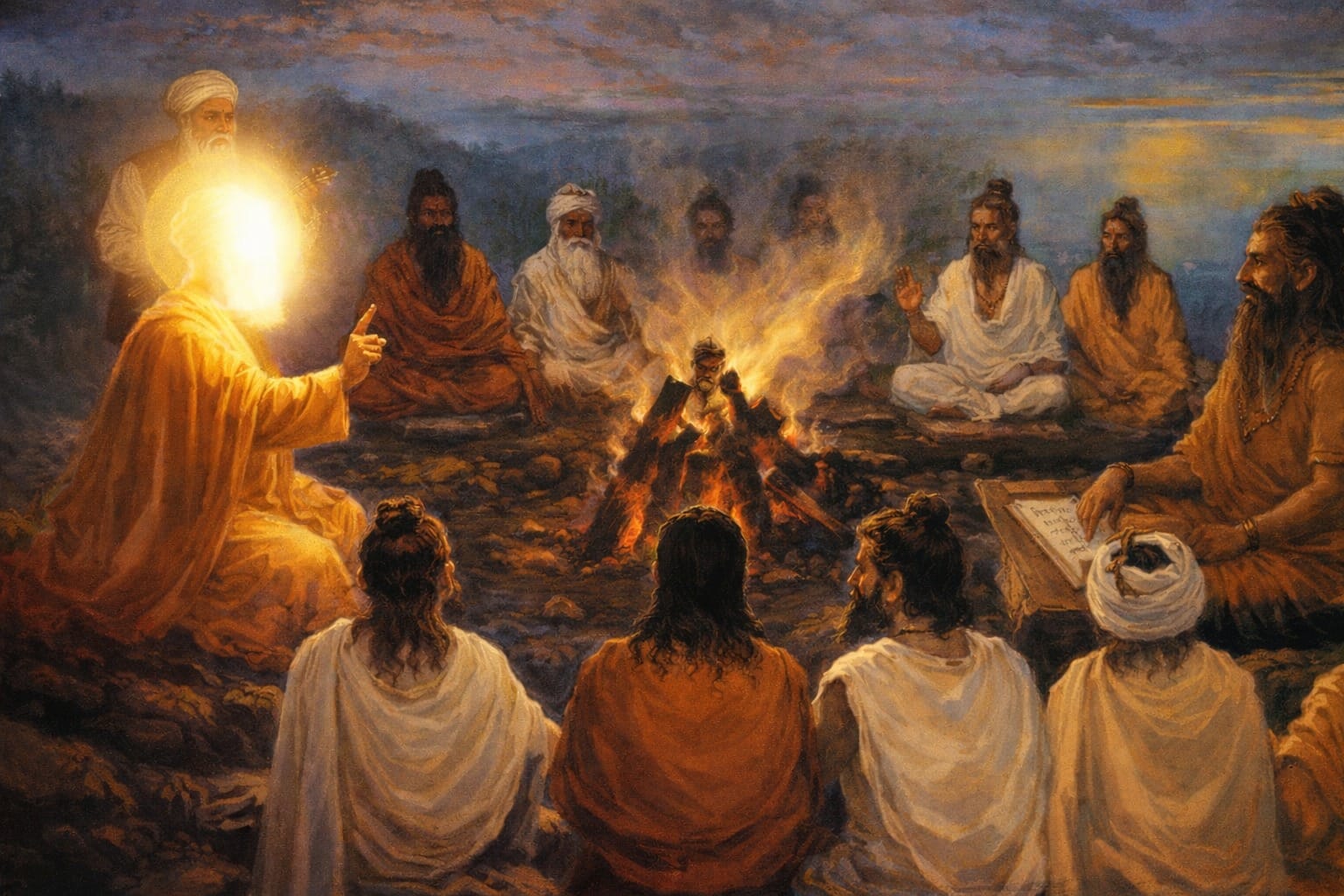
Sidh Gosht is one of the most mystical Baanis of Siri Guru Granth Sahib jee. The Sidhas, who are known to be 84, are accomplished Yogis, and at the time of Siri Guru Nanak Dev jee, they were probably the most spiritually elevated beings in existence. Siri Guru Nanak Dev jee, during his 4 Udaasis (Parchaar journeys) met many Sidhas and Naaths and many Shabad, especially in Raag Ramkali, are related to these meetings and debates. In Raag Ramkali, Guru Sahib has recorded Sidh Gosht which summarizes the main debate that took place between Guru Sahib and Sidhas.
Sidh Gosht is part of Punj Granthi that serious Seekers of Vaheguru do every day as part of their Nitnem. The flow of Sidh Gosht is just amazing. Such is the rhyming of this Baani and such beautiful words have been used that one can’t help say Vaah Vaah while doing Paath of it. No one in history asked such intelligent and spiritually elevated questions as Sidhas and no one provided such answers as Guru Sahib. There are many famous historical debates e.g. King Milinda and Nagarajan, Shankracharya and Mandan Mishra and they contain very intricate and complex ideas and thoughts but these debates are just great exercises of the mind. The questions are mind-related and so are the responses but Sidh Gosht is something else; it is not only complex and intricate but also very mystical and not to mention extremely soothing. Doing Paath of this Baani brings great Anand to the being.
From the starting of Sidh Gosht, it is apparent that Guru Sahib Himself went to meet the Sidh Mandli (group of Sidhas). This meeting is said to have taken place at Sumer Mountain in the Himalayas. Guru Sahib went to that place where Sidh Sabha (Majlis or sitting of Sidhas) was seated and declared his Jaikaaro (Namaskaar) to Sant Sabha (ਸਿਧ ਸਭਾ ਕਰਿ ਆਸਣਿ ਬੈਠੇ ਸੰਤ ਸਭਾ ਜੈਕਾਰੋ ॥) . Naam-Rattay (Naam imbued) Satguru jee reaching the Sidh Sabha said Jaikaaro, not to Sidh Sabha but to Sant Sabha (the Sabha or Sangat of Gurmukhs). The Sidhas were taken aback and then Guru Sahib said in response to their question as to whom Guru Sahib was bowing (doing Namaskaar), said that He was bowing to Him (Vaheguru) who is Sacha and beyond reach. Here it should be noted that originally Guru Sahib said Jaikaaro to Sant Sabha but then said that his Rehraas (Namaskaar) was to Vaheguru. This is because Jaikaaro to Sant Sabha is because Vaheguru resides in Sant Sabha; therefore Jaikaaro to Sant Sabha is actually Jaikaaro to Vaheguru. Here a great Gurmat principle is hidden – Sant Sabha is same as Vaheguru because Vaheguru is Pargat in Sant Sabha (Majlis or Sangat of Gurmukhs). So we should deal with Sant Sabha accordingly i.e. we should always stay humble in front of Sangat.
Then Guru Sahib went on to declare His dedication to Vaheguru jee by saying that he would cut his head off for Him – ਮਸਤਕੁ ਕਾਟਿ ਧਰੀ ਤਿਸੁ ਆਗੈ ਤਨੁ ਮਨੁ ਆਗੈ ਦੇਉ ॥
The First Questions that Started the Great Mystical Debate
ਕਵਨ ਤੁਮੇ, ਕਿਆ ਨਾਉ ਤੁਮਾਰਾ, ਕਉਨੁ ਮਾਰਗੁ, ਕਉਨੁ ਸੁਆਓ ॥
The Sidhas (Charpat) asked Guru Sahib 4 questions:
1. Who are you?
2. What is your name?
3. What is your Maarag i.e. Dharam i.e. religion?
4. What is your purpose?
Guru Sahib responded to the above 4 questions with one answer:
ਸਾਚੁ ਕਹਉ, ਅਰਦਾਸਿ ਹਮਾਰੀ, ਹਉ ਸੰਤ ਜਨਾ ਬਲਿ ਜਾਓ ॥
(I am telling the truth that my Ardaas is that may I go Balihaar (sacrifice) on the Sant Jan (Gurmukh devotees)).
The Sidhas were surprised at Guru Sahib’s response because naturally they had expected an answer telling them that Guru Sahib’s name was such and his religion was such and so on. They asked Guru Sahib to explain His answer more clearly and to respond to the questions asked. Guru Sahib answered that He had already answered all the questions asked. The Sidhas were not satisfied with the response because outwardly, it seemed as if Guru Sahib had not responded to their 4 questions but when Guru Sahib said that He had already responded to their questions, they asked Guru Sahib to explain it more clearly:
Guru Sahib in this Pankiti has said that He is sacrifice at Sant Jan i.e. Bhagats; so he meant to say that his existence, his name, his religion and his purpose is same as that of Sant Jan. Below is the summary of Guru Sahib’s answers to their questions:
1. Who are you?
I am what Sant Jan are.
2. What is your name?
My name is not important. I am what Sant Jans are.
3. What is your Maarag i.e. Dharam i.e. religion?
My Maarag is same as Sant Jan.
4. What is your purpose?
My purpose is same as Sant Jan.
When the Sidhas heard such lofty response to their questions, they were impressed and then they asked more questions.
After hearing the magnificent answer to the first 4 questions, the Sidhas (Charpat in particular) asked Guru Sahib 5 more questions as listed in the 2 Pankitis below (literally translated):
ਕਹ ਬੈਸਹੁ ਕਹ ਰਹੀਐ ਬਾਲੇ ਕਹ ਆਵਹੁ ਕਹ ਜਾਹੋ ॥
ਨਾਨਕੁ ਬੋਲੈ ਸੁਣਿ ਬੈਰਾਗੀ ਕਿਆ ਤੁਮਾਰਾ ਰਾਹੋ ॥੨॥
1. Where do you sit (ਕਹ ਬੈਸਹੁ)?
2. Where do you stay (ਕਹ ਰਹੀਐ ਬਾਲੇ )?
3. Where (or why) do you come (ਕਹ ਆਵਹੁ)?
4. Where (or why) do you go (ਕਹ ਜਾਹੋ)?
5. What is your path (ਕਿਆ ਤੁਮਾਰਾ ਰਾਹੋ)?
In response to these questions, Siri Guru jee responded as follows:
ਘਟਿ ਘਟਿ ਬੈਸਿ ਨਿਰੰਤਰਿ ਰਹੀਐ ਚਾਲਹਿ ਸਤਿਗੁਰ ਭਾਏ ॥
ਸਹਜੇ ਆਏ ਹੁਕਮਿ ਸਿਧਾਏ ਨਾਨਕ ਸਦਾ ਰਜਾਏ ॥
ਆਸਣਿ ਬੈਸਣਿ ਥਿਰੁ ਨਾਰਾਇਣੁ ਐਸੀ ਗੁਰਮਤਿ ਪਾਏ ॥
ਗੁਰਮੁਖਿ ਬੂਝੈ ਆਪੁ ਪਛਾਣੈ ਸਚੇ ਸਚਿ ਸਮਾਏ ॥੩॥
The summary of question and answers is as follows:
1 + 2 . Where do you sit (ਕਹ ਬੈਸਹੁ) and where do you stay (ਕਹ ਰਹੀਐ ਬਾਲੇ )?
Answer: ਘਟਿ ਘਟਿ ਬੈਸਿ ਨਿਰੰਤਰਿ ਰਹੀਐ – we sit in meditation continuously (ਨਿਰੰਤਰਿ) focussing on Vaheguru who resides in very body (ਘਟਿ ਘਟਿ ਬੈਸਿ).
3 + 4. Where (or why) do you come (ਕਹ ਆਵਹੁ) and where (or why) do you go?
Answer: ਸਹਜੇ ਆਏ ਹੁਕਮਿ ਸਿਧਾਏ – In Hukam of Vaheguru we came effortlessly and will leave effortlessly in His Hukam. Guru Sahib is basically saying that He did not come in this world to settle some Karmic debt but came as per Hukam of Vaheguru. Also, if their question pertained not to coming in this world but to Guru Sahib’s arrival at their place, then too the answer is appropriate that Guru Sahib came as per Hukam of Vaheguru and for no other purpose.
5. What is your path (ਕਿਆ ਤੁਮਾਰਾ ਰਾਹੋ)?
Answer: ਚਾਲਹਿ ਸਤਿਗੁਰ ਭਾਏ – Guru Sahib has stated the Gurmat Path which is to walk in the Hukam of Satguru. In other words, these 3 words explain whole of Gurmat. Gurmat is about walking in the will of Satguru jee i.e. obeying the Hukams of Satguru jee.
The last two Pankitis of this Pauri further explain the terse answers of Guru Sahib – One who sits on the Aasan stable and permanent is Narayan Vaheguru but this understanding comes through Gurmat. By becoming a Gurmukh one can realized the self and then Sach merges in Sach.
It should be noted that while asking this set of 5 questions, Charpat Jogi addressed Guru Sahib as ਬਾਲੇ which means a child or a boy. There were two reasons for addressing Guru Sahib like this – 1. The Sidhas were very old in age; some were hundreds of years old; 2. The Sidhas considered themselves to be the most elevated spiritual beings and at first look considered Guru Sahib to be inferior to them, thereby, addressing Guru Sahib as ਬਾਲੇ. Later on they realize their mistake and start addressing Guru Sahib as Swami.
Gurbani is Agam Agaadh Bodh.
Written By: Bhai Kulbir Singh Ji
We’re here to help. Whether you’re curious about Gurbani, Sikh history, Rehat Maryada or anything else, ask freely. Your questions will be received with respect and answered with care.
Ask Question