
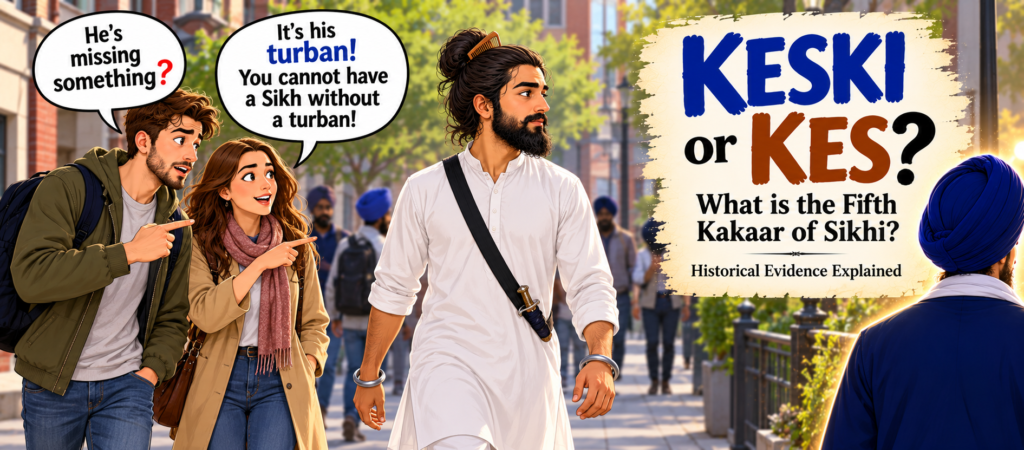
The Five Kakaars (Five Ks) are fundamental to the identity and discipline of the Khalsa, officially codified by Guru Gobind Singh Ji in 1699. Although most contemporary publications list them as Kes (uncut hair), Kangha (wooden comb), Kara (iron bracelet), Kirpan (sword) and Kachhera (traditional undergarment), historical Sikh literature provides substantial evidence for recognising Keski (the small Dastaar or turban), rather than Kes, as the fifth Kakaar. With greater access to historical sources, educational resources and the growing influence of social media, awareness of this evidence and the breadth of support for the Keski interpretation has become more visible. It is increasingly apparent that recognising Keski as a Kakaar is not confined to one particular Sikh organisation, Jatha or tradition, but is an understanding shared by Sikhs from different sections of the Panth, including Nihang Singhs associated with the Buddha Dal and Tarna Dal. The distinction is significant: Kes is the Guru’s sacred seal (Guru di Mohar), while Keski is the article of faith worn to honour, protect and preserve it. Recognising Keski as the fifth Kakaar therefore reinforces the Dastaar as an integral and inseparable part of the distinct Khalsa identity, equally applicable to Sikh men and women.
The distinction between Kes and Keski is fundamental to understanding the historical identity of the fifth Kakaar. Kes is the natural, unshorn hair, preserved in obedience to the Guru’s command. Its deliberate removal constitutes one of the four Bajjar Kurehats (cardinal transgressions) of the Khalsa discipline. The Keski, by contrast, is a small Dastaar (turban) worn to cover, protect and honour the hair.
The Five Kakaars are physical articles maintained as part of the daily discipline of an Amrit-dhaari Sikh. The Kara, Kirpan, Kachhera and Kangha are all externally worn or carried. The Keski likewise belongs to this category, whereas Kes is already a natural part of the body. Just as a Gatra (strap) is used to carry the Kirpan, and a Naala (drawstring) secures the Kachhera, the Keski serves as the appropriate covering for the sacred hair. The Kangha maintains the cleanliness of the Kes, while the Keski protects them from dust, dirt and unnecessary exposure. Both are articles associated with the care and preservation of the hair.
Recognising Keski as the fifth Kakaar therefore does not replace the obligation to maintain Kes. Rather, it distinguishes the sacred natural form, which must never be cut, from the article of faith worn to protect it. This distinction is consistent with the wider structure of Khalsa Rehat, in which the preservation of uncut hair is already independently protected by one of the most serious religious prohibitions.
Historical Sikh literature contains explicit references identifying Keski among the Five Kakaars. A verse attributed to the Rehatnama of Bhai Chaupa Singh Ji states:
ਕੱਛ, ਕੜਾ, ਕਿਰਪਾਨ, ਕੰਘਾ, ਕੇਸਕੀ।
ਇਹ ਪੰਜ ਕਕਾਰੀ ਰਹਿਤ ਧਾਰੇ ਸਿੱਖ ਸੋਇ।
Kachhera, Kara, Kirpan, Kangha and Keski — the Sikh observes the discipline of these Five Kakaars.
The importance of this passage lies in its direct enumeration of the five articles. Keski is not presented as an optional covering or merely an additional practice, but is explicitly named as one of the Kakaars. Although the dating and transmission of individual Rehatnama passages require careful historical examination, this wording provides direct evidence of the Keski interpretation within Sikh disciplinary literature.
Further evidence appears in Guru Kiaaⁿ Sakhiyaaⁿ, attributed to Bhai Sarup Singh Kaushish. In its account of the establishment of the Khalsa, Guru Gobind Singh Ji is described as bestowing a blue Keski, Kangha, Kirpan, Sarbloh Kara and white Kachhera, with the instruction that these articles should not be separated from the body (Guru Kiaaⁿ Sakhiyaaⁿ, p. 123):
ਤੁਮ੍ਹੇ ਪਾਹੁਲ ਦੇਨੇ ਪਹਿਲੇ – ਹਮੇਂ ਪਾਂਚ ਕਕਾਰ ਦੀਏ ਹੈਂ- ਇਨ੍ਹੇ ਭੁਲ ਕੇ ਬਦਨ ਸੇ ਜੁਦਾ ਨਹੀਂ ਕਰਨਾ । ਪ੍ਰਿਥਮੇ ਤੁਸਾਂ ਕੋ ਨੀਲੀ ਰਾਂਗ ਕੀ ਕੇਸਕੀ, ਕੰਘਾ, ਕ੍ਰਿਪਾਨ, ਸਰਬ ਲੋਹ ਕਾ ਕੜਾ ਤੇ ਸਫੈਦ ਰੰਗ ਕਾ ਕਛਿਹਰਾ ਦੀਆ ਹੈ। ਇਨ ਮੇਂ ਏਕ ਭੀ ਜੁਦਾ ਹੋਇ ਜਾਇ, ਗੁਰਦਵਾਰੇ ਜਾਇ ਸੰਗਤ ਮੇਂ ਬਖਸ਼ਾਨਾ, ਢਿਲ ਨਹੀਂ ਪਾਨਾ ।
“Before administering Amrit to you, I (Guru Gobind Singh Ji) bestowed upon you the Panj Kakkaars, which you must never separate from your body. First, you have been given the blue-coloured Keski, the Kangha, the Kirpan, the Kara made of Sarbloh (pure iron), and the white-coloured Kachhera. If any one of these becomes separated from you, then seek forgiveness from the Sangat in the Gurdwara without delay.”
(Guru Kiaan Sakhiyaan, p. 123)
The same work describes the initiation of Madho Das Bairagi as Banda Singh Bahadur, recording that Guru Sahib Ji bestowed the Kangha, Kirpan, Kara and Kachhera, and tied a small Dastaar, identified as a Keski, upon his head (p. 199):
ਸਤਿਗੁਰਾਂ ਅਪਨੇ ਦਸਤ ਮੁਬਾਰਕ ਸੇ ਕੰਘਾ, ਕਰਦ, ਕੜਾ ਤੇ ਕੱਛਾ ਪਹਿਨਾਏ ।
ਸਿਰ ਤੇ ਛੋਟੀ ਦਸਤਾਰ-ਕੇਸਕੀ ਸਜਾ ਬੈਰਾਗੀ ਸੇ ਸਿੰਘ ਰੂਪ ਮੈਂ ਲੈ ਆਦਾ ।…
“With His blessed hands, Satguru Ji adorned the Khalsa with a Kangha, Karad (Kirpan), Kara, and Kachhera. Upon the head, a small Dastaar — the Keski — was tied, and in this way the Bairaagi (Maadho Daas) was bestowed with the identity of a Singh.”
(Guru Kiaan Sakhiyaan, p. 199)
These accounts are particularly significant because they associate the Keski with the formal bestowal of the Khalsa identity, rather than merely with customary Sikh clothing. While the manuscript history and reliability of Guru Kiaaⁿ Sakhiyaaⁿ remain relevant considerations, the explicit inclusion of Keski cannot be overlooked when examining the historical development of the Five Kakaars.
A passage cited from the Bhatt Vahee: Pargana Thanesar (p. 168) similarly records that the Kangha, Kirpan, Keski, Kara and Kachhera were bestowed, while separately stating that all recipients were made Kes-dhari (maintainers of uncut hair).
ਕੰਘਾ, ਕਰਦ, ਕੇਸਕੀ, ਕੜਾ, ਕੱਛ ਸਭ ਕੋ ਦੀਆ। ਸਭ ਕੇਸਾਧਾਰੀ ਕੀਏ।…
“…Kangha, Karad (Kirpan), Keski, Kara, and Kachh were bestowed upon all. All were Kes-dhari (maintainers of unshorn hair).”
(Bhatt Vahee: Pargana Thanesar – p. 168)
The distinction is especially revealing: the Keski is identified among the articles bestowed, while the preservation of Kes is described as a separate obligation. This supports the understanding that maintaining uncut hair and wearing the Keski were complementary aspects of Khalsa discipline rather than interchangeable requirements. The provenance and dating of the cited Bhatt Vahee passage should nevertheless be established through examination of the relevant manuscript tradition.
Another passage, attributed to the Mukat-nama of Bhai Sahib Singh Ji (p. 144), describes the Keski as the Guru’s seal and condemns its removal after receiving Amrit, while also strongly condemning the cutting of a child’s hair:
ਗੁਰ ਕੀ ਛਾਪ ਸਿਰ ਕੇਸਕੀ, ਪਾਹੁਲ ਦੇਇ ਉਤਾਰ, ਸੋ ਬੇਮੁਖ ਜਾਨਹੁ ।ਬੇਟੇ ਕੇ ਬੰਧੁ ਕੋ ਛਾਪ ਮੁਡਾਵਤ, ਜਮ ਦੁਖ ਭੋਗ ਕੇ ਪ੍ਰੇਤ ਪਛਾਨਹੁ ।“The Guru’s seal is Keski (Kes covered with a small Dastaar). One who has received Paahul (Amrit) and removes this is known as a Bemukh (one turned away from the Guru). One who cuts the hair of their child will suffer at the time of death and should be regarded as spiritually fallen, like a ghost.”
(Mukat-nama: Bhai Sahib Singh – p. 144)
The historical case for Keski as the fifth Kakaar has been examined by Sikh historians and scholars, several of whom have explicitly supported its recognition in place of Kes. Professor Piara Singh Padam, recognised for his extensive research into Sikh historical literature and Rehat-namas, argued that Keski or the Dastaar was originally included among the Five Kakaars, while Kes subsequently became more widely used in its place. In Gobind Saagar (p. 120), he explained his reasoning and offered a historical explanation for this change.

Translation:
For the past two hundred years, Kes has held the primary position amongst the Kakkaars, while Keski has disappeared. It appears that during the dark period of the eighteenth century, Kes and Keski gradually became regarded as indistinguishable from one another, and slowly Keski disappeared from the list of Kakkaars.
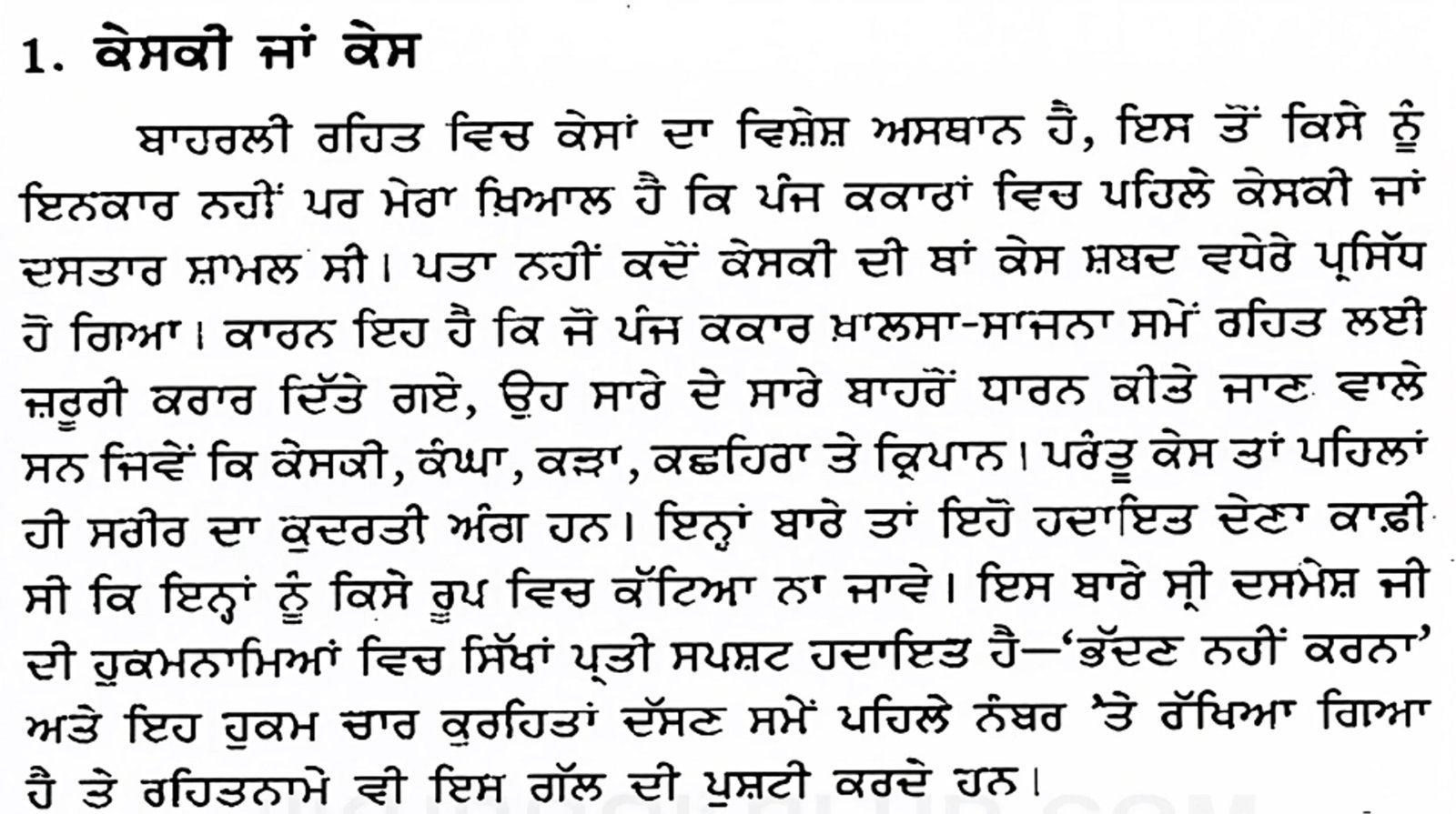
Translation:
1. KESKI OR KES
Within external Rehat (code of discipline), Kes undoubtedly holds a special position; no one can deny this. However, it is my view that originally Keski or the Dastaar was included amongst the Five Kakkaars. It is unclear when the word Kes became commonly used in place of Keski. The reason for this is that the Five Kakkaars which were declared obligatory for Rehat (code of discipline) at the time of the Khalsa’s revelation were all outward articles externally worn, namely: Keski, Kangha, Kara, Kachhehra, and Kirpan. Kes, however, are already a natural part of the body. Regarding Kes, it is sufficient that the instruction was given that they must never be cut in any form. Concerning this, Sri Dasmesh Ji (Guru Gobind Singh Ji), in His Hukam-namas, gave Sikhs the clear instruction: “bhadan nehee karnaa” (meaning, do not cut or shave the hair), and this command is also placed first when listing the four Kurehats (major prohibitions that lead to apostasy). The Rehat-namas also confirm this point.
Padam’s argument distinguishes between the obligation to preserve uncut hair and the five physical articles worn as part of Khalsa Rehat. He also suggested that the historical circumstances of the eighteenth century contributed to Kes and Keski becoming regarded as interchangeable, although the precise circumstances of this proposed change remain a matter for historical investigation.
A comparison of editions of Padam’s Rehat-namey is also noteworthy. While the fourth edition lists the fifth Kakaar as Kes, the eighth edition includes the clarification Kes (Keski) (p. 9). This editorial revision further illustrates his recognition of the historical Keski interpretation.


Dr Karamjit Kaur Malhotra, writing in Sikh Rites and Rituals (p. 193), likewise observes that Guru Kiaaⁿ Sakhiyaaⁿ explicitly identifies the Five Kakaars, with Keski appearing instead of Kes, while the Keski itself covers the hair. Her observation is significant because it acknowledges the historical evidence for Keski within academic scholarship, rather than treating the matter merely as a contemporary disagreement over religious practice.
Bhai Kaur Singh Ji, in Sikh Rehat Maryada Di Parchol (p. 8), examines the question from the perspective of Sikh religious discipline. He challenges the inclusion of Kes among the Five Kakaars when cutting or dishonouring the hair already constitutes a Bajjar Kurehat (cardinal transgression). His argument is presented through a series of questions concerning the distinction between the sacred hair and the articles of faith worn upon the body.
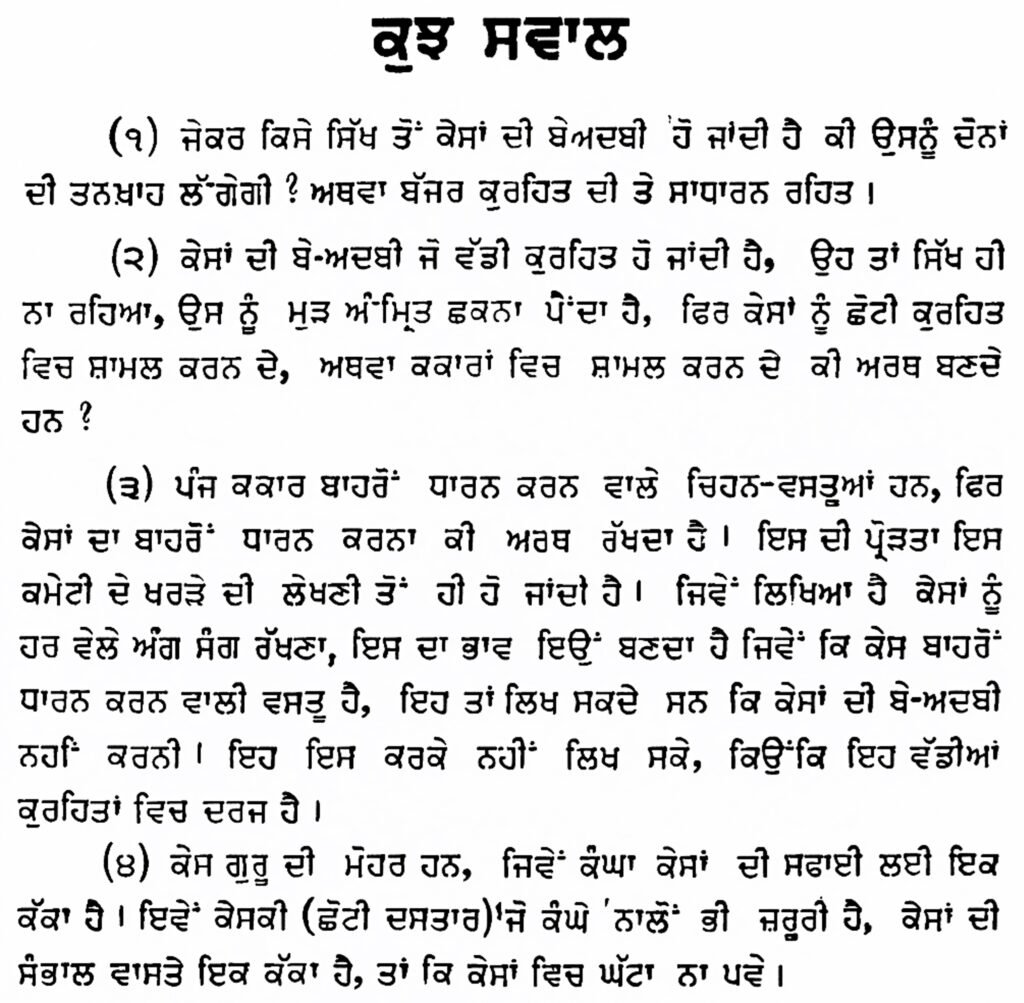
Translation
SOME QUESTIONS
- If a Sikh commits disrespect towards their Kes, would they then incur a religious penalty for both offences — namely, for a Bajjar Kurehat (cardinal transgression) as well as for an ordinary breach of Rehat [i.e. violation relating to a Kakkaar]?
- Disrespecting Kes is already regarded as a major Kurehat (prohibition). A Sikh would not intentionally commit this, and if it does occur, they are required to retake Amrit. Therefore, what additional necessity or distinct purpose is there in separately including Kes either among the major Kurehats (prohibitions) or among the Kakkaars?
- The Panj Kakkaars are outward articles or representations of faith physically worn by a Sikh, whereas Kes are not something ‘worn’ in the same sense. This understanding may itself be inferred from much of what this committee has written. For example, it is written that Kes should be “kept upon one’s person at all times.” This wording creates the impression that Kes are an external article worn on the body, whereas it would have been more appropriate simply to state that the disrespect or cutting of Kes must not be committed. This is why it was unable to be written this way, because this matter is already included among the major Kurehats (prohibitions).
- Kes are the Guru-di-Mohar (the Guru’s seal). Just as the Kangha is a Kakkaar for the maintenance and cleanliness of the Kes, in the same way the Keski (small Dastaar) — which is even more important than a Kangha — serves as Kakkaar for the care and protection of the Kes, shielding them from dust and dirt.
Note: It is proven in every respect that Kes are not included amongst the Kakkaars. Rather, the Keski (small Dastaar tied over the hair) is one of the five Kakkaars. Kes are only included amongst the Bajjar Kurehats (cardinal prohibitions), and one who violates them is regarded as a Patit (fallen Sikh/apostate).
Bhai Kaur Singh Ji’s reasoning reinforces the distinction between Kes, which is protected by a cardinal prohibition, and Keski, which is physically worn to preserve the cleanliness, dignity and protection of the hair. His argument is particularly significant because it examines the internal consistency of Khalsa Rehat, rather than relying solely upon the wording of historical lists.
Taken together, these scholarly contributions demonstrate that recognising Keski as the fifth Kakaar rests upon historical research, textual evidence and reasoned examination of Sikh religious discipline. The interpretation therefore cannot be dismissed as merely the preference of one contemporary Sikh organisation or Jatha.
The understanding that Keski is the fifth Kakaar is sometimes mistakenly associated exclusively with the Akhand Kirtani Jatha. Although this organisation has played an important role in preserving and promoting the Keski discipline, the historical evidence and acceptance of Keski as a Kakaar extend beyond any single Jatha, organisation or section of the Sikh Panth.
Greater access to historical literature, alongside the growth of social media and online religious discourse, has made this wider understanding more visible. In earlier decades, the teachings and practices of particular Sikh communities were often known primarily within their own circles. Today, recorded Katha (religious discourses), interviews and discussions allow Sikhs to hear perspectives from traditional scholars, Gianis, Nihang Singhs and other practitioners whose views might otherwise have received little attention beyond their immediate communities.
Notably, Nihang Singhs associated with both the Buddha Dal and Tarna Dal traditions have spoken in support of Keski as the fifth Kakaar. Among them, Nihang Singh Giani Surinder Singh Samraat Ji has explained that Kes is the Guru’s sacred seal, while the blue Keski is the fifth Kakaar bestowed by Guru Gobind Singh Ji. Such statements are significant because they challenge the assumption that the Keski interpretation belongs exclusively to one particular Sikh group. They should not, however, be taken to mean that every member or leadership body of these traditions necessarily holds the same position.
The increasing visibility of these perspectives also highlights an important distinction between the frequency with which a particular interpretation appears in educational publications and the actual diversity of understanding within the Sikh Panth. The widespread repetition of Kes as the fifth Kakaar has sometimes created the impression that this is the only historically recognised position. However, the evidence of historical texts, scholarly research and continuing Sikh practice demonstrates that the Keski interpretation has a wider foundation than is often acknowledged.
As awareness of this evidence grows, educational resources and introductory explanations of the Five Ks have good reason to acknowledge Keski explicitly. Presenting only Kes, without recognising the established Keski tradition, risks giving readers an incomplete understanding of Sikh history, religious discipline and the place of the Dastaar within the Khalsa identity.
A historical examination must also consider the sources commonly cited in support of Kes as the fifth Kakaar. One frequently reproduced Persian-style verse identifies Kara, Kirpan, Kachhera, Kangha and Kes, declaring that without Kes, the other four are of no value:
ਨਿਸਾਨਿ ਸਿਖੀ ਈਂ ਪੰਜ
ਹਰਫਿ ਅਸਤ ਕਾਫ ॥
ਹਰਗਿਜ ਨਾ ਬਾਸਦ ਈਂ ਪੰਜ ਮੁਆਫ ॥੧॥
ਕੜਾ ਕਾਰਦੋ ਕੱਛ ਕੰਘੇ ਬਿਦਾਂ ॥
ਬਿਲਾ ਕੇਸ ਹੇਚ ਅਸਤ ਜੁਮਲੇ ਨਿਸਾਂ ॥੨॥“These five letters ‘K’ are the marks of Sikhi, and none of these five may be omitted. Recognise the Kara, Kirpan, Kachhera and Kangha; without Kes, all these marks are of no value.”
This verse has sometimes been associated with manuscripts of the Dasam Granth, but its historical provenance has been questioned.
Bhai Kahn Singh Nabha Ji, in Gurmat Maartand (Vol. 2, p. 565), investigated the claim that this verse appeared in a handwritten Dasam Granth manuscript preserved at Sangrur. Having personally examined the manuscripts and historical writings there, he concluded that the account was fabricated.
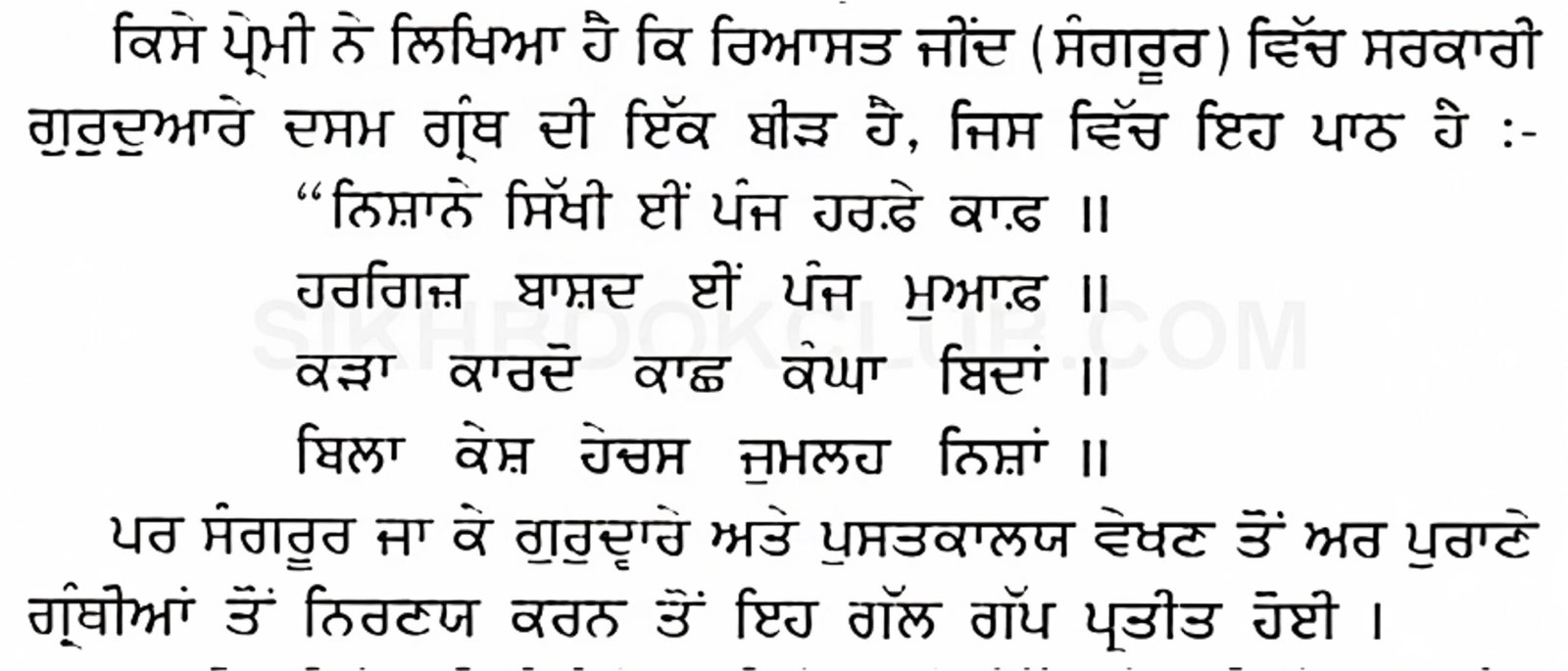
Translation:
Someone has written that at the Government Gurdwara in the state of Jind (Sangrur), there exists a handwritten copy of the Dasam Granth containing the following verses:
ਨਿਸਾਨਿ ਸਿਖੀ ਈਂ ਪੰਜ ਹਰਫਿ ਅਸਤ ਕਾਫ ॥ ਹਰਗਿਜ ਨਾ ਬਾਸਦ ਈਂ ਪੰਜ ਮੁਆਫ ॥੧॥ ਕੜਾ ਕਾਰਦੋ ਕੱਛ ਕੰਘੇ ਬਿਦਾਂ ॥ ਬਿਲਾ ਕੇਸ ਹੇਚ ਅਸਤ ਜੁਮਲੇ ਨਿਸਾਂ ॥੨॥
“These five letters ‘K’ are the marks of Sikhi, and none of these five may be omitted. Recognise the Kara, Kirpan, Kachhera and Kangha; without Kes, all these marks are of no value.”
However, after personally visiting the Gurdwara in Sangrur and examining the manuscripts and historical writings preserved there, it appears that this account is merely a fabricated story.
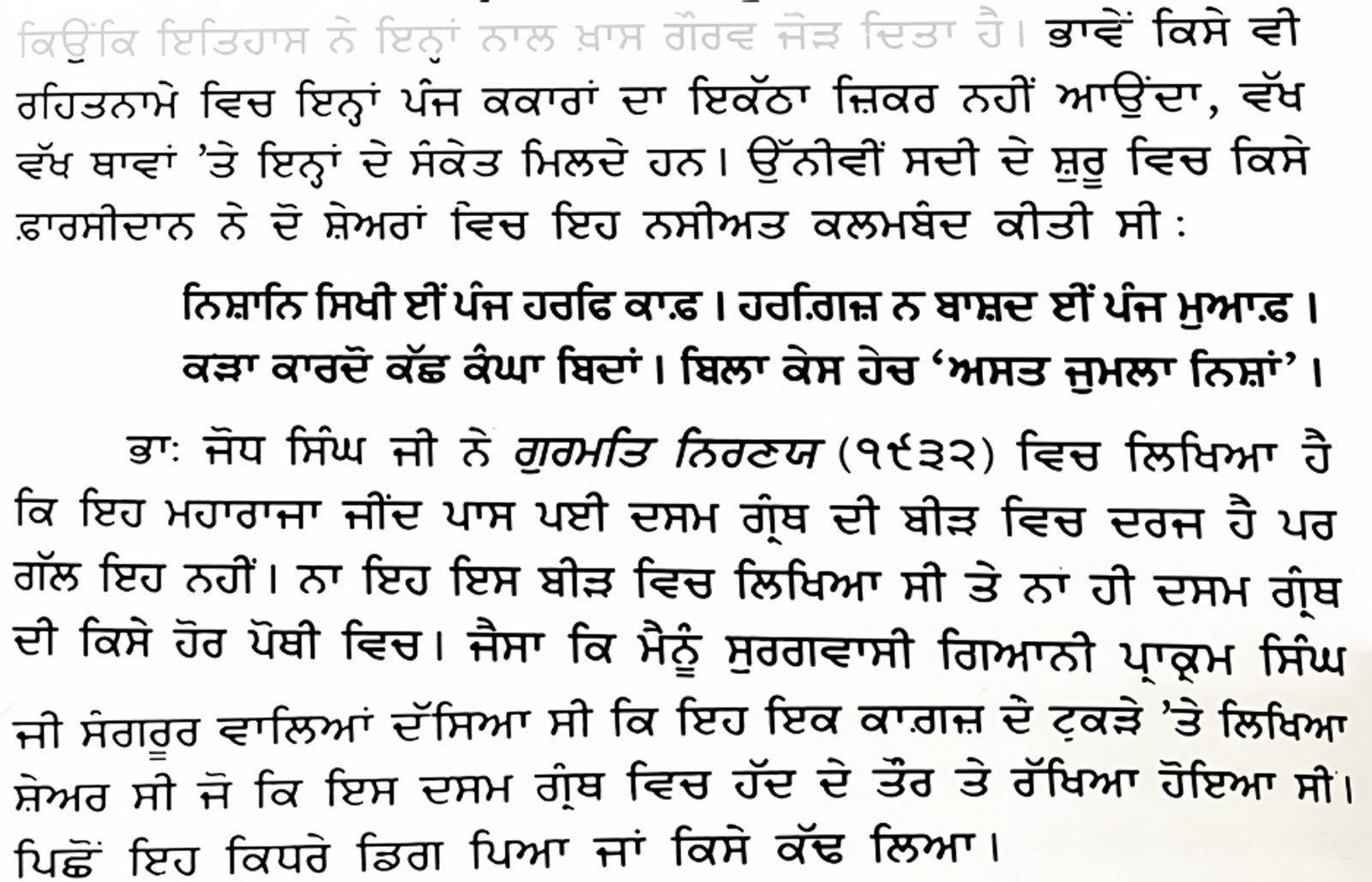
Professor Piara Singh Padam Ji independently challenged the alleged early provenance of this verse. In Rehat-namey (8th edition, pp. 35–36), he specifically rejected Dr Jodh Singh Ji’s claim that it had appeared in a Dasam Granth manuscript during Guru Gobind Singh Ji’s lifetime:
Translation:
Dr Jodh Singh Ji writes in Gurmat Nirnay (1932) that this was included in a manuscript of the Dasam Granth whilst Maharaj (Guru Gobind Singh Ji) was still physically present, but this is false. It was neither written in that manuscript nor in any Pothi (scriptural volume) of the Dasam Granth. As the late Giani Prakram Singh Ji of Sangrur told me, this writing was merely a couplet written on a piece of paper that had been placed inside the cover of a Dasam Granth volume. Afterwards, it either fell out or was removed by someone.
This distinction is historically significant. A loose piece of paper inserted inside a manuscript’s cover cannot establish that its contents formed part of the original manuscript, much less that they originated during Guru Gobind Singh Ji’s lifetime. The verse’s date, authorship and textual authenticity must therefore be independently established before it can be accepted as early historical evidence. The same standard of scrutiny must, of course, be applied to sources identifying Keski as the fifth Kakaar.
Furthermore, the assertion that the other Kakaars have no value without Kes does not necessarily establish that Kes itself must be counted as the fifth Kakaar. From the Keski perspective, this statement is entirely consistent with the fundamental importance of uncut hair. Kes is indispensable to Khalsa identity, while Keski is the article worn to preserve, protect and honour it. The sacred status of Kes and the identification of the fifth Kakaar are therefore related but distinct questions.
The recognition of Keski as a Kakaar has particular importance for the religious identity of Sikh women. Guru Gobind Singh Ji established the Khalsa discipline for both men and women, and the obligation to maintain uncut hair is not restricted by sex. If the Keski is worn to protect and honour the sacred hair, the same principle naturally applies to every Amrit-dhaari Sikh.
Bhagat Puran Singh Ji, founder of Pingalwara, strongly advocated the distinct Khalsa identity of Sikh women. In Sikh Bibia Da Pehraava (p. 11), he recognised Keski as a Kakaar and emphasised that Amrit-dhaari Singhnis are Khalsa just as Singhs are, and encouraged women to remain steadfast in their religious principles, tie their hair in a knot upon the head and wear a Keski. His guidance reflects an understanding of the Keski as an integral part of Sikh religious discipline rather than merely a cultural or optional form of dress.
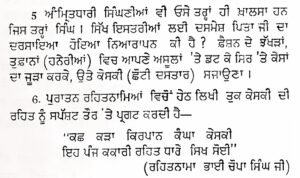
Recognising Keski as the fifth Kakaar establishes a consistent standard for Sikh men and women alike. It prevents the Dastaar from being regarded as essential for men but optional for women, despite both being subject to the same obligation to maintain and honour their Kes. Although historical practices concerning women’s head-coverings have varied among Sikh communities, the Keski tradition preserves a clear expression of equal Khalsa Rehat.
The historical evidence provides substantial grounds for recognising Keski as the fifth Kakaar of the Khalsa. References in Sikh Rehatnama literature, accounts preserved in Guru Kiaan Sakhiyaan and the Bhatt Vahee tradition, together with the interpretations of respected Sikh scholars, demonstrate that the Keski position is neither a modern invention nor an understanding confined to one particular Sikh organisation. Its continuing recognition among Sikhs from different traditions, including individuals associated with the Nihang Dals, further illustrates the breadth of this interpretation within the Panth.
With greater access to historical sources and the increasing visibility of Sikh voices through digital media, the evidence for Keski as a Kakaar is reaching a wider audience. This growing awareness makes it particularly important for educational publications and resources to move beyond presenting Kes as though it were the only accepted historical interpretation. A more accurate explanation of the Five Kakaars should acknowledge the established Keski tradition and the historical reasoning upon which it rests.
Most importantly, recognising Keski as the fifth Kakaar does not diminish the sacred status of uncut hair. Kes remains the Guru’s sacred seal, whose deliberate removal constitutes a cardinal transgression, while Keski is the article of faith worn to honour and protect that seal. This distinction also affirms the Dastaar as an integral and inseparable part of the Khalsa identity for both men and women, rather than merely an optional cultural head-covering.
Kes is the Guru’s sacred seal (Guru di Mohar); Keski is the Kakaar that honours and protects it. Within this established Sikh tradition, the Five Kakaars are therefore recognised as Kachhera, Kara, Kirpan, Kangha and Keski.
Rehat-nama attributed to Bhai Chaupa Singh Ji
Bhai Sarup Singh Kaushish, Guru Kiaaⁿ Sakhiyaaⁿ, pp. 123, 199.
Bhatt Vahee: Pargana Thanesar, p. 168.
Mukat-nama, attributed to Bhai Sahib Singh Ji, p. 144.
Professor Piara Singh Padam, Gobind Saagar, p. 120.
Professor Piara Singh Padam (ed.), Rehatnamey, 4th and 8th editions, pp. 9, 35–36.
Dr Karamjit Kaur Malhotra, Sikh Rites and Rituals, p. 193.
Bhai Kaur Singh Ji, Sikh Rehat Maryada Di Parchol, p. 8.
Bhagat Puran Singh Ji, Sikh Bibia Da Pehraava, p. 11.
Bhai Kahn Singh Nabha, Gurmat Maartand, Vol. 2, p. 565.
We’re here to help. Whether you’re curious about Gurbani, Sikh history, Rehat Maryada or anything else, ask freely. Your questions will be received with respect and answered with care.
Ask Question