
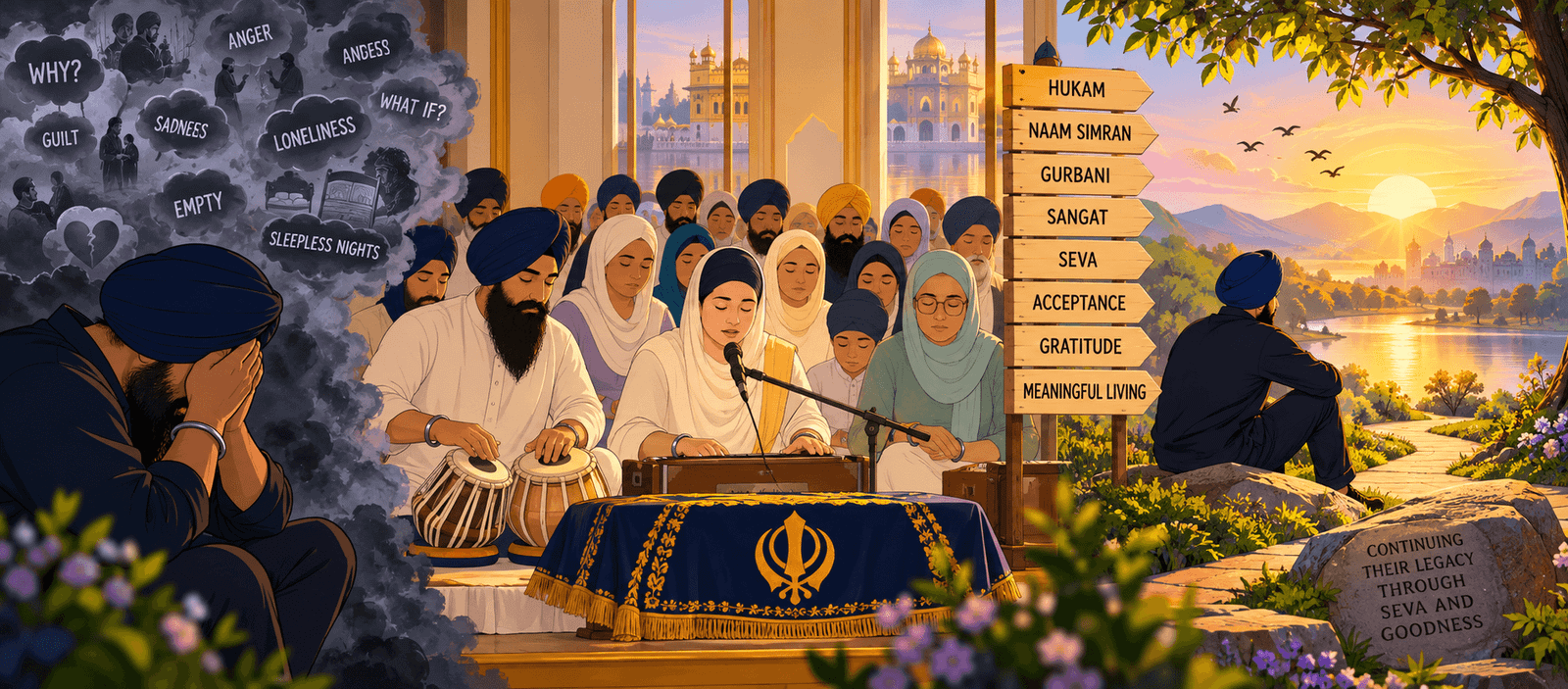
The death of someone we love can be one of the most painful experiences of human life. Bereavement may bring sadness, shock, loneliness, anger, guilt, anxiety, numbness or a profound sense that someone is missing. It can affect sleep, appetite, concentration and everyday functioning, and there is no single timetable for grief. People respond differently depending upon their relationship with the person, the circumstances of the death, previous experiences of loss and the support available around them.
Sikhi does not require us to pretend that separation does not hurt. Nor does accepting Vaheguru’s Hukam (Divine Will) mean becoming emotionless. Instead, the Guru gives us a spiritual understanding through which grief can gradually be processed without allowing grief to become hopelessness or consuming attachment.
One of the most profound Sikh teachings on bereavement is found in scriptural prayer named ‘Raamkali Sadd,’ revealed through Bhai Sundar Ji and preserved within Sri Guru Granth Sahib Ji. It describes the final period of the physical life of Guru Amar Das Ji and the continuation of Guruship through Guru Ram Das Ji. Yet its message extends beyond that historical event: through it, the Eternal Guru teaches humanity how to understand death, respond to separation and continue living when someone we love departs.
The word Sadd means a summons, invitation or call. This immediately gives us a different way of looking at death. Rather than presenting death simply as destruction, Gurbani describes the earthly journey reaching its appointed conclusion:
ਆਇਆ ਹਕਾਰਾ ਚਲਣਵਾਰਾ ਹਰਿ ਰਾਮ ਨਾਮਿ ਸਮਾਇਆ ॥
aa’yaa ha’kaaraa chalaN’vaaraa; har raam naam samaa’yaa.
While completely immersed in the awareness and remembrance of Vaheguru, the Divine summons came for Him to leave his earthly body.
Everything within creation changes. Bodies age, circumstances change, relationships experience separation and physical life eventually ends. Vaheguru alone remains Eternal. For someone grieving, this does not make their pain imaginary or insignificant. Instead, it places that pain within a larger spiritual reality: the physical presence of the person we love has gone, but Vaheguru has not.
Bereavement can produce difficult questions: Why did this happen? Why now? Why this person? Why did Vaheguru allow something that has caused so much pain?
Raamkali Sadd repeatedly directs us towards Hukam:
ਹਰਿ ਭਾਣਾ ਗੁਰ ਭਾਇਆ ਗੁਰੁ ਜਾਵੈ ਹਰਿ ਪ੍ਰਭ ਪਾਸਿ ਜੀਉ ॥
har bhaa’Naa gur bhaa’yaa; gur jaa’vai, har prabh paas jee’o.
Vaheguru’s Will was sweet and pleasing to the Guru, and the Guru-form prepared to return to the Divine Presence.
Accepting Hukam does not mean claiming that bereavement feels pleasant. It means recognising that our understanding is limited while Vaheguru’s wisdom is unlimited. A grieving Sikh may sincerely say: “Vaheguru, I do not understand why this has happened and it hurts, but I still place my trust in You.”
That acceptance may take time. Someone can understand Hukam spiritually while their emotions are still adjusting to the physical absence of someone they love. Faith and grief are not opposites.
Guru Amar Das Ji instructed His family:
ਮਤ ਮੈ ਪਿਛੈ ਕੋਈ ਰੋਵਸੀ ਸੋ ਮੈ ਮੂਲਿ ਨ ਭਾਇਆ ॥
mat mai pishhai ko’ee rov’see; so mai mool na bhaa’yaa.
“After I leave this world, do not give yourselves over to mourning and lamentation. That would not please Me.”
This should not be reduced to the idea that “Sikhs are not allowed to cry”. Tears, sadness and missing someone are natural human responses to separation. The deeper teaching is against becoming consumed by crying, lamentation, despair and attachment.
This distinction is important because grief can take many forms. Someone may cry openly, while another person becomes quiet or withdrawn. Others may experience anger, guilt, confusion, anxiety, disturbed sleep or difficulty concentrating. Bereavement support guidance therefore cautions against imposing a fixed timetable or assuming that everyone should grieve in the same way.
Immediately after instructing His loved ones not to become consumed by mourning, Guru Amar Das Ji explains:
ਮਿਤੁ ਪੈਝੈ ਮਿਤੁ ਬਿਗਸੈ ਜਿਸੁ ਮਿਤ ਕੀ ਪੈਜ ਭਾਵਏ ॥
mit pai’jhai, mit big’sai; jis mit kee paij bhaa’vaye.
When a friend receives honour, a true friend rejoices in that honour.
Bereavement naturally makes us think about what we have lost. The Guru gradually teaches us to see love beyond possession and physical attachment. Genuine love does not require us to forget someone, but it eventually learns to accept that their physical presence was never ours permanently.
Raamkali Sadd gives practical spiritual guidance rather than leaving the bereaved without direction:
ਅੰਤੇ ਸਤਿਗੁਰੁ ਬੋਲਿਆ ਮੈ ਪਿਛੈ ਕੀਰਤਨੁ ਕਰਿਅਹੁ ਨਿਰਬਾਣੁ ਜੀਉ ॥
ann’tey sat’gur boliyaa; mai pishhai, keertan kari’yahu nir’baaN jee’o.
“After I leave, devote yourselves to singing and reflecting upon Vaheguru’s praises with pure hearts.”
The bereaved are directed towards Gurbani (Sikh scripture), Keertan (singing of sacred revealed hymns), Naam Simran (connecting with the Divine presence through meidtation), Ardaas (prayer supplication) and Sangat (spiritual company or congregation). Rather than becoming absorbed in elaborate funeral rituals or outward displays of mourning, the Guru redirects the consciousness towards Vaheguru.
This is an important principle of Sikh funeral practice. Rituals cannot determine the spiritual destiny of the person who has died. The purpose of Antam Sanskaar and associated Gurbani is primarily to give spiritual direction to those who remain: to remind us of the temporary nature of the physical body, reconnect us with Vaheguru and help the bereaved face separation through Gurmat.
Someone may feel peaceful one day and deeply distressed the next. A birthday, photograph, familiar place, smell or ordinary memory can unexpectedly bring the person’s absence back into focus. This does not necessarily mean that someone is “going backwards”.
Modern bereavement care describes people as moving between confronting their loss and attending again to ordinary life. Another useful model describes people as gradually “growing around grief”: the loss remains part of their life story, but it no longer occupies the entirety of their life.
This can sit comfortably alongside the pastoral application of Gurmat (the Guru’s teachings and way). Sikhi does not require us to erase our memories of someone. Instead, Gurbani gradually moves the centre of our consciousness from attachment to the temporary towards connection with the Eternal.
Sometimes the most helpful Seva (selfless service) is simply being present. A bereaved person may need to talk about the person who died, tell stories about their life, express difficult feelings or simply sit with somebody who will listen without judging them. Bereavement guidance emphasises being heard, understood and acknowledged as important needs after a death.
We should therefore be cautious about immediately telling somebody to “be strong”, saying “at least…” or insisting that we know exactly how they feel. Even religious truths can become insensitive when used to close down somebody’s grief rather than support them through it. Good support involves warmth, empathy, patience, listening and practical help, while avoiding assumptions about how somebody ought to feel.
The Sangat has an important role here. Gurbani, Keertan, Naam Simran and Ardaas provide spiritual support, while companionship, meals, practical assistance and continuing to check on a family after the funeral provide human support. The wider bereavement material you supplied likewise emphasises Gurbani and communal support as important sources of comfort within Sikh bereavement.
Quoting Hukam (the Divine Order and Law) should therefore never become a way of silencing someone’s pain. The Guru gives us somewhere to take our pain.
One of the deepest lessons of Raamkali Sadd is that Guru Amar Das Ji was already immersed in remembrance of Vaheguru when the Divine summons came. Spiritual preparation for death did not begin at the moment of death; it was expressed through the way life had already been lived.
Bereavement therefore confronts those of us who remain with an important question. If our own physical lives are also temporary, how are we using them?
Naam Simran, understanding Gurbani, Nitnem (daily prayers), Seva and Sangat are not merely religious activities. They gradually train our consciousness to recognise what is temporary and connect with what is Eternal. Death reminds us not to postpone our relationship with Vaheguru until old age or illness.
We can also honour someone who has died by considering the goodness they left within us. What did they teach us? What kindness, Seva, courage or devotion can we continue? Remembering somebody does not have to mean remaining trapped in the moment of their death. Their positive influence can continue through the way we live.
The message of Raamkali Sadd is not “do not grieve”. Separation hurts because love existed. The Guru instead teaches us not to allow grief to have the final word.
A Sikh can miss someone deeply while still trusting Vaheguru, shed tears while accepting Hukam, and remember someone lovingly without allowing attachment to consume the remainder of their life. Over time, grief can deepen our awareness that physical life is temporary while Vaheguru is Eternal.
Continue with Naam Simran. Listen to and understand Gurbani and Keertan. Make Ardaas. Remain connected with the Sangat, family and people who will listen compassionately. Where grief becomes particularly difficult to manage, seeking appropriate bereavement or professional support need not conflict with relying upon the Guru; psychological support can address aspects of human grief while Gurbani provides the spiritual direction and meaning through which a Sikh understands life and death. The supporting material similarly recognises these approaches as potentially complementary rather than competing.
Ultimately, Raamkali Sadd teaches us not only about dying, but about living. It teaches us to remember Vaheguru, accept Divine Will when our understanding reaches its limits, support one another compassionately, avoid becoming trapped in empty ritual or despair, and recognise the temporary nature of this physical existence.
When somebody we love dies, their physical presence is no longer with us and life may never feel exactly the same again. Yet Vaheguru remains, the Guru remains, and the path forward remains.
Bereavement therefore leaves us not only asking, “Where has the person I love gone?” It also places another question before those of us who remain:
While Vaheguru has still given me this precious human life, how will I live it?