
• Home
  • Gurmat
  • Why can’t non-Amritdharis do kirtan in the Gurdwara?

Why can’t non-Amritdharis do kirtan in the Gurdwara?

Non-Amritdharis are more than welcome to attend kirtan programmes and sit among the sangat. They can listen and join in the recitation from their place with full respect and devotion. There is no restriction on their presence or participation as members of the sangat. If a non-Amritdhari Sikh or even a non-Sikh wishes to do Gurbani Kirtan, they are free to do so at home or in a private setting. However, leading kirtan in the sangat by playing the vaja or tabla is a responsibility that comes with certain boundaries. Gurbani repeatedly speaks about complete surrender to Guru Sahib Ji, accepting His hukam, and shaping one’s life according to Gurmat. This raises an important question: do non-Amritdharis truly fit into this category of surrender that Gurbani speaks of?

Imagine a mona person(who cuts their hair) leading kirtan and singing:

ਪੀਵਹੁ ਪਾਹੁਲ ਖੰਡਧਾਰ ਹੁਇ ਜਨਮੁ ਸੁਹੇਲਾ॥
“Drink the Amrit, accomplish the worth of your birth.”
(Bhai Gurdas Ji)

This pankti asks Sikhs to drink Amrit and make one’s birth fruitful. When the person leading kirtan has not accepted Amrit or the discipline that comes with it, the message of the shabad loses its weight. For this reason, allowing only Rehatvaan Amritdhari Gursikhs to lead kirtan helps preserve the maryada of Guru Ghar.

Critics usually put forward the argument that even if they don’t keep Kes (unshorn hair) or receive Amrit (initiation), Sikhi is inside them. In regard to that, it can be kindly put forward that Sri Guru Gobind Singh Ji has clearly taught Sikhs to observe internal as well as external Rehat (code of discipline), which can be summed up in the following line of Gurbani:

ਜੀਅਹੁ ਨਿਰਮਲ ਬਾਹਰਹੁ ਨਿਰਮਲ ॥
“Purity within, and purity outside.”
(Raag Raamkalee, M:3, Ang 919)

Now the thing to think about is that only Guru Ji knows the inner rehat (discipline), but the outer rehat (discipline) can be seen, which is the responsibility of the gurdwara management of the time to take into consideration.

If this point is to be understood in more detail, then a worldly example can be used. A police officer of one country can visit another country and know all the laws and procedures of the country they are visiting. However, they would not be able to exercise their police powers in the country they are visiting without having enrolled in the Police Force of the land and being officially recognised. In the same way, one cannot go to a gurdwara and ask for the right to perform kirtan, even if one knows how to perform kirtan, without following Guru’s maryada (protocol and rules) and being officially recognised by the Guru-Khalsa. If someone wants to perform kirtan to feed for their soul, then there is no prohibition in that. However, one cannot do kirtan for the purpose of the congregation, as it would be a public preaching role reserved for those who comply with the Guru’s commands.

In the Guru Ghar, kirtan is not the name of any art. This can be proved with Gurbani. Sri Guru Amardas Sahib Ji says:

ਇਕਿ ਗਾਵਹਿ ਰਾਗ ਪਰੀਆ ਰਾਗਿ ਨ ਭੀਜਈ ॥
“Many people sing ‘raags’ (musical melodies), but Vaheguru is not pleased even with ‘raags’ (musical melodies).”
(Raag Malaar, M:3, Anga 1285)

For this reason, the ‘Sikh Rehat Maryada’ document mentions the rule that only Sikhs should perform kirtan so that the positive influence of the appearance of Rehatvaan (disciplined) Sikhs can be made on the Sangat. One who has not committed themselves to the Guru by taking Amrit will have little or no effect on the Sangat.

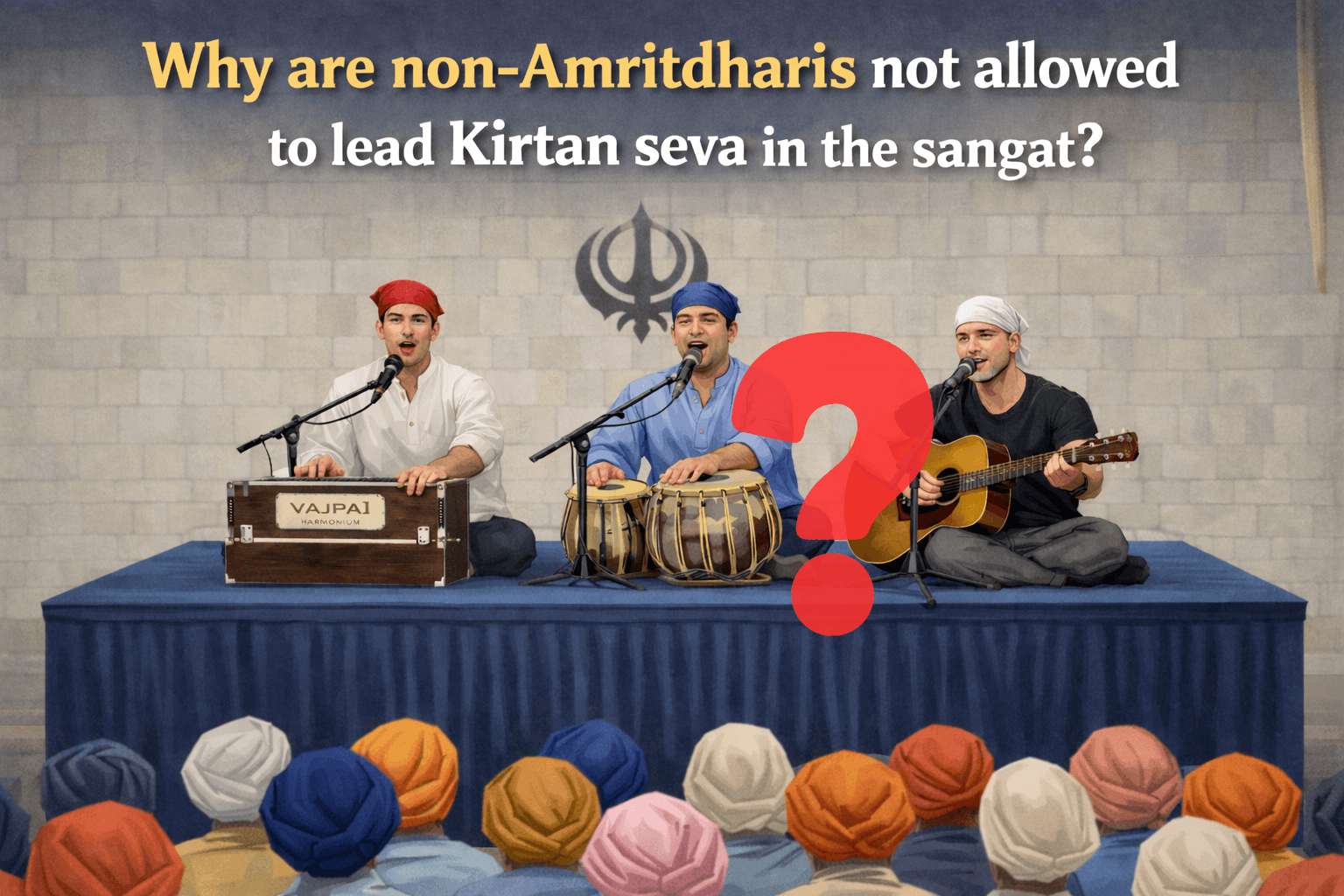
Why are non-Amritdharis not allowed to lead Kirtan seva in the sangat? Some thoughts: 

This rule has a clear basis; it comes from the Panthic Rehat Maryada and is followed by Sikhs across the Panth. All Panthic Sikh groups follow it strictly by not allowing non-Amritdharis on the stage. When the reason behind this rule is understood, it is not really a matter of debate.

  1. Panthic Rehat Maryada
    Sikh Rehat Maryada clearly says that only a Sikh is permitted to lead or formally perform Kirtan in the presence of the Sangat. Keeping kesh is one of the most basic and visible rules of being a Sikh. For some roles and sevas in the Guru Ghar, being Amritdhari is necessary. Someone who does not even keep kesh is far outside the basic discipline required for these sevas.

    ੳ) ਸੰਗਤ ਵਿੱਚ ਕੀਰਤਨ ਕੇਵਲ ਸਿੱਖ ਹੀ ਕਰ ਸਕਦਾ ਹੈ।
    a. Only a Sikh is permitted to lead or formally perform Kirtan in the presence of the Sangat (congregation).
    (Sikh Rehat Maryada)

  2. Responsibility of those on stage
    Anyone who performs Kirtan or gives updesh through Gurbani is automatically representing Gurmat and should set an example. How can someone who is clean-shaven or cuts their kesh teach or share Gurmat in public? When a person sings verses like “ਸਤਿਗੁਰ ਆਗੈ ਸੀਸੁ ਭੇਟ ਦੇਉ” but has not offered their own ਸੀਸੁ by becoming Guru-wala through Amrit, it shows a clear contradiction. At the very least, those performing Kirtan in public should show through their appearance that they are committed to Guru Sahib.

    Gurbani says:
    ਪ੍ਰਥਮੇ ਮਨੁ ਪਰਬੋਧੈ ਅਪਨਾ ਪਾਛੈ ਅਵਰ ਰੀਝਾਵੈ ॥
    “First, instruct your own mind, and then leads others.”
    (Raag Aasa M:5, Ang 381)

    ਅਵਰ ਉਪਦੇਸੈ ਆਪਿ ਨ ਕਰੈ ॥ ਆਵਤ ਜਾਵਤ ਜਨਮੈ ਮਰੈ ॥
    “One who does not practice what he preaches to others shall come and go in reincarnation, through birth and death.”
    (Raag Gauree M:5, Ang 269)

  3. Impact on the sangat
    When someone who does Kirtan cuts or removes their hair, or is not a rehatvaan Sikh, it gives the wrong message. People usually assume they know a lot about Gurbani, but they are not living according to Gurmat. This can make others in the sangat, especially those who are new or still learning, think that keeping rehat is not important for spiritual growth. How does this help Sikhi? Breaking Gurmat just to make people feel included or “inspired” does more harm than good. There are many other respectful ways to welcome and encourage them.

    Gurbani says:
    ਗਿਆਨੁ ਗਿਆਨੁ ਕਥੈ ਸਭੁ ਕੋਈ ॥ ਕਥਿ ਕਥਿ ਬਾਦੁ ਕਰੇ ਦੁਖੁ ਹੋਈ ॥ ਕਥਿ ਕਹਣੈ ਤੇ ਰਹੈ ਨ ਕੋਈ ॥ ਬਿਨੁ ਰਸ ਰਾਤੇ ਮੁਕਤਿ ਨ ਹੋਈ ॥੨॥ ਗਿਆਨੁ ਧਿਆਨੁ ਸਭੁ ਗੁਰ ਤੇ ਹੋਈ ॥ ਸਾਚੀ ਰਹਤ ਸਾਚਾ ਮਨਿ ਸੋਈ ॥ ਮਨਮੁਖ ਕਥਨੀ ਹੈ ਪਰੁ ਰਹਤ ਨ ਹੋਈ ॥ ਨਾਵਹੁ ਭੂਲੇ ਥਾਉ ਨ ਕੋਈ ॥੩॥
    “Everyone talks about spiritual wisdom and spiritual knowledge. Talking, talking, they argue, and suffer. No one can stop talking and discussing it. Without experiencing the divine taste, there is no liberation. ||2|| Spiritual wisdom and meditation all come from the Guru. Through the lifestyle of Truth, the True Lord comes to dwell in the mind. The Manmukh (egotistical person) talks about it but does not practice it. Forgetting the Name, he finds no place of rest. ||3||”
    (Raag Bilaaval M:1, Ang 831)

    ਜੋ ਪਢ ਕਰਿ ਉਪਦੇਸ਼ ਬਤਾਵੈ ॥ ਆਪ ਨਹੀਂ ਸ਼ੁਭ ਕਰਮ ਕਮਾਵੈ ॥
    ਤਿਸ ਕੀ ਛਾਯਾ ਪਰੈ ਨ ਕਿਸ ਪੈ ॥ ਸ੍ਰਵਣ ਕਰੇ ਕਿਛ ਹੋਇ ਨਾ ਤਿਸ ਪੈ ॥
    “One who read and instructs others but does not practice good deeds themselves – do not go near their shadow as listening to them, nothing will be gained.”
    (Kavi Santokh Singh Ji – Sri Gur Prataap Suraj Granth)

  4. Naam and leadership in Simran
    It does not make much sense for someone who is Gurmantar-heen (without Gurmantar) to lead the sangat in simran, because Naam-Gurmantar is only received from the Panj Pyare after taking Amrit. How can they guide others toward the joy and sweetness of Gurbani if they do not have Naam themselves or live according to Guru Sahib’s mat?

    Gurbani says:
    ਜਿਨ ਕੈ ਹਿਰਦੈ ਨਾਹਿ ਹਰਿ ਸੁਆਮੀ ਤੇ ਬਿਗੜ ਰੂਪ ਬੇਰਕਟੀ ॥
    ਜਿਉ ਨਿਗੁਰਾ ਬਹੁ ਬਾਤਾ ਜਾਣੈ ਓਹੁ ਹਰਿ ਦਰਗਹ ਹੈ ਭ੍ਰਸਟੀ ॥੧॥
    “Those who do not have the Name of their Lord-Master within their hearts, are the most wretched, deformed lepers. Like the ‘Nigura’ (Guru-less person, i.e. who does not follow the Guru), they may know many things, but they are cursed in the Court of Vaheguru. ||1||”
    (Raag Dev Gandaaree M:4, Ang 528)

    ਉਧਰਹਿ ਆਪਿ ਤਰੈ ਸੰਸਾਰੁ ॥ ਰਾਮ ਨਾਮ ਜਪਿ ਏਕੰਕਾਰੁ ॥
    ਆਪਿ ਕਮਾਉ ਅਵਰਾ ਉਪਦੇਸ ॥ ਰਾਮ ਨਾਮ ਹਿਰਦੈ ਪਰਵੇਸ ॥੩॥
    “You shall be redeemed from vice and sin, and through you, the whole world shall be saved from vice and sin. Repeat the Name of the Almighty, and remember the One Creator. Practice this yourself (first), and (then) teach others as well. Instill the Name of the Almighty in your heart. ||3||”
    (Raag Gauree, M:5, Ang 185)

  5. Inspiration to take Amrit
    Allowing only Amritdhari Gursikhs to perform kirtan also serves as inspiration for non-Amritdharis who have shardha for Guru Sahib Ji. When they see that leading kirtan and performing seva on stage is reserved for those who have taken Amrit and committed to Gurmat, it can motivate them to take Amrit themselves. This not only helps them grow spiritually but also gives them the opportunity to participate in this important seva in the future.

    Bhai Gurdas Ji says:

    ਹਉ ਸਦਕੇ ਤਿਨ੍ਹਾਂ ਗੁਰਸਿਖਾਂ ਗੁਰਸਿਖ ਦੇ ਗੁਰਸਿਖ ਮਿਲਾਇਆ ॥
    “May I lovingly devote myself to those Gursikhs who, imparting the teachings of the Guru make another disciple meet the Guru.”
    (Bhai Gurdas Ji: vaar 12, pauri 6)

Leave A Comment

Your email address will not be published. Required fields are marked *