
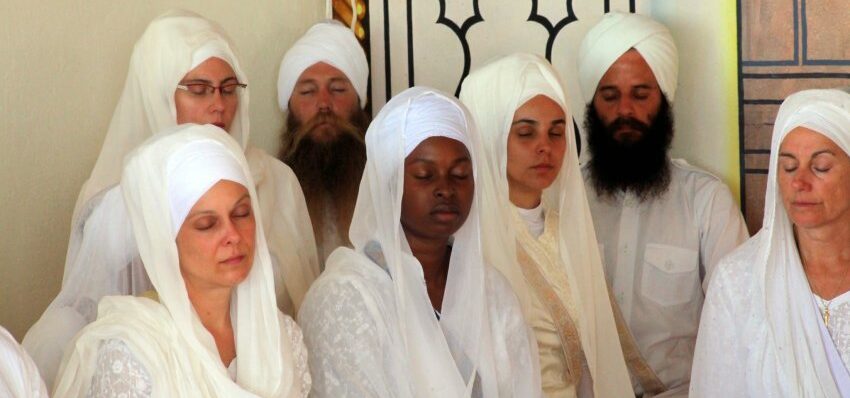
Initiation is an essential step before joining the Khalsa Panth. Sri Guru Gobind Singh Ji formalized this practice with the establishment of the Khalsa in 1699, laying the foundation for a distinct Sikh identity rooted in discipline and devotion. Khande-Di-Pahul (the Amrit of the double-edged sword) is accessible to all individuals, regardless of gender, caste, color, or creed. Amrit Sanchaar is conducted privately, away from public view, and guarded by a Pehradar or guard to ensure that no unwarranted person enters the area.
The Amrit ceremony (initiation) is held in the presence of Sri Guru Granth Sahib Ji. The ceremony is conducted by five initiated Sikhs, known for their piety, called Panj Piyaaray. Additionally, one more Piyaara sits on Maharaj’s tabeya. All of them wear the five articles of faith: Keski (turban), Kanga (wooden comb), Kachhera (specially tailored shorts), Karha (iron bangle), and Kirpan (sword), which is worn in a gatra (strap worn across the body).
The Singh sitting on Maharaj’s tabeya explains the principles of Sikhi to those seeking initiation and also questions them. Amrit is bestowed upon candidates who, after being evaluated by the Panj Piyaaray, are deemed worthy of receiving it.
One of the Singh offers Ardaas, and then Panj piraaye sit around Baataa in Bir Aasan. The Amrit Sanchar Baataa (bowl), Khanda (double-edged sword), and all utensils used are made of Sarbloh (pure iron). Homemade Pataasey (sugar wafers) made in Sarbloh (pure-iron) utensils by a Rehatvaan (disciplined) Amritdhari Gursikh are used for the Amrit Sanchaar.
They recite the five Banis (sacred prayers): Japji Sahib, Jaap Sahib, ten Swaiyyas, Benti Chaupai, and Anand Sahib.

While concentrating their gaze on the water in the bowl, they reciter stirs it with a double-edged sword, a Khanda, held in his right hand. One by one, each of the Panj Piyaaray recites a sacred prayer and stirs the nectar with the Khanda.
The Amrit and Nitnem Banis are documented through eyewitness accounts recorded in the Bhatt Vahees. Bhai Jaita Ji (Bhai Jeevan Singh Ji) writes his eyewitness account as follows:
ਪਾਂਚ ਕਕਾਰ ਸੰਪੂਰਣ ਦੇਖਿ ਕੈ ਯਾਚਕ ਸਿਖਹਿ ਸੰਮੁਖ ਬੈਠੀਜੈ।
ਜਲੋ ਬਤਾਸੇ ਲੋਹ ਪਾਤਰ ਮਹਿਂ ਡਾਰਿ ਕੈ ਛਹਿ ਸਿਖ ਆਸਨ ਬੀਰ ਲਵੀਜੈ।
ਹਾਥ ਪ੍ਰਥਮ ਸਿੰਘ ਖੰਡੇ ਕਉ ਲੇਕਰ ਜਲੋ ਪਤਾਸੋ ਕਉ ਖੂਬ ਮਿਲੀਜੈ।
ਜਪੁ ਕੋ ਪਾਠ ਕਰਹਿ ਸੰਗ ਤਿਹ ਸਿਖ ਪਾਤਰਿ ਦੂਸਰ ਹਾਥ ਧਰੀਜੈ ॥੧੧੨॥
ਪਾਚਹੁੰ ਮਹਿ ਚਾਰ ਸੁ ਹੋਵਹਿਂ ਅਵਰ ਜੋਇ ਪਾਤਰ ਊਪਰ ਹਾਥ ਰਖੀਜੈ।
ਆਪਨ ਆਪਨ ਬਾਰ ਯੇ ਪਾਂਚਹੁੰ ਪਾਂਚ ਹੀ ਬਾਣੀ ਕੋ ਪਾਠ ਪੜ੍ਹੀਜੈ।
ਜਪੁ, ਜਾਪ, ਸਵੈਯੇ, ਚੌਪਈ, ਅਨੰਦ ਕੋ, ਪਾਠ ਸੋਂ ਪਾਹੁਲ ਤਿਆਰ ਕਰੀਜੈ।
ਪਾਂਚਓ ਚੁਲੇ ਮੁਖ ਪਾਵਹਿ ਸੁ ਯਾਜਕ ਏਤ ਹੀ ਨੇਤਰ ਕੇਸ ਪਵੀਜੈ ॥੧੧੩॥
ਪ੍ਰਤਿ ਏਕ ਚੁਲੇ ਸੰਗ ਯਾਚਕ ਮੁਖ ਤੇ ਵਾਹਿਗੁਰੂ ਕੀ ਫਤਿਹਿ ਗਜਾਵੈ।
ਯਾਚਕ ਸਿੰਘ ਜੋ ਅਵਰ ਭਿ ਹੋਇ ਅੰਮ੍ਰਿਤ ਏਕੁ ਹੀ ਪਾਤਰ ਪਾਵੈ।
ਰਹਿਤ ਕੁਰਹਿਤ ਬਤਾਇ ਕੈ ਸਬਹਿਨ ਅਰਦਾਸ ਕਰਹਿ ਪ੍ਰਸਾਦਿ ਦਵਾਵੈ।
ਪੁਨ ਸਬ ਏਕੁ ਹੀ ਬਰਤਨ ਮਾਹਿਂ ਏਕਠਿ ਖਾਨ ਔ ਪਾਨ ਕਰਾਵੈ ॥੧੧੪॥
(Baba Jeevan Singh – ‘ਭਾਈ ਜੈਤ ਰਾਮ-ਜੀਵਨ ਤੇ ਰਚਨਾ’, S. Gurmukh Singh, Punjabi University, 1994)
Each of the Panj Pyaaray, in turn, administers Amrit (the divine nectar) to each spiritual seeker. Every time a candidate receives a handful of Amrit (holy water) to drink, he says, “Waheguru Ji Ka Khalsa, Waheguru Ji Ki Fateh!”
The Amrit is placed five times in the candidate’s eyes by each of the Panj Pyaaray and five times on his hair (over the Dasam Duaar, the Tenth Spiritual Gate), while he repeats the above greeting each time. The seed of Naam is sown into the seeker’s heart through the Panj Pyaaray, who serve as the physical representation of the Guru, as they give the candidate the Gurmantar, which he or she is to meditate upon with each and every breath.
The remaining Amrit from the ceremony is sipped by all candidates to eliminate caste and social prejudices. One of the five then explains the code of Sikh discipline – Rehat.
The candidates are to regard themselves as sons and daughters of Sri Guru Gobind Singh Ji and Mata Sahib Kaur Ji. Their spiritual home is Anandpur Sahib. They must abstain from the four misdeeds:
Dishonoring the hair (cutting, waxing, plucking, or dyeing any hair on the body).
Eating Kutha (slaughtered meat, i.e., any form of meat, fish, or eggs).
Engaging in an intimate relationship outside of wedlock.
Using tobacco or any other intoxicants.
If a Sikh commits any of these four major misdeeds – Bajjar Kurehats – he must undergo re-initiation after making a confession and performing the prescribed penance.
One of the Panj Piyaaray then offers Ardaas (standing prayer) and reads a Hukamnama (edict taken from a random reading) from Sri Guru Granth Sahib Ji.
Those adopting Sikhi for the first time receive a new name, with the suffix “Singh” (meaning “lion”) for males and “Kaur” (meaning “princess”) for females.
All the initiated Sikhs then receive Karhah Parshad (sacred pudding) to eat.
This sacred initiation transforms Sikhs into Saint-Soldiers, embodying spiritual purity, discipline, and unwavering commitment to the Guru’s path. The Amrit ceremony not only deepens one’s connection to Sikhi but also fortifies the collective spirit of the Khalsa, standing united in service and devotion to Waheguru.