
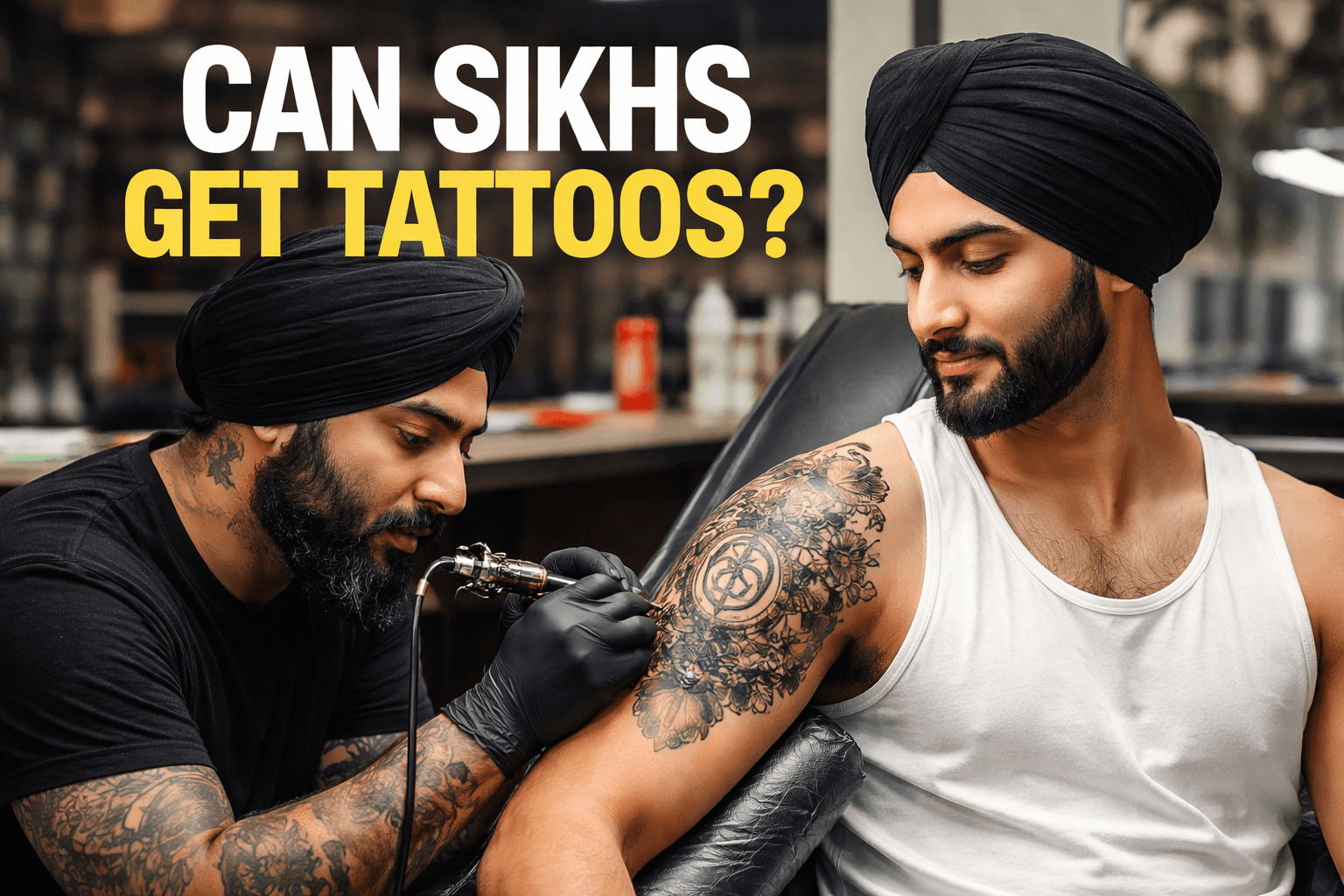
Tattoos are often seen as a way to express who you are. But in Sikhi, identity is not something you need to create — it is something you are given. The Guru has already given Sikhs a complete and distinct identity through the Panj Kakkaar (the mandatory uniform of the five sacred gifts given by the Guru) and Bana (Khalsa attire). This form is intentional, disciplined, and meaningful. Sikhi teaches us to stand out through both character and Guru-given identity — not through self-imposed modifications centered on ego and self-created beliefs. If your identity is already complete, adding to it is not strengthening it — it is moving away from it.
 It’s worth asking a simple question: why get a tattoo? For many, it comes down to influence — trends, social media, or the desire to feel different or more confident. But these reasons don’t last. What feels meaningful now can easily lose its value over time.
Tattoos don’t change when you do. Many people later regret them. That’s why tattoo removal is so common. A permanent decision based on a temporary mindset is not a wise one. Instead, Sikhi teaches confidence and contentment from within — through meditation upon Naam (the Living Presence of the Divine expressed through the Sacred Sound and Word of the Holy Name) and through reading, singing and reflecting upon Gurbani (the Guru’s revealed Word) — not through outward changes.
Some may argue that a tattoo of Gurbani or a Sikh symbol is different — that it promotes Sikhi. But this reasoning does not hold. Sikhi is not something to be displayed through self-designed markings. It is something to be lived. Guru Sahib has already given Sikhs a visible identity to represent Sikhi in the world. Adding symbols onto the body is not seva (selfless service) of Sikhi — it is self-expression, or a display of one’s ego (hau-mai).
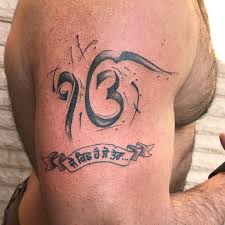 Even if the content is religious, the action is still altering the body based on personal choice and not ordained by Guru Sahib. That remains Manmat (a self-created practice, contrary to the Guru’s teachings), not Gurmat (in accordance with the Guru’s teaching).
There is also the question of respect. Gurbani is meant to be read, understood, and lived — not reduced to decoration or worn casually on the body. Imagine the disrespect of taking Gurbani to the toilet.
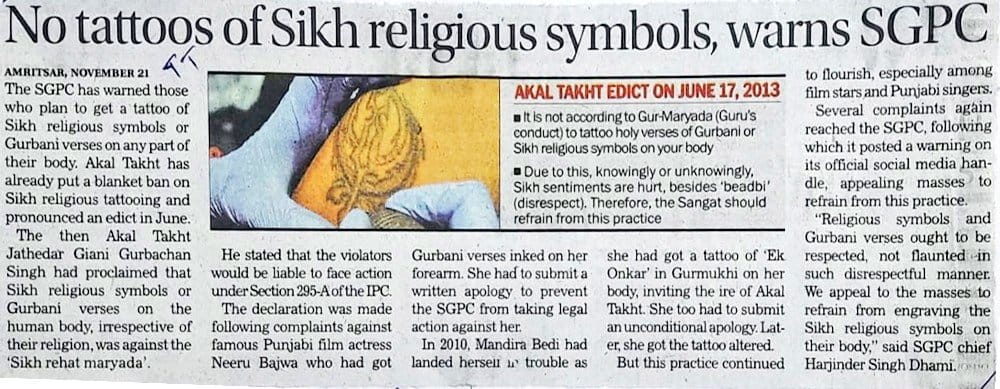
In fact, this concern has been formally addressed within the Panth. In July 2013, the Akal Takhat Sahib issued an edict warning against tattooing Sikh symbols such as Ik Oan-kaar, Khanda, Sikh swords, or Gurbani. It stated that such actions could lead to legal action under Section 295 of the Indian Penal Code for hurting religious sentiments. This reflects the seriousness with which such practices are viewed, not as promotion of Sikhi, but as disrespect. Therefore, if the goal is to represent Sikhi, the most powerful way is through one’s jeevan (personal living) — through actions, discipline, and character.
There is also no example in Sikh history to support tattooing. No Gursikhs of the past, no Shaheeds (martyrs), no Sants (saints), and no role-model Sikhs ever marked their bodies with tattoos or made ego-based modifications to their physical form. They represented Sikhi through their thoughts, their words, and their actions — not through external markings. If tattoos were a valid way to express Sikhi, it would be seen in the lives of those who lived it most deeply. It is not.
Gurbani teaches the body is sacred. It is something to be taken care of with responsibility. Therefore, Sikhs are instructed to eat clean, respect the body and not something to be taken granted for. In that idea, it is given to not put ink on the body because it direspectful to the body. It is not something that Guru Sahib is impressed with. Tattoos are not allowed in Sikhi because they go against core principles. Sikhi teaches maintaining the natural form given by Vaheguru. The Sikh Rehat Maryada does not support unnecessary body alterations. In practice, most tattoos require shaving hair. For a Sikh, this is a Bajjar Kurehat or act of apostacy. Kes (hair) is a gift from Vaheguru that is preserved as commitment to divinity and love of Vaheguru. Removing it for a tattoo is a clear contradiction.
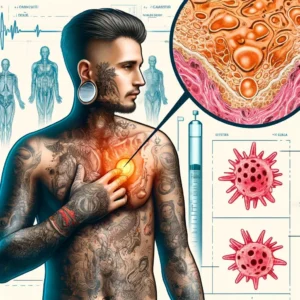 A tattoo is not just visual — it affects your body. Ink is injected into the skin and treated as foreign by the immune system. It cannot be removed, so it remains permanently, creating a lifelong immune response (Baranska et al., 2018). Particles can also migrate to lymph nodes (Schreiver et al., 2017), exposing the body to substances that were never meant to be there. Tattoo inks may contain heavy metals and industrial chemicals, some of which can break down into harmful compounds over time (Kluger, 2015). This is permanent chemical exposure — not just decoration.
Tattoos carry risks:
Allergic reactions and skin problems
Long-term inflammation
Infection if hygiene is poor
Painful and expensive removal
These issues may appear years later. And if your thinking changes, the tattoo does not. Removal is difficult and often incomplete.
Tattoos are not allowed in Sikhi. They conflict with Guru-given identity, involve altering the natural beauty of the body, and may require actions — like removing hair — that go directly violate Sikh Rehat (discipline). They also introduce permanent substances into the body with uncertain long-term effects. A Sikh already stands out. The roop (image) and actions of a Sikh already carry meaning. A Sikh does not need to add anything to be complete.