In a recent video, Adnan Rashid, an Islamic preacher, makes sweeping allegations against Sri Guru Tegh Bahadur Ji, the ninth Guru of the Sikhs. He portrays Guru Ji as “devastating Punjab,” destroying villages, spreading chaos, and even killing people—including Muslims—in Punjabi settlements.
Rashid further claims that Guru Ji was not executed for defending the religious freedom of the Kashmiri Pandits, who were being coerced into Islam. Instead, he alleges that this narrative was fabricated by Sikhs nearly a century later and only then popularized.
Such assertions not only lack credible historical evidence but also call into question Rashid’s integrity as a commentator. By dismissing Guru Ji’s universally recognized martyrdom as a “late invention,” Rashid disregards respected Sikh tradition and independent historical sources. His narrative is not grounded in scholarship, but in distortion.
Adnan Rashid’s allegations about Sri Guru Tegh Bahadur Ji are both historically inaccurate and misleading. The following points demonstrate why his assertions cannot be sustained, and highlight the well‑documented evidence of Aurangzeb’s oppressive policies—including the execution of Guru Tegh Bahadur Ji in Delhi in 1675.
Guru Tegh Bahadur’s Martyrdom: Guru Gobind Singh Ji, the tenth Sikh Guru, clearly describes the martyrdom of his father, Guru Tegh Bahadur Ji, in the Sri Dasam Granth Sahib Ji. Guru Tegh Bahadur sacrificed his life to protect the religious freedom of the Kashmiri Pandits who were being forcibly converted to Islam.
ਤਿਲਕ ਜੰਞੂ ਰਾਖਾ ਪ੍ਰਭ ਤਾ ਕਾ ॥ ਕੀਨੋ ਬਡੋ ਕਲੂ ਮਹਿ ਸਾਕਾ ॥
ਸਾਧਨ ਹੇਤਿ ਇਤੀ ਜਿਨਿ ਕਰੀ ॥ ਸੀਸੁ ਦੀਯਾ ਪਰੁ ਸੀ ਨ ਉਚਰੀ ॥੧੩॥
ਧਰਮ ਹੇਤ ਸਾਕਾ ਜਿਨਿ ਕੀਆ ॥ ਸੀਸੁ ਦੀਆ ਪਰੁ ਸਿਰਰੁ ਨ ਦੀਆ ॥
ਨਾਟਕ ਚੇਟਕ ਕੀਏ ਕੁਕਾਜਾ ॥ ਪ੍ਰਭ ਲੋਗਨ ਕਹ ਆਵਤ ਲਾਜਾ ॥੧੪॥
ਦੋਹਰਾ ॥
ਠੀਕਰ ਫੋਰਿ ਦਿਲੀਸ ਸਿਰਿ ਪ੍ਰਭ ਪੁਰਿ ਕੀਯਾ ਪਯਾਨ ॥
ਤੇਗ ਬਹਾਦੁਰ ਸੀ ਕ੍ਰਿਆ ਕਰੀ ਨ ਕਿਨਹੂੰ ਆਨਿ ॥੧੫॥
ਤੇਗ ਬਹਾਦੁਰ ਕੇ ਚਲਤ ਭਯੋ ਜਗਤ ਕੋ ਸੋਕ ॥
ਹੈ ਹੈ ਹੈ ਸਭ ਜਗ ਭਯੋ ਜੈ ਜੈ ਜੈ ਸੁਰ ਲੋਕਿ ॥੧੬॥
He protected the forehead mark and sacred thread (of the Hindus) which marked a great event in the Iron age.
For the sake of saints, he laid down his head without even a sigh. (13)
For the sake of Dharma, he sacrificed himself. He laid down his head but not his creed.
The saints of the Lord abhor the performance of miracles and malpractices. (14)
Breaking the potsherd of his body head of the king of Delhi (Aurangzeb), He left for the abode of the Lord.
None could perform such a feat as that of Tegh Bahadur. (15)
The whole world bemoaned the departure of Tegh Bahadur.
While the world lamented, the gods hailed his arrival in heavens. (16)
Gur Partap Suraj Granth: Bhai Santokh Singh’s work details the life and sacrifice of Guru Tegh Bahadur, emphasizing his martyrdom for the protection of Hindu religion and the oppressed.
Even contemporary Muslim writers testify to the Guru’s greatness and the multitudes of people who used to visit him and bowed their heads in respect. They used to present him with worldly presents and honour.
The most important part of this source is that the “Muslim” writer calls Guru Teg Bahadur Sahib a “Martyr” and linked his martyrdom with Samad (who was also killed by Aurangzeb for heresy)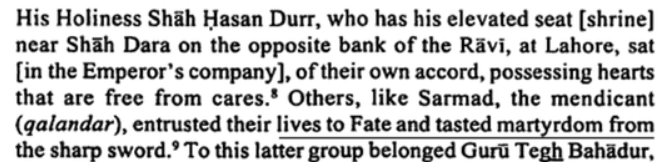
Gurbilas Patshahi describing how Kashmiri Pandits crying and expressing their pain in front of Guruji.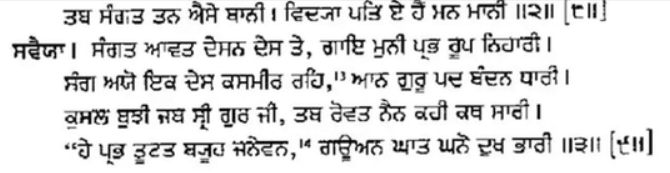
Sainapat gives a glorious tribute to the sacrifice of Guru Teg Bahadur Sahib Ji for the right of religious freedom.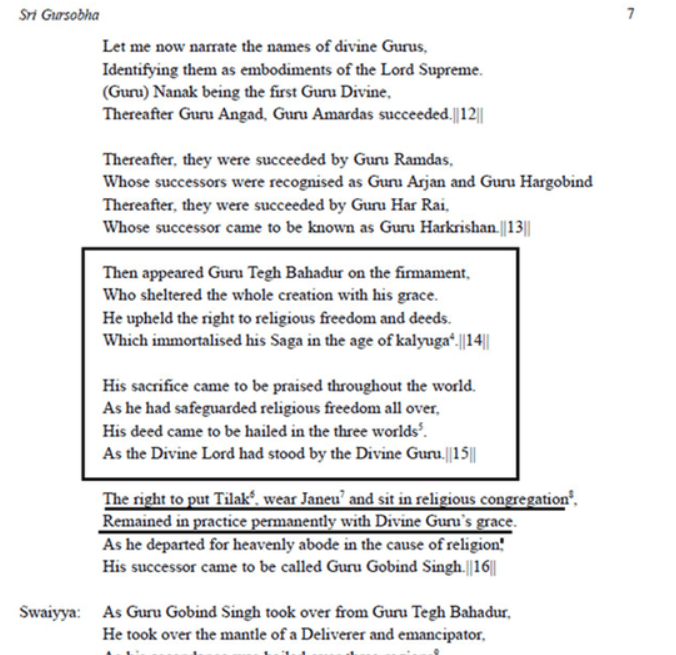
Kesar Singh in his Basanwalinama describes the arrival of Pandits, the atrocities committed against them and how they appeal to Guru Sahib for protection.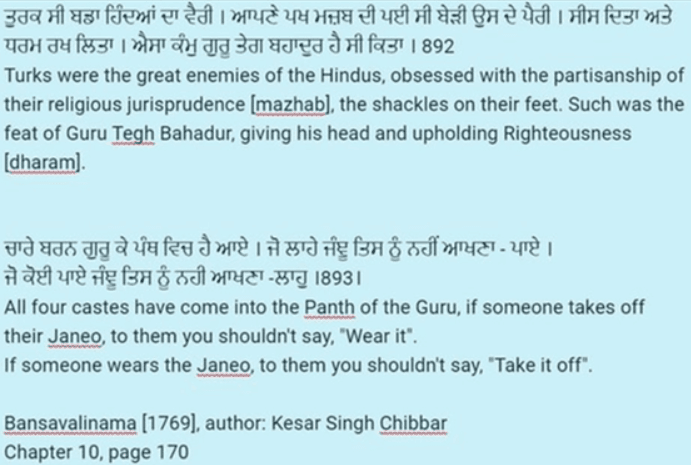
Demolition of Temples: Aurangzeb is known for ordering the destruction of Hindu temples, such as the Kashi Vishwanath Temple and the Keshavdeva temple, as part of his policy to enforce Islamic supremacy.
Jizya Tax Reimposition: Aurangzeb brought back a tax called Jizya, which non-Muslims had to pay. This tax had been stopped by previous rulers. Bringing it back made non-Muslims feel even more left out and showed that Aurangzeb didn’t tolerate other religions.
Modern historians, both Indian and Western, have extensively studied and documented the oppressive nature of Aurangzeb’s rule, including his persecution of non-Muslims. These historical analyses contradict Rashid’s claims and reaffirm the narrative of Guru Tegh Bahadur’s martyrdom for the protection of religious freedom.
Adnan Rashid’s claims about Sri Guru Tegh Bahadur Ji are historically baseless and deliberately misleading. They represent a calculated attempt to smear the revered Sikh Guru and manipulate history for his own agenda. His assertions are not simply errors of interpretation but a conscious effort to distort the truth and promote Islam at the expense of others. Here is how his tactics operate:
Defaming Sacred Figures:By portraying Guru Tegh Bahadur Ji—a universal symbol of sacrifice and religious freedom—as a violent marauder, Rashid seeks to undermine Sikhi’s moral credibility. This is a deliberate misrepresentation, designed to erode the faith of Sikhs and present Islam as the “superior” path.
Sowing Doubt and Desecration: Rashid’s accusations aim to desecrate Sikh history and create confusion among followers. By challenging the well‑documented truth of Guru Ji’s martyrdom, he attempts to weaken Sikh identity, hoping to make vulnerable Sikhs question their heritage and become susceptible to conversion.
Glorifying Tyranny Committed in the Name of Islam: By whitewashing Aurangzeb’s brutal reign—marked by temple demolitions, the reimposition of the oppressive Jizya tax, and the execution of Guru Tegh Bahadur Ji—Rashid defends a ruthless tyrant. His narrative attempts to justify fanaticism while vilifying Sikh heroes, presenting Islamic rule as righteous through distortion.
Ideological Warfare: As an Islamic preacher, Rashid’s agenda is steeped in bias. His attacks on Sikh history form part of a broader effort to rewrite the past and sanitize the atrocities committed by Muslim rulers. This is not scholarship; it is ideological warfare meant to pressure non‑Muslims into submission and conversion.
Conversion by Deception:Rashid’s ultimate aim is clear: to persuade people to convert to Islam through deception. By twisting history and smearing sacred figures, he seeks to sow doubt and weaken the convictions of Sikhs and others. This is not honest debate but calculated deceit, intended to advance his mission of religious domination.
Historical records such as the Bachittar Natak (c. 1700) from Sri Dasam Granth Sahib Ji, authored by Guru Gobind Singh Ji, unequivocally affirm Guru Tegh Bahadur Ji’s martyrdom in 1675 to protect the Kashmiri Pandits from Aurangzeb’s forced conversions. The Gur Partap Suraj Granth further glorifies Guru Ji’s sacrifice as a defense of religious freedom. Modern historians—both Indian and Western—have meticulously documented Aurangzeb’s bigotry: his destruction of Hindu temples such as Kashi Vishwanath, his imposition of the oppressive Jizya tax, and his merciless persecution of non-Muslims. These facts decisively dismantle Rashid’s fabricated narrative and expose his distortion of history.
Adnan Rashid’s assertions are not merely inaccurate; they represent a betrayal of truth, driven by his determination to glorify Islam at the expense of others. His deliberate manipulation and misleading claims reveal a lack of integrity and respect for historical evidence. The audience must see through this misrepresentation and stand firm with the undeniable truth of Guru Tegh Bahadur Ji’s heroic sacrifice—a timeless testimony to the defense of liberty, conscience, and faith.
We’re here to help. Whether you’re curious about Gurbani, Sikh history, Rehat Maryada or anything else, ask freely. Your questions will be received with respect and answered with care.
Ask Question